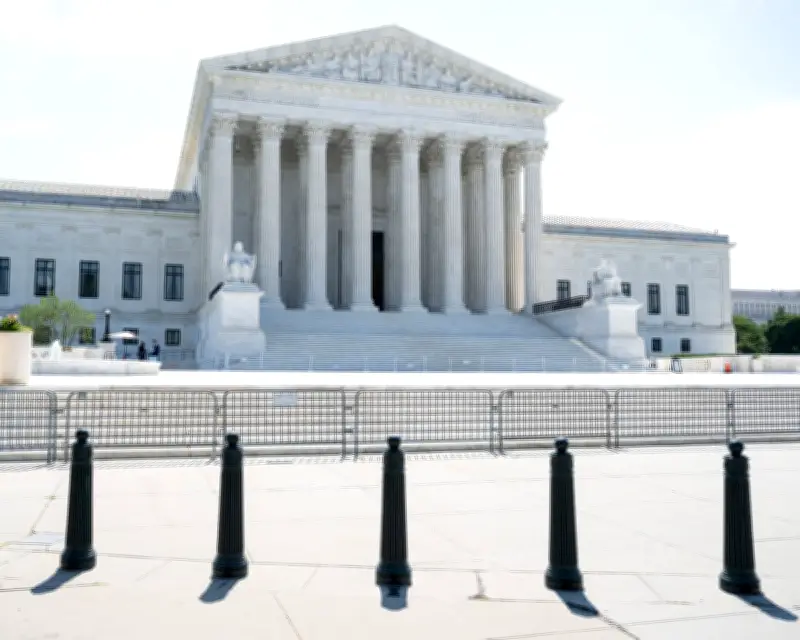
The Supreme Court of the United States delivered a decisive blow to President Donald Trump's immigration agenda on Tuesday, ruling 6-3 that children born to undocumented immigrants on American soil are entitled to birthright citizenship. The decision upholds a century-old interpretation of the 14th Amendment's Citizenship Clause, which states that "all persons born or naturalized in the United States, and subject to the jurisdiction thereof, are citizens of the United States."
Background of the Case
The case originated from Trump's 2025 executive order that sought to deny citizenship to children born to non-citizen parents, including those in the country illegally or on temporary visas. The order was immediately challenged by civil rights groups and 22 states, leading to a federal appeals court blocking its enforcement. The administration appealed directly to the Supreme Court, arguing that the 14th Amendment was never intended to cover children of undocumented immigrants.
During oral arguments in April, Solicitor General Elizabeth Prelogar contended that "the historical understanding of jurisdiction excluded those who were not fully subject to U.S. law," pointing to the 1866 Civil Rights Act as evidence. However, opponents, led by the American Civil Liberties Union, maintained that the amendment's plain language and 120 years of precedent settled the matter.

The Court's Decision
Chief Justice John Roberts wrote the majority opinion, joined by the court's three liberal justices and two conservative justices—Neil Gorsuch and Brett Kavanaugh. The opinion held that "the text and history of the 14th Amendment are clear: birthright citizenship is a constitutional right that cannot be abrogated by executive action." The ruling emphasized that the term "subject to the jurisdiction thereof" excludes only foreign diplomats and enemy soldiers, not undocumented immigrants.
In a concurring opinion, Justice Kavanaugh noted that "Congress, not the president, has the power to alter immigration and citizenship laws, and it has chosen not to change this longstanding rule." Justice Clarence Thomas, writing for the dissent, argued that the majority's interpretation "ignores the original meaning of the Citizenship Clause," and was joined by Justices Samuel Alito and Amy Coney Barrett.
Impact of the Ruling
According to the Migration Policy Institute, approximately 250,000 children are born to undocumented immigrants in the United States each year. The ruling ensures that these children will continue to receive citizenship automatically, granting them access to Social Security numbers, passports, and the ability to vote and run for office. "This is a monumental victory for the principle that all people born in America are equal under the law," said Omar Jadwat, director of the ACLU's Immigrants' Rights Project.
The decision also has significant political ramifications, as it removes a key issue that Trump had planned to use in his 2026 midterm campaign. White House Press Secretary Karoline Leavitt criticized the ruling, stating that "the president will continue to fight for the American people against judicial overreach." She added that the administration is exploring other avenues, including potential legislation or a constitutional amendment.
Reactions and Next Steps
Democratic leaders hailed the decision as a reaffirmation of American values. Senate Majority Leader Chuck Schumer called it "a victory for the Constitution and for every family that dreams of a better life." Meanwhile, Republican House Speaker Mike Johnson expressed disappointment, saying the court "has once again overstepped its role."
Legal experts note that the ruling effectively ends any chance of changing birthright citizenship through executive action, but Congress could still attempt to pass a law or amendment—though such efforts face steep political hurdles. For now, the law remains unchanged, and children born in the U.S. will continue to be citizens regardless of their parents' status.