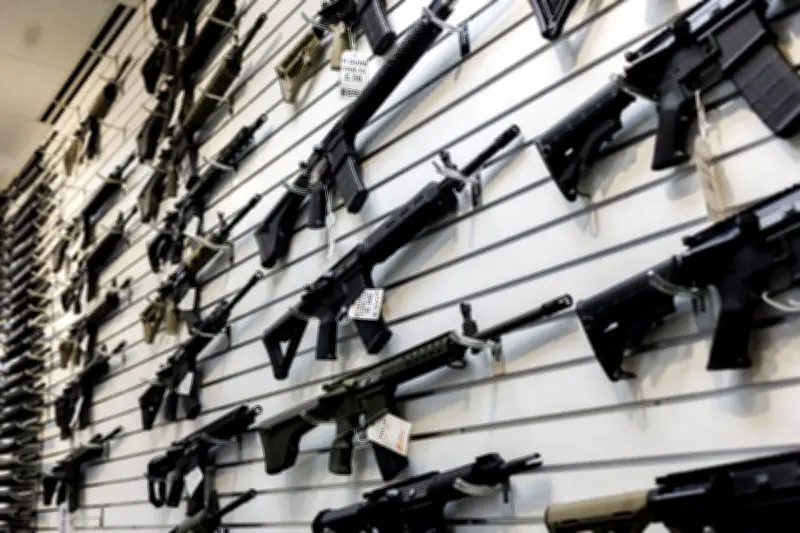
The United States Supreme Court has delivered a landmark decision, upholding state-level bans on assault weapons in a 6-3 ruling that affirms the constitutionality of restrictions on semi-automatic firearms. The decision, handed down on June 30, 2026, marks a significant victory for gun control advocates and solidifies the authority of states to regulate high-capacity weapons.
Ruling Details and Majority Opinion
The majority opinion, written by Chief Justice John Roberts, held that the Second Amendment does not shield assault weapons from regulation, citing their military-style features and capacity for mass casualties. The ruling specifically addressed bans in Maryland, California, and New Jersey, which prohibit the sale and possession of certain semi-automatic rifles and high-capacity magazines. According to the Court, these laws are consistent with historical traditions of firearm regulation and do not unduly burden the right to self-defense.
The decision overturns a lower court ruling that had struck down Maryland's ban, which was enacted after the 2018 school shooting in Parkland, Florida. The Supreme Court's decision reinstates the ban and provides a framework for other states to enact similar measures.

Dissenting Opinions
Justice Clarence Thomas, writing for the dissent, argued that the majority had misapplied the Second Amendment and that assault weapons are commonly used for lawful purposes, including sport shooting and self-defense. He was joined by Justices Samuel Alito and Neil Gorsuch. The dissent contended that the ruling would lead to a patchwork of inconsistent laws across the country.
Impact and Reactions
The ruling is expected to have a broad impact, as at least 10 other states have similar bans that were challenged in lower courts. Gun control groups praised the decision, with Everytown for Gun Safety calling it a 'historic step toward ending the epidemic of gun violence.' Conversely, the National Rifle Association vowed to continue fighting for gun rights, stating that the decision 'ignores the plain text of the Constitution.'
According to data from the Gun Violence Archive, mass shootings involving assault weapons have declined in states with bans, though overall gun violence remains high. The Court's decision may also influence pending legislation at the federal level, where a proposed assault weapons ban has stalled in Congress.
Legal and Historical Context
The ruling builds on the Court's 2022 decision in New York State Rifle & Pistol Association v. Bruen, which established a historical test for firearm regulations. In this case, the majority found that assault weapons bans are analogous to historical restrictions on dangerous and unusual weapons. The decision clarifies that the Bruen test does not automatically invalidate all modern gun laws.
Legal experts note that the ruling may still face challenges, as plaintiffs could argue that specific weapons or magazine capacities are not covered. However, the Court's clear endorsement of state authority is likely to reduce the number of legal challenges.