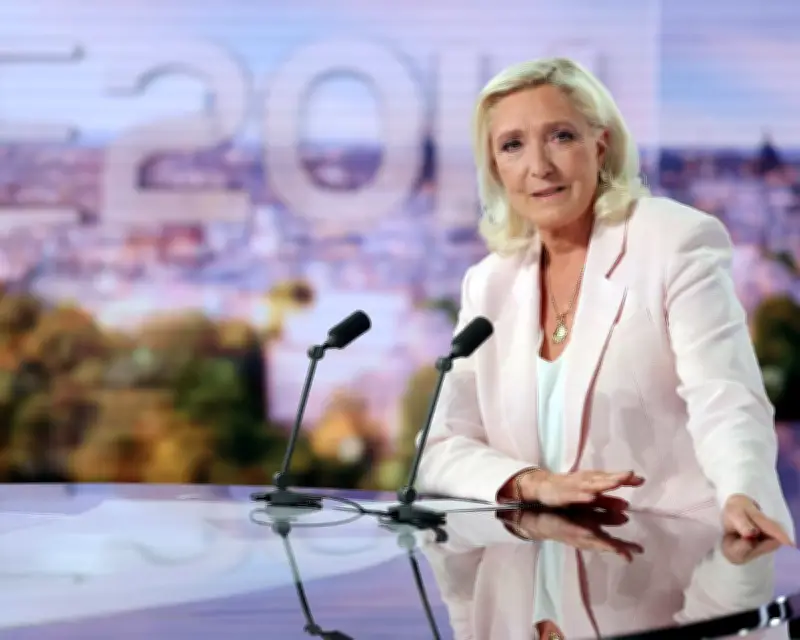
Le Pen's National Rally Surges in French Polls
Marine Le Pen's far-right National Rally (RN) has emerged as a dominant force in French politics, consistently leading in opinion polls ahead of the 2027 presidential election. According to recent surveys, Le Pen would win the first round of voting with 32% of the vote, compared to 24% for President Emmanuel Macron's centrist alliance. If she reaches the second round, she is projected to defeat any mainstream candidate, including Macron, by a margin of 52% to 48%.
This surge is not accidental. Le Pen has spent years detoxifying her party's image, softening its rhetoric on immigration and Europe while maintaining a hardline stance on national identity and security. She has also capitalized on widespread discontent with Macron's economic policies, particularly among rural and working-class voters.
Farage's Reform UK Struggles for Traction
Across the English Channel, Nigel Farage's Reform UK has failed to replicate Le Pen's success. In the 2024 UK general election, Reform UK won only five seats in the House of Commons, despite securing 14% of the national vote. The UK's first-past-the-post electoral system penalizes smaller parties that lack geographically concentrated support. Farage himself has not been elected to Parliament, though he remains a prominent media figure.

Reform UK's policy platform mirrors many of Le Pen's themes: curbing immigration, leaving the European Convention on Human Rights, and prioritizing British sovereignty. Yet, the party's electoral impact remains marginal. According to political analyst Matthew Goodwin, "Farage's movement is a protest vehicle, not a serious contender for power. The UK's electoral system is a major barrier."
Electoral Systems Shape Outcomes
The divergent fortunes of Le Pen and Farage underscore the importance of electoral systems. France's two-round system allows candidates like Le Pen to consolidate the far-right vote in the first round and then appeal to a broader electorate in the runoff. In contrast, the UK's winner-takes-all system forces smaller parties to either form coalitions or concentrate their efforts in specific constituencies.
Le Pen has also benefited from the collapse of traditional parties. The French Socialist Party and the Republicans have fragmented, leaving a void that the National Rally has filled. In the UK, the Conservative Party has moved to the right on issues like immigration and Brexit, co-opting some of Farage's policies and limiting Reform UK's appeal.
Populist Movements Across Europe
Le Pen and Farage are part of a broader wave of populist movements across Europe. In Italy, Giorgia Meloni's Brothers of Italy leads the government; in Germany, the Alternative for Germany (AfD) polls second nationally; and in the Netherlands, Geert Wilders' Party for Freedom won the most seats in 2023. However, only Le Pen is on the cusp of executive power in a major European country.
"The difference is that Le Pen has built a professional party machine and adapted to the realities of the French political system," said Dr. Sarah de Lange, a professor of European politics at the University of Amsterdam. "Farage remains a charismatic figurehead, but his party lacks the organizational depth to win seats."
Implications for Europe
A Le Pen presidency would have profound implications for the European Union. She has promised to reduce France's contribution to the EU budget, renegotiate treaties, and hold a referendum on French membership if her demands are not met. While she has abandoned her earlier call for a 'Frexit,' her policies would fundamentally challenge the EU's cohesion.
In the UK, Farage's influence is felt more through the Conservative Party than his own. Prime Minister Rishi Sunak has adopted tougher immigration policies to stave off the Reform threat. However, Farage's ultimate goal of a right-wing realignment remains elusive.
As Le Pen inches closer to the Élysée Palace, the contrast with Farage's perennial outsider status highlights the uneven terrain of European populism. For now, the French far right is on the march, while its British counterpart remains on the sidelines.