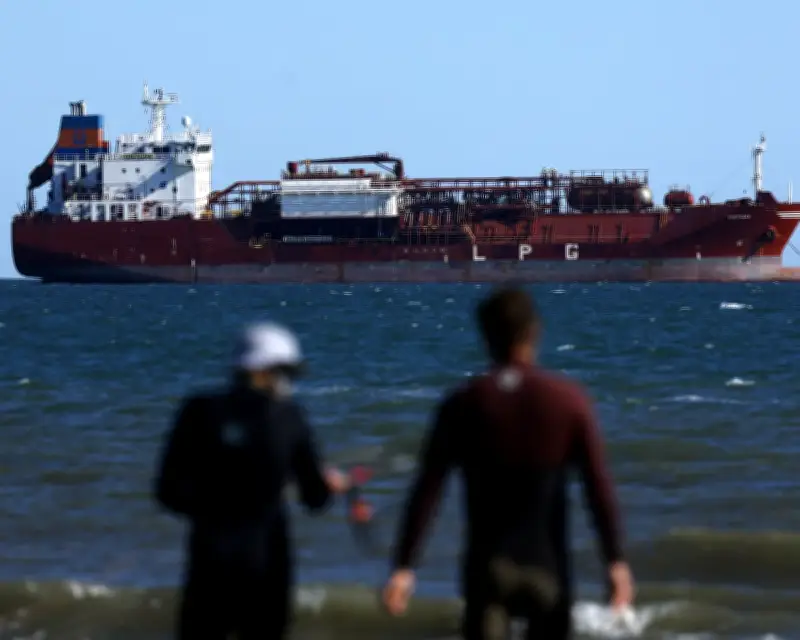
Oil prices surged more than 5% on Wednesday after Iran attacked two oil tankers in the Strait of Hormuz, a critical waterway for global crude shipments. The attack, which involved drones and missiles, set one vessel ablaze and forced the other to divert course, according to shipping sources and regional officials.
Attack Details and Immediate Impact
The incident occurred early Wednesday morning local time near the Omani coast, about 50 nautical miles from the port of Fujairah. A spokesperson for the United Arab Emirates' National Emergency Crisis and Disasters Management Authority confirmed that the tankers were hit by projectiles. One tanker, the Marshall Islands-flagged Ocean Sapphire, reported a fire that was later extinguished. The second, the Panama-flagged Golden Horizon, sustained minor damage and continued its journey after assessing safety.
Iran's state-run media quoted a military official claiming the attack was retaliation for a recent Israeli airstrike on Iranian targets in Syria. However, no group immediately claimed responsibility, and the U.S. Fifth Fleet said it was monitoring the situation. "We are aware of reports of attacks on commercial vessels in the Strait of Hormuz and are in contact with our partners," a U.S. naval spokesperson said.

Market Reaction and Global Concerns
Brent crude futures rose by $3.45 to $79.82 a barrel, while U.S. West Texas Intermediate crude climbed $3.12 to $75.90 a barrel, marking the largest single-day gain in over a month. The spike reflects market anxiety over potential disruptions to the Strait, through which about 20% of the world's oil passes daily. Analysts at Goldman Sachs warned that a prolonged closure could push prices above $100 a barrel.
"This is a serious escalation in a region already on edge," said Helima Croft, head of commodity strategy at RBC Capital Markets. "The Strait of Hormuz is the world's most important oil chokepoint, and any sustained disruption would have severe consequences for global energy markets."
Historical Context and Geopolitical Tensions
The attack comes amid heightened tensions between Iran and Western powers over Tehran's nuclear program and its support for proxy groups. In 2019, similar attacks on tankers near the Strait led to a temporary spike in oil prices and increased naval patrols. The U.S. has accused Iran of being behind those incidents, though Iran denied involvement.
Iran's foreign ministry issued a statement denying any role in Wednesday's attack, calling it a "false flag operation by enemies seeking to destabilize the region." However, the U.S. State Department said it was "reviewing evidence" and would respond accordingly. "We will hold those responsible accountable," a department spokesperson said.
Impact on Global Supply Chains and Insurance
The attack has also rattled shipping insurance markets, with war risk premiums for vessels transiting the Strait doubling overnight. The London-based insurance market Lloyd's warned that further incidents could lead to a complete withdrawal of coverage, effectively halting trade through the waterway. Shipping companies were already advising vessels to avoid the area, with several major operators rerouting via the longer Cape of Good Hope route.
"The insurance implications are huge," said Marcus Baker, global head of marine and cargo at Marsh. "If underwriters decide the risk is too high, we could see a significant disruption to global oil flows."
Diplomatic Reactions and Next Steps
The United Nations Security Council was scheduled to hold an emergency session later Wednesday, with the U.K., France, and Germany calling for restraint. Saudi Arabia, the world's largest oil exporter, urged all parties to avoid escalation and said it would increase production capacity to stabilize markets if needed. "We are monitoring the situation closely and stand ready to act," a Saudi energy ministry official said.
Oil markets are now bracing for further volatility, with traders watching for any retaliatory strikes or additional attacks. The attack also highlights the vulnerability of global energy infrastructure to regional conflicts, underscoring the need for diversified supply routes and investment in renewable energy, analysts said.