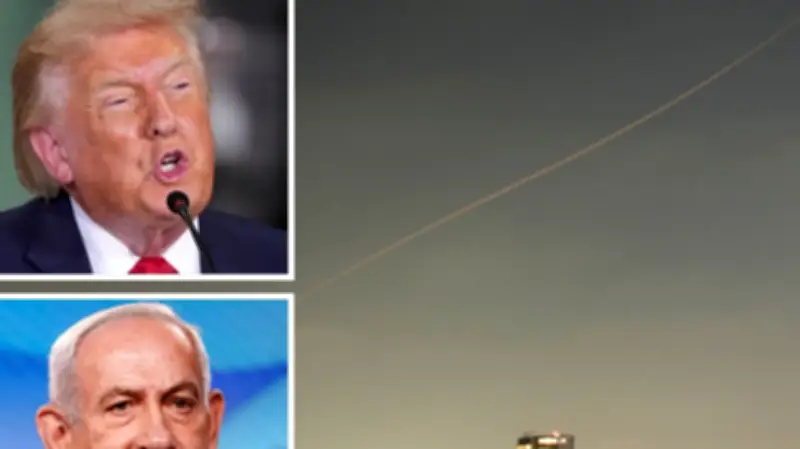
In a significant escalation of Middle Eastern tensions, Israel has launched retaliatory strikes against Iran following a series of missile attacks from Tehran. This marks the first such confrontation since a fragile ceasefire was established in April.
Missile Attacks and Responses
Israel's military confirmed it intercepted at least three waves of missiles originating from Iran. The attacks represent a direct violation of the ceasefire that had been in place for over two months.
In response, Israeli officials accused Iran of committing a “grave mistake” and vowed to “strike the enemy with force as soon as the green light is given.” The military has already initiated counterstrikes, though details remain limited.

Iran, meanwhile, characterized its missile launches as a “warning” following an Israeli airstrike on Beirut’s southern suburb of Dahiyeh earlier in the day. General Ali Abdollahi, head of Iran’s Khatam al-Anbiya command, issued a stern warning: “The Israeli army must stop its attacks on southern Lebanon and the suburbs, and if it expands its attacks to that region or responds to Iran’s action, it will face more devastating and regrettable blows.”
US Intervention
US President Donald Trump intervened directly, stating, “You’ve shot your missiles, that’s enough.” He urged both sides to “get back to the table and make a deal.” Trump’s remarks came during an interview with NBC News, which he abruptly ended after being questioned about his 2020 presidential election allegations.
During the same interview, Trump claimed that Iran’s military force has been “virtually decapitated” as the conflict between Iran and the United States enters its 100th day. The comment drew sharp reactions from analysts, who noted the ongoing volatility in the region.
Escalation Concerns
The exchange of fire raises fears of a broader war in the Middle East. The ceasefire, which had held since April, was already fragile, and both sides have accused each other of violations. International observers have called for restraint, but the situation remains tense.
As the world watches, the coming hours and days will be critical in determining whether the region can avoid a full-scale conflict. The United Nations has yet to issue an official statement, but diplomatic channels are reportedly active.