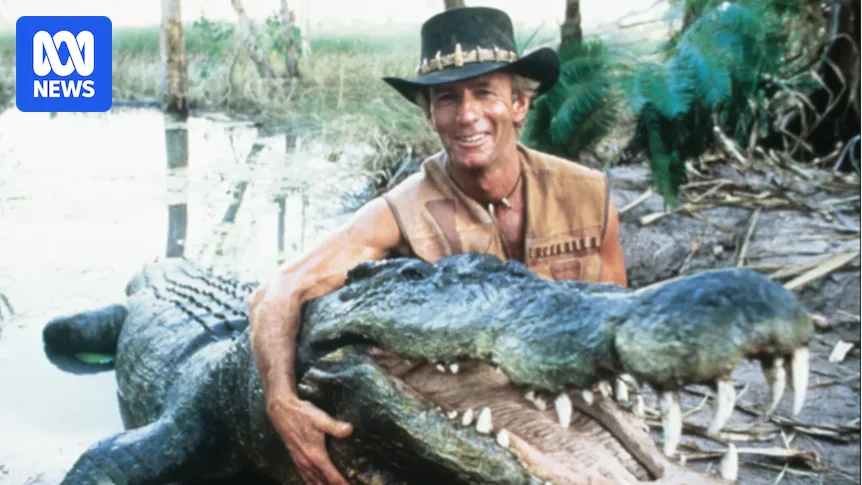
As the 40th anniversary of the release of Crocodile Dundee approaches, Kakadu National Park is experiencing a renewed surge in global interest, with tourism operators and filmmakers reflecting on the film’s enduring impact on the region. The 1986 blockbuster, which broke multiple box office records, put the Australian outback on the international map and transformed Kakadu into a must-visit destination.
During filming in 1985, Darwin native Di, who worked as a stand-in for actress Linda Kozlowski, recalled a startling encounter with a crocodile at Girraween Lagoon. While standing in the water, a sudden movement and flash of open jaws caused her to lurch backward, prompting the director to remark, “Well, that’s answered the question if it’s real enough.” The scene was part of the iconic crocodile attack sequence, filmed using a mechanical crocodile with armed rangers on standby for safety.
Cinematographer Mike Atkinson, who worked on the film, highlighted the dangers of filming in crocodile habitat. “The first rule is: be very careful. We didn’t have drones in those days … so you had to get in close — and sometimes it’s extremely dangerous,” he said. Atkinson helped location scout Craig Bolles find key sites, including Gunlom Falls, where the camp scene, first kiss, and waterhole swim were filmed. For one shot, Atkinson hung from a rope over an escarpment to capture the scene.

The “Dundee effect” saw Kakadu’s annual visitor numbers reach 300,000 in the late 1980s, with a threefold increase in overseas visitors over the decade. While numbers have since stabilized between 160,000 and 200,000 annually, international visitors have declined. However, the park’s recent ranking at number 14 in the New York Times’ 52 Places to Go in 2026 list has reignited interest.
Kakadu Tourism now offers a self-guided tour of iconic film locations, and a real-life tour company called Never Never Safaris, run by father-daughter duo Sean “Chizo” Chisholm and his daughter, operates from Jabiru. Chizo, who watches the film monthly, enjoys quoting lines to tourists at sites like Ubirr. He notes that while the film draws visitors, most are captivated by Kakadu’s Aboriginal culture, wildlife, and flood plains.