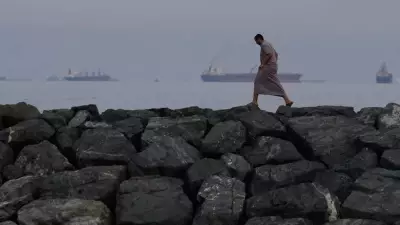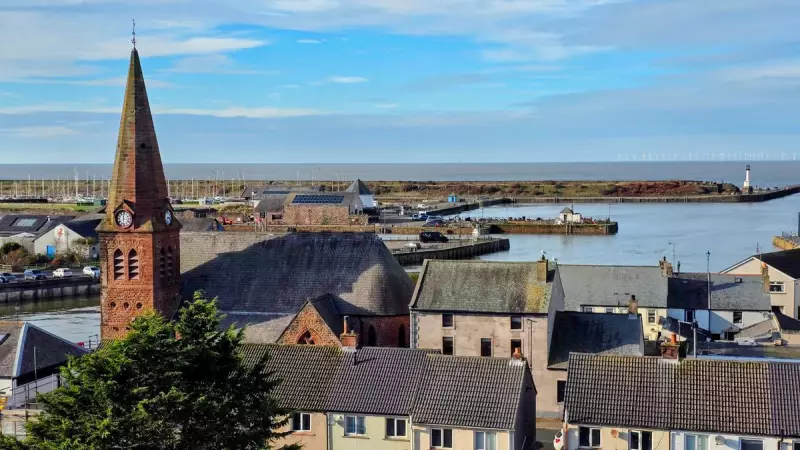
A visit to the Solway Coast in northern Cumbria is often billed as a spring or summer affair. Those warmer months showcase the region's spectacular natural beauty, with blossoming flora and the return of migratory birds, while beachside promenades and caravan parks buzz with life.
This journey, however, takes place in the depths of late autumn. The mission: house and cat-sitting for a week in the snug, warm farmhouse of Newtown, a rural hamlet. The weather presents a relentless challenge of incessant rain, icy winds sweeping in from the Solway Firth, and roads threatening to flood. Yet, the hired Vauxhall SUV proves hardy, the sodden farmland is alive with sheep and birds, and even the distant wind turbines hold a curious appeal.
With major attractions like Carlisle, Hadrian's Wall, and the Lake District temporarily sidelined by the conditions, the focus turns to exploring several nearby coastal and inland towns, each brimming with layers of history. Here are four compelling stops on a rain-soaked Cumbrian itinerary.

Abbeytown: Echoes of Monastic Grandeur
The village of Abbeytown owes its existence and name to Holme Cultram Abbey. This Cistercian monastery was founded on the edge of the Solway marshes in 1150 and, despite perpetual struggles with flooding and Scottish raids, grew into one of northern England's most powerful and wealthy abbeys.
Today, the original abbey is largely gone. Visitors find the church's nave standing amidst scattered ruins and centuries of tombstones. The atmosphere outside is solemn, punctuated by the cry of a raven. Inside, however, the community spirit shines, as witnessed during a vibrant Christmas fete offering local crafts, tea, and mince pies.
A small but excellent museum reveals fascinating details. The abbey was built by monks from Melrose Abbey when this was considered Scottish land, a time before fixed borders. Its name derives from Old Norse and Latin: Holme (holmr) for land almost surrounded by water, and Cultram from the verb meaning to cultivate.
Silloth-on-Solway: A Victorian Resort's Legacy
For sustenance and strong wi-fi, the Fairydust Emporium tearoom in Silloth is a favoured, quirky stop. This town was once part of Holme Cultram's ancient parish. A visit involves practicalities like shopping at the Co-Op and gathering information from the Solway Coast Area of Outstanding Natural Beauty Discovery Centre.
No research trip is complete without a visit to the local chippie, where servings are famously gargantuan. Silloth's character was transformed in the mid-1800s by the arrival of the railway and a wet dock, evolving from a hamlet into a port and Victorian seaside resort. This legacy is visible in its wide cobbled streets, expansive promenade, and green, which are reportedly overrun in summer but peaceful in the off-season.
Maryport: From Roman Fort to Industrial Port
Located 20 kilometres south-east of Silloth, Maryport has deep historical roots. It began with the construction of the Roman fort of Alauna in 122 AD at the western end of Hadrian's Wall. In 1749, Humphrey Senhouse renamed the town after his wife Mary and developed it into a port for coal exports, with shipbuilding and ironworks flourishing in the Victorian era.
A stroll from Redby Coffee reveals Georgian architecture in various states of repair, with charming details like a dancing pigeon on a chimney pot and a striking green door with Doric columns. Historical plaques tell more of the story: White Star Line founder Thomas Ismay was born here, and railway pioneer George Stephenson met local businessmen in August 1836 to plan the Maryport to Carlisle railway, completed in 1845.
The visit concludes with part of the Lowry Trail, highlighting locations that inspired artist L.S. Lowry, a regular visitor who painted scenes like Senhouse Street, Maryport (1955).

Aspatria: Mining Town with Ancient Secrets
Roughly 12km north-east of Maryport lies Aspatria, a former coal-mining town. Its Roman-sounding name is actually of Old Norse and Celtic origin, meaning "Ash-tree of St Patrick." The main draw is St Kentigern's Church, reached via a steep, headstone-lined path in the pouring rain.
The current Victorian Early English church replaced a Norman building. Fragments of the past remain, including a font, arches, part of a 10th-century cross, and even a Viking "hogback" tombstone, recalling a Viking burial horde found here in 1789.
Inside, a humble organ and a grand piano share space with a surprising blue plaque: it marks where legendary contralto Kathleen Ferrier gave her first professional performance in 1937. Among memorials to the war dead, visitors can reflect on the deep, layered history contained within this quiet place.
For those inspired to explore the Solway Coast's natural and historical sites further, comprehensive information is available through the official Solway Coast website.