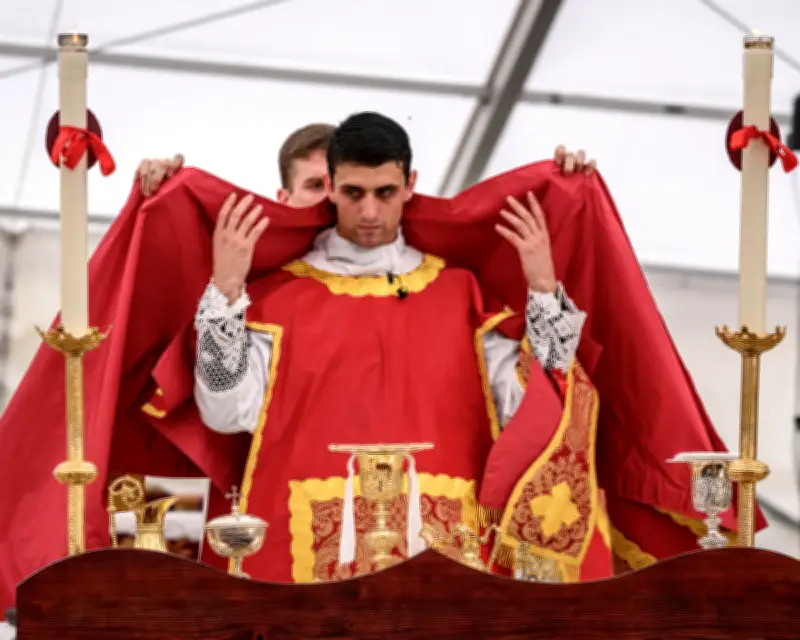
Pope Leo has granted the traditionalist Society of St. Pius X (SSPX) permission to ordain bishops, a decision that conservative Catholic groups warn could lead to a schism within the Church. The move, announced on Tuesday, reverses decades of tension between the Vatican and the breakaway group, which has been in a canonical irregular status since 1988.
Background of the SSPX
The SSPX was founded in 1970 by Archbishop Marcel Lefebvre, who opposed the modernizing reforms of the Second Vatican Council. In 1988, Lefebvre consecrated four bishops without papal approval, leading to excommunication for him and the bishops. Since then, the group has operated outside full communion with Rome, though it has maintained some dialogue with successive popes.
Pope Benedict XVI lifted the excommunications of the SSPX bishops in 2009, but the group remained in a canonical irregularity. Pope Francis attempted to regularize the society in 2015 by granting limited sacramental faculties, but negotiations stalled. Now, Pope Leo's decision to allow SSPX to ordain bishops is seen as a significant olive branch.

The Decree and Its Implications
The Vatican decree, issued by the Dicastery for the Doctrine of the Faith, states that the SSPX may ordain bishops with prior approval from the Holy See. This marks a departure from the previous stance that only the pope could authorize such ordinations. The decree emphasizes that the ordinations must be for the good of the faithful and in line with Church doctrine.
Conservatives within the Church, however, have expressed alarm. Cardinal Raymond Burke, a leading conservative voice, warned that the move could embolden the SSPX to further challenge papal authority. "This is a dangerous precedent that could undermine the unity of the Church," Burke said in a statement. "The SSPX has consistently rejected key aspects of Vatican II, and granting them this power risks legitimizing their position."
Supporters' View
Supporters of the decision argue that it is a pastoral gesture aimed at healing a long-standing rift. Archbishop Carlo Maria Viganò, a traditionalist who has criticized Pope Francis, praised the move as a step toward reconciliation. "This is a recognition of the SSPX's commitment to preserving the traditional Latin Mass and Catholic doctrine," Viganò said. "It is a wise decision that prioritizes the spiritual needs of the faithful."
The SSPX itself welcomed the decree. In a statement, the society's superior general, Bishop Alfonso de Galarreta, said, "We are grateful for the Holy Father's trust and hope this leads to full regularisation. We will continue to adhere to the Catholic faith as handed down by tradition."
Impact on the Church
The decision has already caused ripples among Catholic bishops worldwide. Some fear that it could encourage other traditionalist groups to seek similar concessions, potentially fragmenting the Church further. According to a Vatican source, the number of SSPX faithful is estimated at around 600,000 globally, with strongholds in France, the United States, and parts of South America.
In the United States, the SSPX operates over 100 chapels and schools. The group's growth has been fueled by dissatisfaction among some Catholics with the modern Mass and liberal trends in the Church. The new policy may accelerate that growth, as the SSPX can now train and ordain its own bishops without seeking Vatican approval for each individual.
However, the decree also includes safeguards. It requires that SSPX bishops be ordained only with explicit papal permission and that they profess fidelity to the Magisterium. The Vatican will also appoint a delegate to oversee the ordination process to ensure compliance with canon law.
Reactions from the Catholic Hierarchy
The reaction from national bishops' conferences has been mixed. The French Bishops' Conference, where the SSPX is particularly active, expressed concern about the potential for confusion among the faithful. "We urge the faithful to remain united with their diocesan bishops and to avoid any action that could lead to division," said Archbishop Éric de Moulins-Beaufort, president of the conference.

In contrast, the bishops of some African countries, where the SSPX has a smaller presence, have been more welcoming. They see the decision as a way to address the shortage of priests in remote areas, though the SSPX's strict traditionalism may not align with local customs.
Historical Context
The SSPX's history is marked by resistance to the reforms of Vatican II, including the use of vernacular languages in the liturgy and ecumenical dialogue with other religions. The group insists on the exclusive use of the Tridentine Mass and rejects what it sees as doctrinal errors in the council's documents. Pope Leo's predecessor, Pope Francis, had attempted to limit the spread of the traditional Latin Mass through the 2021 motu proprio Traditionis Custodes, which restricted its use. The new decree appears to reverse that trend.
In 2024, the SSPX reported that it had ordained 25 new priests worldwide, and its seminaries in Switzerland, the United States, and Germany are at capacity. The ability to ordain bishops will allow the society to ensure apostolic succession without relying on outside bishops, a practical necessity for its long-term survival.
Conclusion
Pope Leo's decision is a gamble that could either heal one of the Church's most persistent wounds or deepen existing divisions. As the SSPX prepares to ordain its first bishops under the new rules, the Catholic world watches closely. The move underscores the ongoing tension between tradition and reform within the Church, a dynamic that has defined Catholicism for centuries.