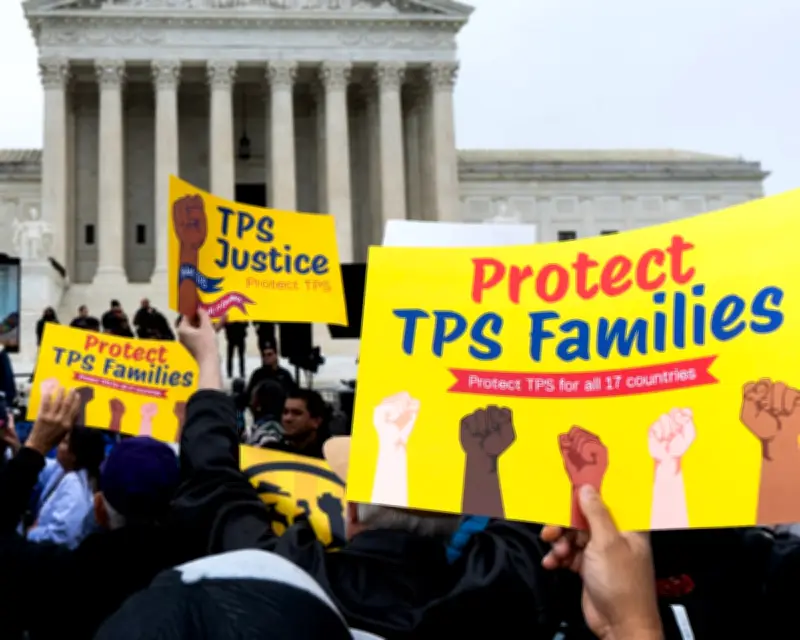
The Supreme Court on Thursday ruled that the Biden administration can end temporary protected status (TPS) for hundreds of thousands of immigrants from Haiti and Syria, upholding a policy that had been challenged by advocacy groups.
What the Court Decided
In a 6-3 decision, the justices held that the secretary of homeland security has broad discretion to terminate TPS designations. The ruling reverses a lower court decision that had blocked the termination, which was set to affect approximately 200,000 Haitians and 7,000 Syrians.
Writing for the majority, Justice Samuel Alito said that the statute allows the secretary to decide when conditions in a home country have improved enough to end the protections. The court found that the plaintiffs lacked standing to challenge the termination because they could not show that the government's decision was based on improper motives.

Impact on Immigrants
Advocates for immigrants warned that the ruling could lead to mass deportations and family separations. "This is a devastating blow to families who have built their lives here," said Marielena Hincapié, executive director of the National Immigration Law Center. "TPS holders have contributed to our communities and economy for decades."
The decision does not immediately end TPS for current holders; the Department of Homeland Security will implement the termination in phases, with a 12-month transition period for Haitians and 18 months for Syrians.
Reactions
The White House expressed disappointment, with press secretary Karine Jean-Pierre saying the administration would work with Congress to find a legislative solution for long-term TPS holders. Republicans praised the ruling as a win for the rule of law, arguing that temporary protections should not become permanent.
The case had been closely watched by immigration advocates and business groups, as many TPS holders work in essential industries such as healthcare and construction.