WA Premier Condemns Invasion Day Attack as Rally Organisers Warn Against Protest Laws
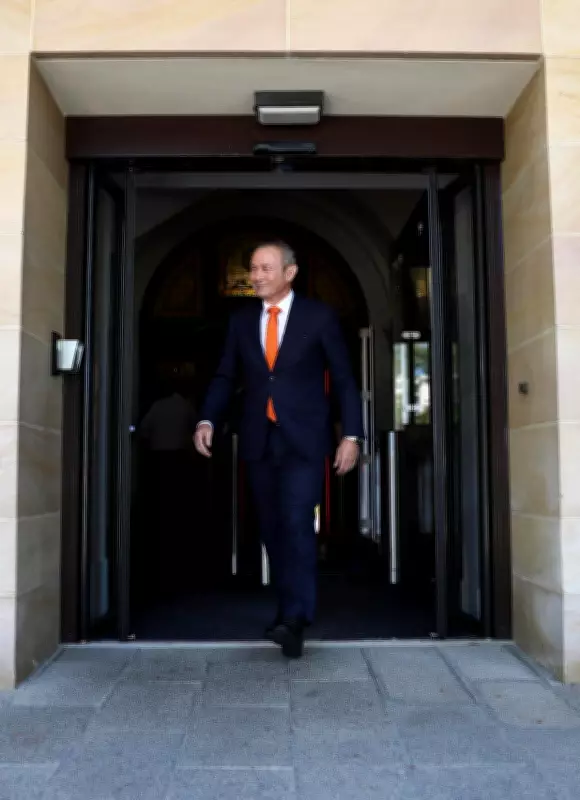
Premier Roger Cook has used his first speech on the opening day of State Parliament to strongly condemn an attempted terrorist attack on an Invasion Day rally in Perth. This condemnation came just minutes after the accused would-be bomber appeared in court, highlighting the urgency of the situation.
The Premier described the attempted firebombing in Forrest Place as an "attack on democracy" and acknowledged that people are rightfully angry. However, organisers of the march have demanded he pause new laws aimed at policing protests, warning that these measures could have unintended consequences.
Condemnation and Unity in Parliament
Parliament's standing orders were suspended to allow a motion condemning the attempted bombing, which passed with unanimous support. Mr Cook stated that the events of January 26 have caused "shock, hurt, confusion and anxiety" across Western Australia. He emphasised that the state must not be divided by hate and called for community action to prevent such incidents in the future.

"Prior to January 2026, we thought this wasn't something that happened in Western Australia, because it shouldn't," Mr Cook said. "We must do everything we can as a community so that it never happens again. I stand resolutely with our Aboriginal community, and I say again to all Aboriginal Western Australians, we see you, we hear you, we stand with you."
Rally Organisers Voice Concerns Over Proposed Laws
Organisers of the January 26 rally were present in the public gallery to hear Mr Cook's speech but have spoken out against proposed new laws. These laws would empower police to refuse permits if a protest is "likely" to cause hate. They noted that these changes were not discussed during a meeting with the Premier two weeks ago and have called for more consultation.
Aboriginal Muslim woman Brielle Jackson expressed strong opposition, stating: "These proposed laws will not dismantle far right networks. They will not address the Islamophobia, and they will not reduce the ongoing racism towards indigenous communities. Instead, there is a real risk that they will limit the very movements and communities who are speaking out against hate."
She added: "The trauma many of us experienced on Invasion Day must not be used to justify and introduce laws that restrict multiple movements. Our pain should not be turned into a policy that narrows democratic space."
Government Defends Legislation as Safety Measure
In response, Mr Cook defended the public order legislation, asserting that it is primarily about safety. "These laws are there to protect peaceful rallies, to protect people's right of expression, of freedom of speech, but what they also do is to make sure that people stay safe," he explained.
Rally organisers have called for calm and warned against vigilante action after a suppression order protecting the accused terrorist's identity was lifted. Fabian Yarran urged: "We do ask that nobody takes matters into their own hands, because we want him to face the full extent of the law."
Warnings Ignored and Political Rhetoric Criticised
Noongar woman Jade Cameron revealed that warnings about the attack were not taken seriously. "I was told online that there was going to be an attack. It wasn't taken seriously on social media and online, you get these comments, but you don't actually ever think it's going to happen. Well, it did happen on the 26th and we were a part of it, and we are affected by it," she said.
Labor MP Dave Kelly, who was present at Forrest Place on January 26, shared his anger over the incident. "I saw the look on the face of a young woman who had the device drop at her feet. Three weeks later, I'm still angry that someone would try to injure so many Australians who were exercising their democratic right," he stated.

Mr Kelly also criticised political debate for fuelling racism, calling on leaders to tone down their rhetoric. "Our leaders need to dial down the rhetoric and refrain from using racial or ethnic groups as punching bags. Attacking Indigenous Australians, whether physically or culturally, should never be okay," he emphasised.
Comparisons to Other National Tragedies
Kimberley MP Divina D'anna criticised the national response to the January 26 attack, comparing it to the Bondi massacre. She argued that "dog whistles" are being "dressed up as debate" and expressed disappointment in the lack of urgency from leaders. "The nation mourned. We stood united in condemnation. I feel the same urgency was not expressed on the events of January 26 . . . Where were the leaders who so readily speak about national unity and safety? This attack was horrific in its intent," she said.
D'anna concluded: "When violence is directed at Aboriginal people, particularly in a political context, it cannot be treated as a footnote."