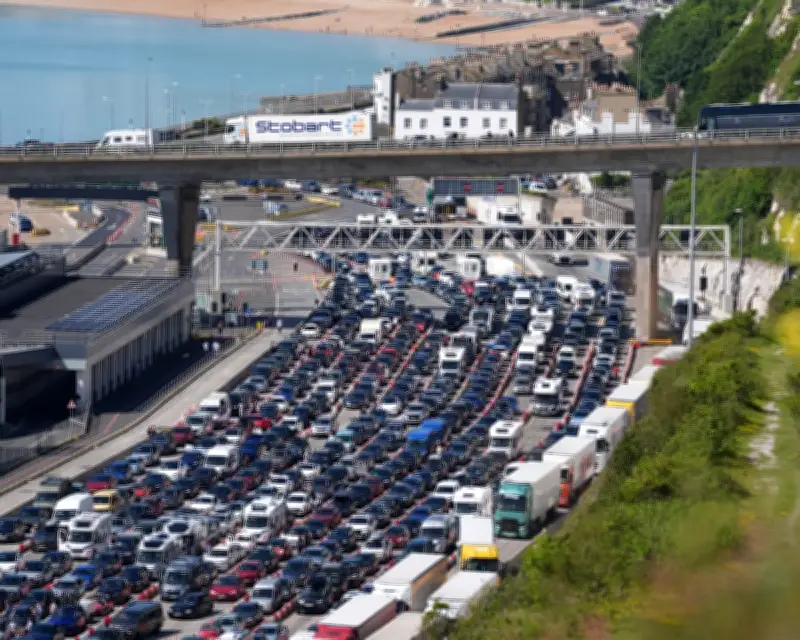
The Port of Dover could descend into 'utter chaos' when the European Union's new biometric border system comes into force, according to a cross-party group of MPs, who have warned of severe delays and significant economic damage.
EES Implementation Concerns
The EU's Entry/Exit System (EES), which will require non-EU travellers to register their fingerprints and a facial image upon entry into the Schengen area, is scheduled to launch later this year. The system is designed to enhance border security and track overstayers, but MPs fear it will cause major disruption at the Port of Dover, a critical gateway for trade and tourism between the UK and continental Europe.
The House of Commons European Scrutiny Committee has published a report warning that the port is 'uniquely vulnerable' to the new requirements, as it handles a high volume of coach and car passengers who must all be processed individually. Unlike airports, where passengers can be processed in a more controlled environment, the port's layout and infrastructure are ill-suited to the new checks, the committee said.

'Utter Chaos' Predicted
Committee chair Sir William Cash said: 'The government and the EU must act now to prevent utter chaos at Dover. The current plans are simply not fit for purpose and risk causing gridlock that will harm businesses and holidaymakers alike.'
The report warns that delays could be 'catastrophic' for the local economy and for supply chains, with lorries potentially queuing for hours or even days. The port handles around 120,000 lorries and 2.5 million passengers annually, and even minor disruptions can have a ripple effect across the region.
Government Response and Mitigation Efforts
The UK government has acknowledged the concerns and is working with French and EU authorities to mitigate the impact. A spokesperson for the Department for Transport said: 'We are aware of the challenges posed by EES and are engaging closely with port operators and our European partners to ensure a smooth implementation. We are investing in new technology and infrastructure to minimise disruption.'
However, the committee criticised the government for a lack of transparency and for failing to provide a clear timeline for when the system will be operational. The report also called for a contingency plan to be published urgently, including measures to manage queues and protect vulnerable passengers.
Economic and Business Impact
Business groups have also raised the alarm, warning that the delays could cost the UK economy millions of pounds. The Road Haulage Association said that any prolonged disruption at Dover would 'severely impact' the supply of goods, including fresh produce and medical supplies.
The British Chambers of Commerce added that the government must 'get a grip' on the situation to avoid a repeat of the post-Brexit border chaos seen in 2021. 'Businesses cannot afford another bout of disruption at our borders,' a spokesperson said.
The EES is expected to be implemented in stages, with a full rollout likely by the end of 2026. However, the committee stressed that 'time is running out' to address the issues at Dover and called for an urgent meeting between UK ministers and EU officials.