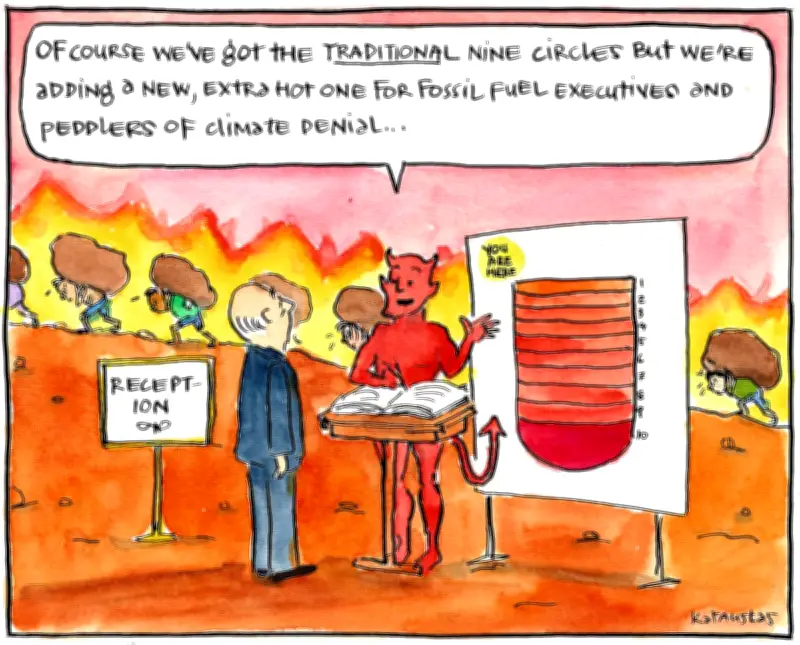
A recent analysis has laid bare the staggering concentration of responsibility for global warming: just 90 companies are accountable for nearly two-thirds of all industrial greenhouse gas emissions since the dawn of the fossil fuel era. Yet, as the planet continues to heat up and extreme weather events intensify, these corporate giants have so far escaped any significant legal or financial reckoning.
The Carbon Majors Report
The findings come from the Carbon Majors Database, a research project that tracks the emissions of the world's largest fossil fuel producers. The report, published by the Climate Accountability Institute, updates previous data showing that from 1854 to 2022, these 90 entities—including state-owned oil companies, multinational corporations, and coal producers—have emitted 63% of the world's carbon dioxide and methane.
Among the top emitters are Saudi Aramco, Gazprom, Chevron, ExxonMobil, and Coal India. Together, they have released more than 1.5 trillion tonnes of CO2 equivalent into the atmosphere. The report's lead author, Richard Heede, noted that "these companies have known for decades that their products cause global warming, yet they continued to extract and sell fossil fuels at record levels."

Legal and Moral Responsibility
The question of accountability has become a central theme in climate litigation. Several municipalities and states have filed lawsuits seeking damages from major oil companies for costs associated with climate change, such as sea-level rise and extreme weather. In 2023, a landmark case in the Netherlands ordered Shell to cut its emissions by 45% by 2030, but the company has appealed. Meanwhile, in the United States, cases brought by cities like San Francisco and New York have been dismissed or are pending.
"The disconnect between the scale of the harm and the lack of consequences is staggering," said Dr. Lisa Benjamin, a climate law expert at Lewis & Clark Law School. "These companies have contributed to a global crisis, and yet they continue to operate without paying for the damage they've caused."
Economic and Environmental Impact
The economic toll of climate change is mounting. According to the World Meteorological Organization, weather-related disasters have cost the global economy $4.3 trillion over the past 50 years. The 2022 floods in Pakistan alone caused $30 billion in damages. The report underscores that a small number of actors are responsible for a disproportionate share of these costs.
Environmental groups argue that the fossil fuel industry has engaged in a decades-long campaign to mislead the public about the risks of global warming. A study by the Harvard Kennedy School found that ExxonMobil's internal research accurately predicted climate change as early as 1977, but the company publicly cast doubt on the science.
Pathways to Accountability
Several approaches have been proposed to hold these companies accountable. These include carbon taxes, divestment campaigns, and legal action. In 2023, the International Court of Justice began hearing arguments on whether countries can be held liable for climate change, which could set a precedent for corporate liability.
"The moral imperative is clear," said Heede. "Those who have profited most from fossil fuels must bear the cost of the transition to a clean energy economy." However, the political will to enforce such measures remains weak, particularly in countries where fossil fuel companies wield significant influence.
As the world grapples with record-breaking heatwaves, wildfires, and storms, the question posed by the Guardian's editorial cartoon becomes ever more urgent: will those responsible for global warming ever face the heat?