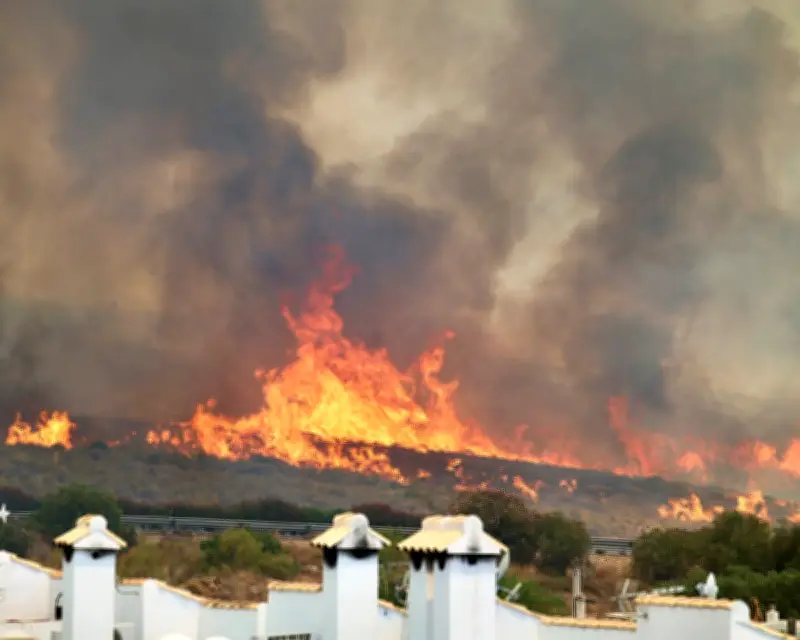
A devastating wildfire in the Almeria region of southern Spain has claimed at least 12 lives, marking one of the deadliest blazes in the country's recent history. The fire, which broke out on July 9, 2026, has scorched over 15,000 hectares of land, forcing the evacuation of thousands of residents from their homes. Emergency services continue to battle the flames, which are being driven by strong winds and record-high temperatures.
Unprecedented Scale and Speed
The wildfire, described by local authorities as 'unprecedented' in its intensity and speed, has destroyed more than 200 homes and critical infrastructure. According to the regional government of Andalusia, the fire advanced at a rate of 10 kilometers per hour, catching many residents off guard. 'We have never seen a fire move this fast in this region,' said Maria Sanchez, head of the Andalusian emergency response unit. 'The combination of extreme drought and high temperatures has created perfect conditions for such a disaster.'
Climate Change Link
Experts have been quick to point to climate change as a key factor behind the severity of the blaze. Spain has experienced its driest spring in over 50 years, with rainfall levels 60% below average. Temperatures in Almeria reached 45°C on the day the fire started, breaking previous records. 'This is a clear signal of a warming climate,' said Dr. Javier Martinez, a climate scientist at the University of Barcelona. 'The Mediterranean region is becoming a hotspot for wildfires, and we need to adapt our strategies accordingly.'

Evacuations and Emergency Response
More than 5,000 people have been evacuated from affected areas, including the towns of Nijar and Carboneras. Emergency services, including 1,500 firefighters and 20 water-dropping aircraft, have been deployed to contain the fire. However, strong winds and difficult terrain have hampered efforts. The Spanish government has declared a state of emergency in the region and requested assistance from the European Union's Civil Protection Mechanism.
Impact on Communities and Economy
The fire has devastated local communities, destroying farmlands, olive groves, and livestock. The agricultural sector in Almeria, known for its greenhouse production, has suffered significant losses. 'This is a catastrophe for our farmers,' said local mayor Juan Lopez. 'Many families have lost everything. We need immediate support to rebuild.' The economic impact is expected to run into hundreds of millions of euros, with the tourism season also affected as popular coastal areas are closed to visitors.
Long-Term Outlook
As firefighters continue to battle the blaze, officials warn that the risk of further wildfires remains high due to ongoing heatwave conditions. Climate projections indicate that southern Spain could face more frequent and intense wildfires in the coming decades. 'We need to invest in prevention and adaptation measures,' said Sanchez. 'This tragedy is a wake-up call for us all.' The Spanish government has announced plans to allocate additional funds for firefighting resources and reforestation efforts.