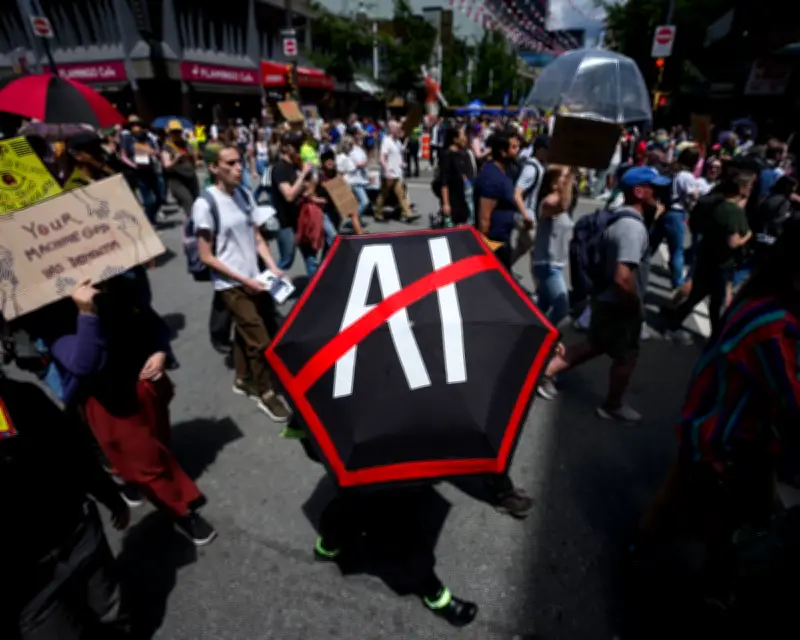
A prominent voice in the technology sector has sparked debate by questioning society's fixation on artificial intelligence, arguing that basic human needs such as clean water should take precedence over digital innovation. In a recent commentary, the figure highlighted the stark contrast between the rapid advancement of AI and the persistent global crisis of water scarcity.
The Core Argument: Prioritizing Essentials Over Innovation
The commentary, published on July 1, 2026, asserts that while AI offers numerous benefits, it is not a necessity for human survival, unlike clean water. The author points to the billions of people worldwide who lack access to safe drinking water, a crisis that claims more lives annually than many wars or diseases. According to the United Nations, approximately 2.2 billion people lack access to safely managed drinking water services, a statistic that underscores the urgency of the issue.
AI's Environmental Footprint
The piece also criticizes the environmental cost of AI development. Data centers that power AI models consume vast amounts of water for cooling, exacerbating water stress in drought-prone regions. A single large language model training can consume millions of litres of water, raising ethical questions about resource allocation. The author notes that tech companies often tout their sustainability goals but fail to address the water consumption embedded in their AI infrastructure.

A Call for Balanced Innovation
Rather than rejecting AI outright, the commentary calls for a more balanced approach to innovation. It suggests that tech leaders should redirect some of their resources toward solving water scarcity, such as improving desalination technologies, water recycling systems, and smart irrigation. The author states, "We can live without AI, but can we live without clean water? The answer is obvious, yet our priorities are skewed."
Industry Reactions and Counterarguments
The article has drawn mixed reactions from the tech community. Some executives defend AI's potential to address environmental challenges, including water management. For instance, AI can optimize water distribution networks and detect leaks. However, critics argue that these benefits are often overshadowed by the industry's own resource consumption. A spokesperson for a major AI research lab responded, "AI is not the enemy; it is a tool that, if used responsibly, can help solve the water crisis. But we must acknowledge and mitigate its environmental impact."
Global Water Crisis in Numbers
The article emphasizes the scale of the water crisis: by 2025, half of the world's population is projected to live in water-stressed areas. Already, 4 billion people experience severe water scarcity at least one month per year. The economic impact is also staggering, with water shortages costing the global economy an estimated $500 billion annually. These numbers, the author argues, demand immediate action rather than speculative investments in AI.
Conclusion: Rethinking Technological Priorities
The commentary concludes by urging policymakers, investors, and the public to reconsider what constitutes progress. It warns against a future where AI is celebrated while basic human needs go unmet. As the author puts it, "The true measure of our civilization is not how advanced our algorithms are, but how well we ensure the fundamentals for all." The article serves as a poignant reminder that technology should serve humanity, not distract from its most pressing challenges.