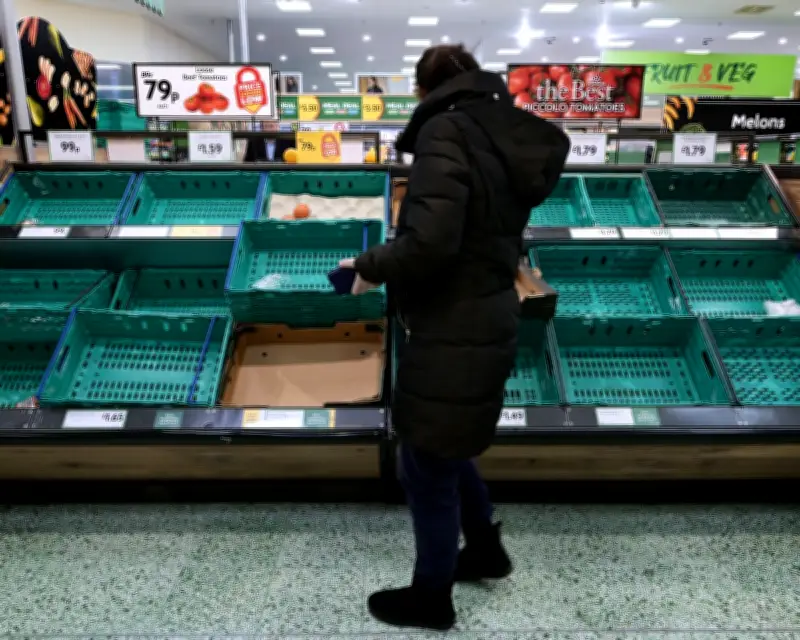
A stark new report from the UK government has identified ecosystem collapse as a direct and escalating threat to national food security, warning that without urgent intervention, the country could face severe disruptions to its food supply chains.
Report Findings: A Clear and Present Danger
The report, commissioned by the Department for Environment, Food and Rural Affairs (Defra), concludes that the degradation of natural systems—including soil health, pollination networks, and water cycles—poses a risk comparable to other national security threats. It states that the loss of biodiversity and ecosystem services could reduce UK agricultural productivity by up to 20% within the next decade, leading to higher food prices and increased reliance on imports.
According to the report's lead author, Professor Jane Thornton of the University of Oxford, “The evidence is overwhelming. We are sleepwalking into a crisis where the very foundations of our food system are being eroded. This is not a distant problem; it is happening now and accelerating.”

Key Threats Identified
The report highlights several critical areas of concern. Soil degradation, driven by intensive farming and climate change, is causing a loss of fertile land at an alarming rate. Pollinator populations, essential for many crops, have declined by nearly 40% in the last two decades. Meanwhile, water scarcity is becoming more frequent, with droughts expected to become three times more common by 2050.
These factors combine to create a systemic risk that could undermine the UK's ability to feed itself. The report notes that the UK currently imports about 50% of its food, making it vulnerable to global shocks. A collapse in domestic ecosystems would exacerbate this dependency.
Government Response and Recommendations
In response, the government has pledged to develop a National Ecosystem Restoration Strategy, with a target to restore 30% of degraded land by 2030. The report recommends investing in regenerative agriculture, rewilding projects, and green infrastructure to rebuild natural capital. It also calls for a shift in agricultural subsidies to reward farmers who adopt sustainable practices.
Environment Secretary Michael Gove said, “This report is a wake-up call. We must treat the health of our ecosystems as a matter of national security, just as we do with defence or energy. The cost of inaction is far greater than the cost of action.”
Economic and Social Implications
The economic stakes are high. The report estimates that ecosystem degradation already costs the UK economy £2.5 billion annually in lost agricultural output and increased flood damage. If left unchecked, these costs could rise to £10 billion per year by 2040. Food price inflation, already a concern, could accelerate, hitting low-income households hardest.
Consumer groups have expressed alarm. A spokesperson for the Food Foundation said, “This report confirms what many of us have feared: our food system is fragile. The government must act quickly to protect both nature and the public from the consequences of its collapse.”
International Context and Future Outlook
The UK is not alone in facing these challenges. Similar assessments have been made by the UN's Intergovernmental Science-Policy Platform on Biodiversity and Ecosystem Services (IPBES), which warns that global ecosystem collapse could lead to food shortages for millions. However, the UK report is notable for its explicit framing of ecosystem health as a national security issue.
Looking ahead, the report outlines a set of milestones for 2030, including halting the decline of priority species, restoring 500,000 hectares of peatland, and ensuring that all new agricultural policies incorporate biodiversity targets. It warns that without these measures, the UK's food security will be increasingly compromised.
The report concludes with a call for cross-departmental cooperation, urging the Treasury, Home Office, and Ministry of Defence to integrate ecosystem resilience into their planning. As Professor Thornton noted, “This is not just an environmental issue. It is about the future of our nation's ability to sustain itself.”