A federal appeals court has overturned the Trump administration's weaker standards for soot pollution, reinstating stricter limits set under the Obama era. The ruling, issued by the US Court of Appeals for the District of Columbia Circuit, found that the Environmental Protection Agency (EPA) under President Donald Trump had arbitrarily weakened the National Ambient Air Quality Standards for fine particulate matter, known as PM2.5.
Court Ruling Details
The court ruled 2-1 that the EPA failed to justify its decision to keep the annual standard for PM2.5 at 12 micrograms per cubic meter, rather than tightening it as recommended by its own scientific advisers. The EPA had also left the 24-hour standard unchanged at 35 micrograms per cubic meter. The judges said the agency ignored evidence that stricter limits would save thousands of lives annually.
According to the court, the EPA's reasoning was "arbitrary and capricious" because it did not adequately explain why it rejected the advice of the Clean Air Scientific Advisory Committee, which had recommended lowering the annual standard to between 11 and 12 micrograms per cubic meter. The ruling remands the rule back to the EPA for reconsideration.

Impact on Public Health
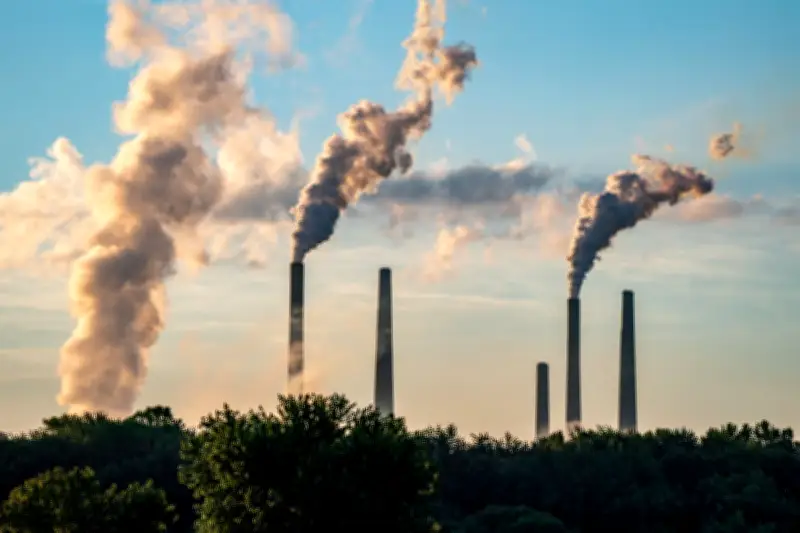
Fine particulate matter, or soot, comes from sources such as power plants, vehicle exhaust, and industrial facilities. Exposure to PM2.5 is linked to respiratory and cardiovascular diseases, premature death, and other health problems. The Obama-era standard was set in 2012 after a review found that reducing soot pollution would prevent up to 15,000 premature deaths each year.
Environmental and public health groups hailed the ruling as a victory for science-based policy. "This decision is a critical step toward protecting communities from dangerous air pollution," said a spokesperson for the American Lung Association. "The court recognized that the Trump EPA's refusal to strengthen soot standards ignored the overwhelming evidence of harm."
Reactions and Next Steps
The EPA under the Biden administration is expected to propose new, stricter soot standards. The agency has already signaled that it will revisit the rule. Meanwhile, industry groups expressed disappointment, arguing that tighter limits could impose economic burdens. The National Association of Manufacturers said it was reviewing the ruling.
The case is one of several legal challenges to Trump-era environmental rollbacks. The court's decision does not immediately impose new limits but requires the EPA to reconsider the standards with proper justification. The agency must complete the review within a reasonable timeframe, likely within the next two years.