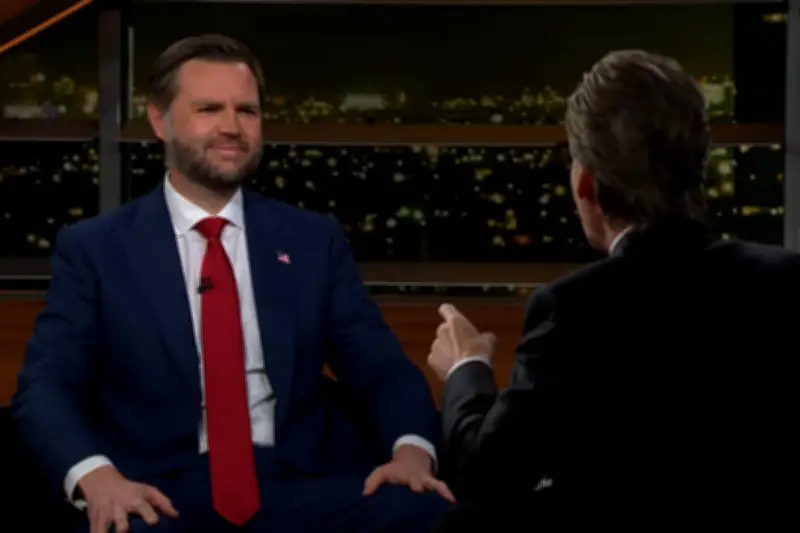
US Vice-President JD Vance declared on Friday that the United States emerges victorious “either way” in negotiations with Iran, citing the destruction of Iran’s nuclear capabilities and its diminished regional standing. Appearing on HBO’s Real Time with Bill Maher, Vance stated, “If we make the final deal, then great. If we don’t make the final deal, their nuclear program is still destroyed. They’re still much weaker as a country, so my attitude is America wins either way.”
Escalation in the Strait of Hormuz
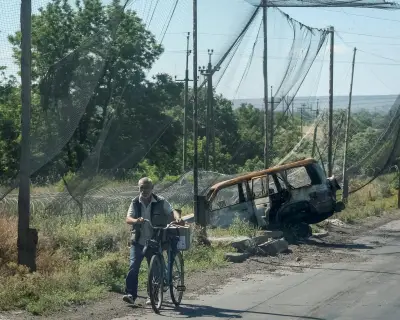
Vance’s comments came just hours before fresh military strikes were exchanged between the US and Iran near the strategic Strait of Hormuz. A tanker was struck by a projectile in the waterway, and both nations launched retaliatory attacks. Washington confirmed hitting Iranian targets overnight, while Iran responded by striking targets linked to US forces on Saturday. The hostilities escalated after an attack on a cargo ship on Thursday.
Vance noted that increased oil flow through the strait signals “something real going on,” but he acknowledged the fragility of the ceasefire deal brokered between Donald Trump and Iranian President Masoud Pezeshkian under a 60-day memorandum of understanding (MOU). “It is always going to be a little messy when you’re dealing with the Iranians,” he admitted.

Nuclear Program Claims Under Scrutiny
During the interview, which primarily promoted his new memoir Communion: Finding My Way Back to Faith, Vance defended the administration’s negotiation strategy. He pointed to falling oil prices—down to $73 a barrel—and argued that Iran’s ability to enrich uranium had been “functionally destroyed.” When pressed by Maher, Vance retorted, “What part of it is not destroyed? The thing that you have to destroy is their ability to enrich uranium, which has been destroyed.”
However, critics of the MOU contend that Iran still possesses a stockpile of 60%-enriched uranium, which, while potentially inaccessible, remains within the country. Rafael Grossi, director general of the International Atomic Energy Agency (IAEA), stated on Friday that reducing or transferring that stockpile abroad remains a viable option as the US and Iran pursue a comprehensive agreement.
Olive Branch and Historical Defense
Vance extended an olive branch to Tehran, saying, “If they are willing to give up nuclear weapons ambitions for the long term, then the United States is willing to fundamentally transform our relationship with that country. If they’re willing to change, we’re willing to change too; if they’re not willing to change, we still fundamentally have all the cards and I think that’s a good place to be.”
The vice-president’s media appearance followed a visit to the Nixon Presidential Library and Museum, where he defended the disgraced former president. Vance argued that Nixon’s legacy—including landmark nuclear arms deals with the Soviet Union and opening relations with China—deserves a renaissance. “If Watergate happened tomorrow, it would be like a 12-hour news story. The idea that it would have taken down a presidency is crazy,” he said.
Immigration Enforcement Sidestepped
On Real Time, Vance deflected Maher’s suggestion that the administration’s immigration enforcement policies had gone too far. “You can’t do a law enforcement operation like that without having some situations that are recorded like that,” Vance responded. “I don’t think there was an easy way to do this.”