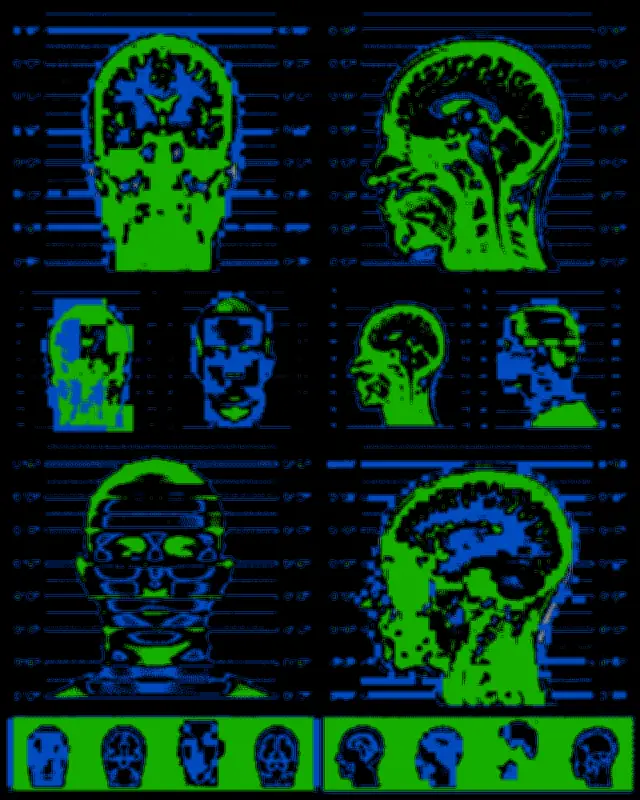
A prominent neuroscientist has launched a scathing critique of the United States legal system, arguing that it systematically fails to consider the role of brain injuries in violent behavior. Dr. Emily R. Johnson, a researcher at the University of California, Los Angeles, presented evidence showing that traumatic brain injuries (TBI) are disproportionately common among incarcerated individuals, yet courts rarely admit such evidence as mitigating factors in sentencing.
Brain Injuries and Criminal Behavior
According to Dr. Johnson's research, up to 60% of inmates in US prisons have experienced at least one TBI, compared to roughly 12% of the general population. Her studies indicate that damage to the prefrontal cortex—a region critical for impulse control and decision-making—can significantly increase the likelihood of aggressive or violent acts. 'We have a legal system that treats violent crime as a purely moral failing, ignoring decades of neuroscience that shows brain damage can fundamentally alter behavior,' she said.
Legal System Resistance
Despite mounting scientific evidence, US courts have been reluctant to incorporate brain injury data into legal proceedings. Defense attorneys often struggle to introduce neuroimaging or expert testimony on TBI, facing objections that such evidence is 'prejudicial' or 'not well-established.' Dr. Johnson pointed to a 2023 case in Texas where a judge excluded brain scan evidence from a defendant with a documented frontal lobe injury, later convicted of assault. 'The law is stuck in the 19th century while science has moved on,' she added.

Call for Reform
Dr. Johnson is advocating for mandatory brain injury screenings for all defendants charged with violent crimes, as well as judicial training on neuroscience. She is collaborating with the American Bar Association to draft model legislation that would require courts to consider TBI evidence during both trial and sentencing. 'This isn't about excusing violence—it's about ensuring justice is truly informed. A person with a damaged brain may not have the same capacity for control as someone without,' she explained.
Impact on Public Safety
Critics argue that such reforms could undermine public safety by reducing accountability. However, Dr. Johnson contends that ignoring brain injuries leads to higher recidivism. 'If we don't treat the underlying neurological cause, we're just warehousing people without addressing why they reoffend,' she said. Her research shows that inmates with untreated TBI are 30% more likely to be rearrested within three years of release.
Broader Implications
The debate has sparked interest among legal scholars and policymakers. Senator Linda Park (D-California) has announced plans to introduce a bill funding pilot programs for TBI screening in federal courts. Meanwhile, the National District Attorneys Association has expressed skepticism, warning that the science is 'not yet ready for prime time.' Dr. Johnson remains undeterred: 'We have enough evidence to act now. Every day we delay, another person with a brain injury is sentenced without the full picture.'