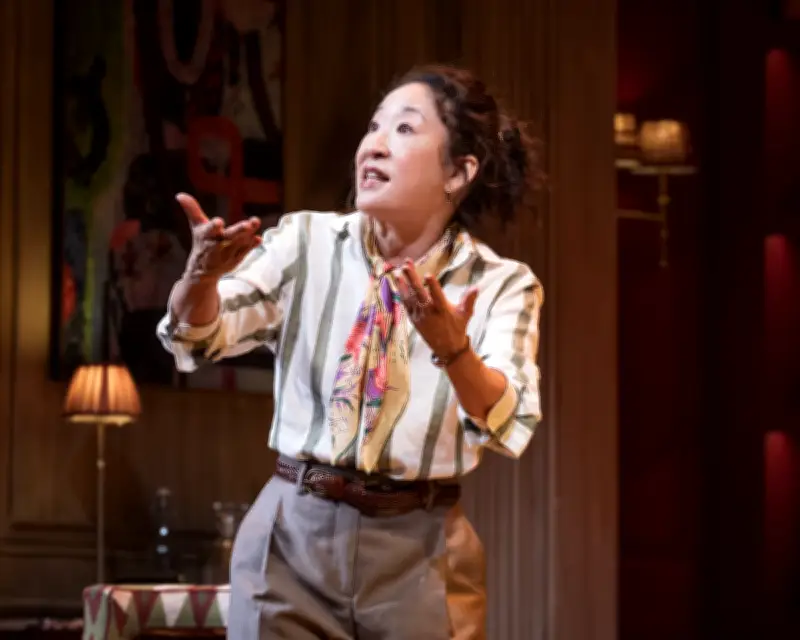
Sandra Oh takes on the role of Alice, a gender-reversed and Americanised version of Molière's Alceste, in Martin Crimp's modern adaptation of The Misanthrope at the National Theatre in London. Oh, known for her roles in Killing Eve and Grey's Anatomy, portrays a bestselling writer in a stylish trouser suit who embodies the misanthrope's uncompromising truth-telling.
A Seductive but Imperfect Adaptation
Crimp, who previously reimagined Cyrano de Bergerac with a beat-boxing twist, aims to make this 17th-century classic seductive for modern audiences. The play is stuffed full of debates about female empowerment, patriarchy, digital rage, misinformation, and the hollow language of acceptance, with jabs at theatre and bad writing. However, the satire often feels sprawling and over-the-top, biting off more than it can chew.
Human Drama Shines Amid Satire
The production excels in its human drama, particularly in the jittery insecurity Alice feels in her relationship with the younger Stefan (Tom Mison), an actor and former alcoholic going through an acrimonious divorce. The tenderness between Alice and her best friend John (Paul Chahidi) also resonates. In these scenes, the play flies, and the comedy of manners feels like an interruption. Oh delivers riveting acting, bringing heart, fire, vulnerability, and comic timing.

Direction and Design
Indhu Rubasingham's direction is fine, set against Robert Jones's drawing rooms that blend modern opulence with 17th-century baroque edges. In the final moments, the drawing room lifts to reveal candles, chandeliers, and bustled gowns in a sea of blackness, capturing a costume party that departs from realism into surrealism, leaving the audience disturbed.
An Imperfect but Heroic Production
As a production, it is imperfect but heroic in its attempt to address how we live and how we might escape the toxicity of the digital world. However, like Molière's Alceste, no one else is willing to find a free, honest corner of the earth. Alice's flight from dishonesty feels less like liberation than self-elected banishment. The play runs at the National Theatre until 1 August.