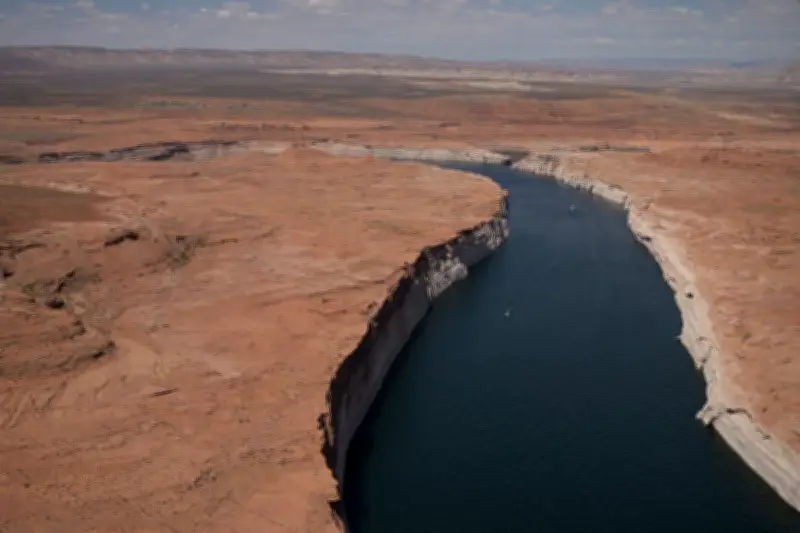
The water level at Lake Powell, the second-largest reservoir in the United States, has plummeted to a record low of 3,525 feet above sea level, triggering an emergency response from federal authorities. The decline, driven by a relentless megadrought and over-allocation of Colorado River water, threatens water supplies and hydropower generation for millions of people across the Southwest.
Emergency Measures Announced
The U.S. Bureau of Reclamation declared a 'Tier 2a' shortage condition on Wednesday, mandating immediate water use reductions for Arizona, Nevada, and California. Under the plan, Arizona will face a 21% cut in its Colorado River allocation, Nevada 12%, and California 7%. The measures aim to prevent the reservoir from falling below the minimum power pool of 3,490 feet, at which Glen Canyon Dam would cease generating electricity.
'This is a stark wake-up call,' said Bureau Commissioner Camille Touton in a press conference. 'We are facing conditions that have never been seen in the modern history of the Colorado River. Without aggressive action, the system faces collapse.'

Impacts on Water and Power
Lake Powell currently holds just 24% of its capacity, down from 30% a year ago. The reservoir provides water to 40 million people and irrigates 5.5 million acres of farmland. Additionally, Glen Canyon Dam generates enough electricity to power 1.5 million homes annually. If levels drop below the minimum power pool, the dam would go offline, exacerbating the region's energy crisis.
'The loss of hydropower would be catastrophic,' said Sarah Porter, director of the Kyl Center for Water Policy at Arizona State University. 'It would raise electricity costs and increase reliance on fossil fuels, undermining climate goals.'
Long-Term Outlook
Scientists attribute the crisis to a combination of climate change, which has reduced snowpack in the Rocky Mountains, and decades of overuse. The Colorado River Basin has experienced 22 years of drought, the worst in 1,200 years. Negotiations among the seven basin states over long-term water cuts have stalled, raising fears of federal intervention.
'We are in a race against time,' said John Entsminger, general manager of the Southern Nevada Water Authority. 'The current trajectory is unsustainable. We need all states to come to the table with meaningful reductions.'
Reactions and Next Steps
Environmental groups have called for more aggressive conservation measures, including mandatory cuts for agriculture, which uses 80% of the river's water. The Biden administration has allocated $4 billion in drought relief from the Inflation Reduction Act, but officials say more funding and policy changes are needed.
'This is not just a Western problem; it's a national crisis,' said Senator Catherine Cortez Masto of Nevada. 'The federal government must do everything in its power to protect the Colorado River system.'