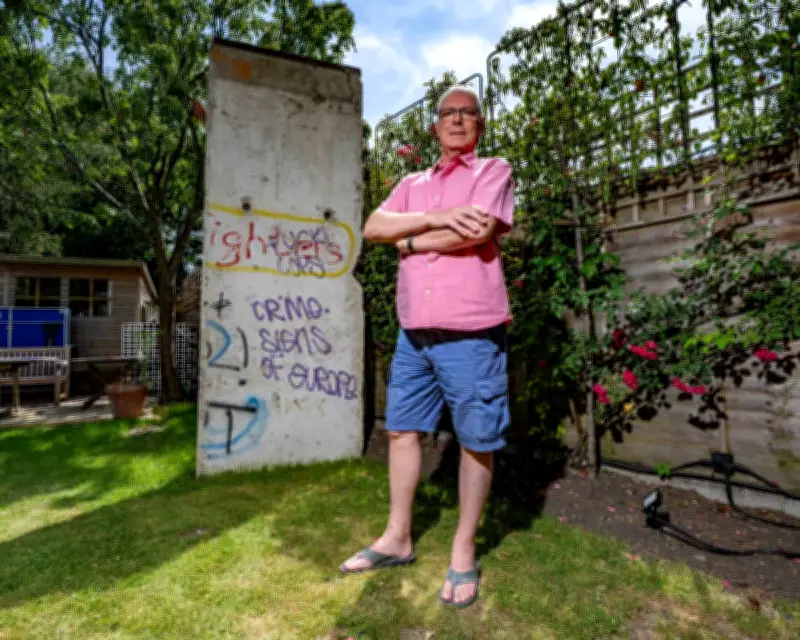
A full-scale replica of the Berlin Wall has been installed in South London, dividing a residential area and drawing comparisons to the original Cold War barrier that split Germany for nearly three decades.
What Happened
The 3.6-metre-high concrete structure, stretching for 1.2 kilometres through the suburb of Peckham, was erected overnight by a private arts organisation, Berlin Wall Project UK. The barrier cuts through a park and a housing estate, separating a playground from a shopping centre and forcing residents to take long detours to reach local amenities.
Details of the Installation
The replica is made of 1,200 concrete panels, each weighing 2.7 tonnes, and is guarded by 24-hour security patrols and CCTV cameras. The project's director, Klaus Richter, said the installation is meant to be a "living art piece" that reminds Londoners of the division that once tore Europe apart. "We want people to feel the frustration and inconvenience that Berliners endured for 28 years," Richter told the Guardian. "It is a powerful educational tool."

Impact on the Community
Residents have reacted with anger and confusion. Local mother Sarah Thompson, 34, said: "My kids can't get to the park without walking 20 minutes around this thing. It's ridiculous. They say it's art, but it's a nightmare for us." The barrier has also split the local business district, with shop owners reporting a 30% drop in foot traffic since the wall went up. The Peckham Chamber of Commerce has called for its immediate removal, citing the economic damage.
Political Reactions
The installation has drawn criticism from local politicians. MP for Camberwell and Peckham, Harriet Harman, described it as "an insensitive and disruptive stunt that has no place in a diverse and modern London." She has demanded that Southwark Council revoke the planning permission, which was granted under a temporary art exemption. The council has launched an investigation into whether the structure violates health and safety regulations.
Historical Context
The original Berlin Wall was erected by East Germany in 1961 to prevent citizens from fleeing to the West. It was a symbol of Cold War division until its fall in 1989. The replica in London is part of a global tour that has previously visited Paris, New York, and Tokyo, but this is the first time it has been installed in a residential area rather than a public square or museum.
Conclusion
As protests continue and legal challenges mount, the future of the wall remains uncertain. The arts organisation has stated it plans to keep the structure in place for at least six months, but residents are mobilising for its early removal. The debate highlights the tension between public art and community needs in urban spaces.