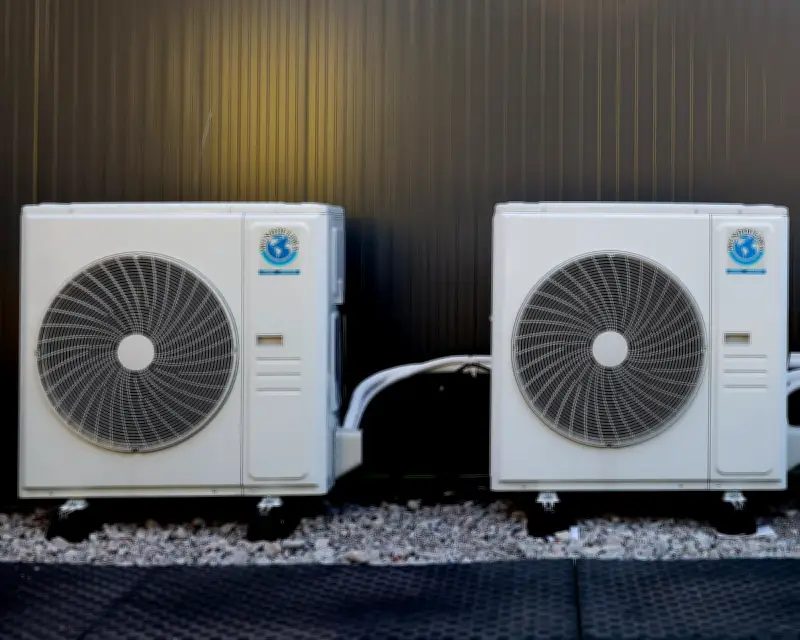
As a record-breaking heatwave sweeps across Europe, a new front has opened in the continent's culture wars: air conditioning. The debate pits those who see AC as a necessity for comfort and health against environmentalists who warn that increased usage will accelerate climate change.
AC Adoption Surges in Traditionally Cooler Regions
Countries like Germany, France, and the UK, where air conditioning was once rare, are now seeing a surge in installations. According to the International Energy Agency, Europe's AC stock could triple by 2050, driven by rising temperatures and more frequent heatwaves. In 2025, AC sales in Germany jumped 25% compared to the previous year, while in the UK, installations rose by 30%.
This trend alarms climate activists, who point out that AC units consume vast amounts of electricity, often generated from fossil fuels, and release potent greenhouse gases. The European Environment Agency estimates that AC-related emissions could account for up to 10% of the EU's total emissions by 2050 if left unchecked.

The Comfort vs. Climate Dilemma
Proponents of AC argue that it is a matter of public health. Dr. Maria Schmidt, a public health official in Berlin, stated, "During extreme heat, air conditioning can be life-saving, especially for the elderly and vulnerable. It's not a luxury; it's a necessity." In Paris, where temperatures reached 42°C (107.6°F) last week, hospitals reported a 20% increase in heat-related admissions.
However, critics say the solution is not to cool individual buildings but to redesign cities for heat resilience. Urban planner Jean-Pierre Lefevre of the French Environment Agency noted, "We need to invest in green roofs, reflective materials, and better insulation. Air conditioning is a short-term fix that worsens the long-term problem."
Government Policies and Public Opinion
Governments are caught in the middle. The UK recently introduced subsidies for heat pumps and passive cooling, while France has mandated that new public buildings incorporate natural ventilation. Yet, public opinion is divided. A 2025 Eurobarometer survey found that 55% of Europeans support stricter regulations on AC use, while 45% oppose them, citing personal freedom.
In Spain, where AC is more common, a new law requires commercial buildings to set thermostats no lower than 27°C (80.6°F) in summer. The measure has sparked protests from business owners, who claim it hurts productivity. Conversely, environmental groups argue it does not go far enough.
The Economic and Environmental Costs
The economic impact is significant. The European Commission estimates that the EU spends €10 billion annually on AC-related electricity, a figure that could rise to €30 billion by 2050. This strains power grids and increases reliance on imported energy. During the current heatwave, France had to import electricity from Germany to meet demand.
Environmentalists advocate for alternatives like district cooling, which uses centralized chillers to cool multiple buildings efficiently. Stockholm's district cooling system, for example, cuts energy use by 50% compared to individual AC units. But such systems require upfront investment and are not feasible everywhere.
Looking Ahead
As heatwaves become more frequent, the AC culture war is likely to intensify. The EU is considering a labeling system for AC units, similar to that for appliances, to encourage energy-efficient models. Meanwhile, cities like Milan and Barcelona are experimenting with cooling centers and public water fountains to reduce reliance on AC.
The debate reflects a broader tension between immediate comfort and long-term sustainability. As one climate activist put it, "We cannot air-condition our way out of the climate crisis. We need to change how we live."