The first round of face-to-face talks between the United States and Iran concluded in Switzerland on Monday, mediators confirmed, following a tense opening marked by Tehran's announcement that it had again closed the Strait of Hormuz and US President Donald Trump's renewed threats to resume attacks on Iran.
Mediators Announce Roadmap for Final Deal
Qatar and Pakistan, acting as mediators, reported that Washington and Tehran agreed to a roadmap aimed at reaching a final deal within 60 days. Technical discussions will continue for the remainder of the week at the Swiss mountain resort of Buergenstock. The parties also agreed to a mechanism to end Israel's war in Lebanon and opened a communications line to help ensure safe passage for commercial ships through the Strait of Hormuz, according to a joint statement.
Just before the high-stakes talks officially began on Sunday, Fox News reported that Trump said he had told Iranian officials regarding the Strait of Hormuz: “You close it and you won’t have a country. You won’t even make it back to your fucking country.” Trump also reiterated an earlier threat that the US would take over the strait and possibly charge a toll of its own.

Iranian Walkout and Tense Opening
The talks had a tense start, with Iranian negotiators walking out in protest against Trump's threats. Iranian state media reported that the talks entered a “difficult phase” and recessed after the “publication of an insulting message by the US president.” However, high-level negotiations continued before concluding in the early hours of Monday. Pakistan and Qatar confirmed that technical talks between the two sides would continue for the rest of the week.
According to Iran's Tasnim news agency, after Trump's threats became public, the Iranian delegation refused to return to the negotiation room, though messages were still exchanged via Pakistani and Qatari mediators. Iranian Foreign Minister Abbas Araghchi stated on social media that his country had secured waivers for oil and petrochemical exports, the release of some frozen assets, and the launch of a reconstruction and development plan for Iran. The US did not immediately comment on these claims.
Strait of Hormuz Closure and Regional Context
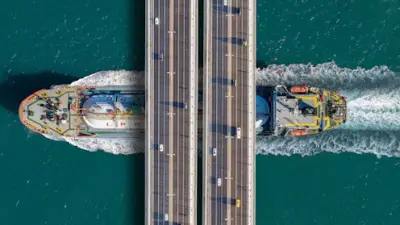
Iran announced over the weekend that it had again stopped maritime traffic through the Strait of Hormuz in response to continued fighting in Lebanon between Hezbollah and Israel. Tehran also stated that Sunday's talks would not cover substantive issues such as Iran's nuclear program. Data from analytics firm Kpler showed that five vessels passed the strait on Sunday, a sharp drop from the 26 ships spotted a day earlier. The data may exclude vessels that switch off their transponders while traveling in the Gulf.
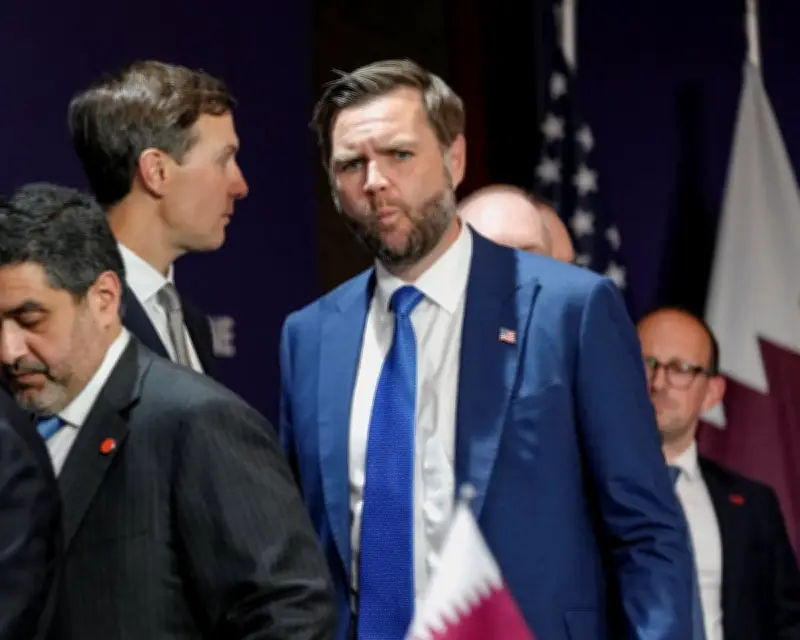
In Switzerland, US Vice-President JD Vance played down the impact of the violence in Lebanon, saying progress had been made toward ending hostilities there. “These things are always a little bit messy,” said Vance, who led the American delegation. In the US, Trump threatened to resume attacks on Iran if it did not rein in its allies. “Iran must immediately stop their highly paid PROXIES in Lebanon from causing trouble,” Trump said on social media, apparently referring to Hezbollah. “If they don’t, we’ll hit Iran very hard again, just like we did last week, only harder!!!” Despite Trump's threats, Vance told reporters the US president had “asked us to turn over a new leaf to transform our relationship with the people of Iran.”
Lebanon Calm and Return of Residents
Sunday appeared to be the quietest day in Lebanon for some time, with no reports of major violence by nightfall, following two days of heavy Israeli strikes that killed many people, including civilians, and fire from Hezbollah fighters on Israeli positions. Reuters journalists in southern Lebanon observed some of the heaviest traffic since the memorandum of understanding was signed, with residents returning to their homes, some waving Hezbollah flags.