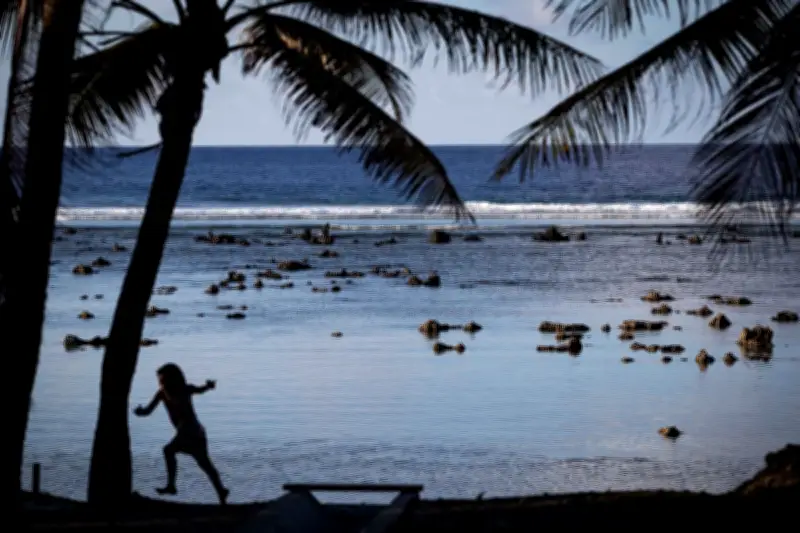
Nauru, the world's smallest republic, may soon undergo a significant transformation: renaming itself “Naoero.” The proposed change aims to break from the island’s colonial past and honor its Indigenous heritage.
The switch would “more faithfully honour our nation’s heritage, our language, and our identity,” said President David Adeang in a speech to parliament in January. After Nauru’s parliament passed the proposal unopposed, the island—home to an estimated 13,000 people—will hold a referendum to decide whether to make the change official.
Why Change the Name?
“Naoero,” pronounced Now-ero, is the term Nauruans use in their own language. “Nauru,” commonly pronounced Now-roo, became the island’s official name because its Indigenous name “could not be properly pronounced by foreign tongues,” the government stated, adding that it was “changed not by our choice, but for convenience.”

The remote island country, located about 3,000 km northeast of Australia and similar in size to London’s Westminster at 21 square kilometers, has a history of name changes. In 1798, it was christened “Pleasant Island” by a British seafarer who was struck by its beauty and the generosity of its people. After Germany annexed the island in 1888, the name “Nauru” entered official records, though variants like “Nawodo” and “Navoda Onawero” were also used. When Australia took over primary administration in 1919 under a League of Nations mandate, it maintained the “Nauru” spelling, which persisted after independence in 1968. In 2001, Australia began using the island as an offshore detention center.
Colonial Legacy and Re-Indigenisation
For scholars of Indigenous place names, such changes are never merely a matter of spelling. Zoltán Grossman, a professor of geography and Native American studies at Evergreen State College in the US, says changing names has long been part of exercising colonial power. “Changing place names has been an integral part of colonialism to erase the presence of the original peoples,” he explains. “It’s not just about the names themselves; it’s about who has the power to change the names.”
In arguing for Naoero, the Nauruan government has pointed to other countries that have changed their official names to better reflect local language, including Türkiye (formerly Turkey) and Eswatini (Swaziland). It also cited the nearby Micronesian state Chuuk, which until 1990 was widely known as Truk—another foreign rendering of an Indigenous name.
This “re-Indigenisation” of place names to reflect local pronunciations is how formerly colonised peoples assert their sovereignty, Grossman adds. The breakup of the Soviet Union led to the de-Russification of eastern European countries: Byelorussia became Belarus, and Moldavia changed to Moldova. India has de-Anglicised many city and state names since independence.
Jordan Engel, founder of the Decolonial Atlas, a project to map and document Indigenous place names, says there is a “growing momentum” to use them for landmarks and places. “At its core, decolonisation is about self-determination, and one of the most basic expressions of self-determination is being able to speak your language and use your ancestral place names,” Engel says.
Challenges and Support
Changing a place’s name is not always straightforward. A petition to change New Zealand to the Māori name Aotearoa gathered more than 70,000 signatures, but its official use has sparked rows in parliament. The Cook Islands has long wrestled with whether to drop the name of British explorer James Cook.
Nauru’s government declined to comment on the potential name change when approached by the Guardian.
Nauruan Arcmen Willis, a wrestler who has represented Nauru internationally, supports the change. He hopes non-Nauruans will make the effort to pronounce the new name correctly. “I want to tell people now how to pronounce it, so it goes around and people would pronounce it right,” Willis says. “It’s good to keep our identity,” he adds, “because once it’s gone, there will be no more Nauru or Naoero.”

UNESCO officially classifies Nauru’s language—Nauruan or dorerin Naoero—as “severely endangered.” While Nauruans like Willis speak it among friends and family, it is not taught in schools. Engel says a name change to Naoero can help protect the language for future generations. “Changes like this can play an important role in language revitalisation and cultural continuity.”
Adoption and Impact
While the change may take some time to become official, the name “Naoero” has already been adopted by the postal service, national health service, and utility provider. The Australian High Commission is using both names in its public communications.
For Nauruans like Willis, the change matters most in how the country is recognised from afar. At home, he says, it carries less weight. “I feel the same, because it’s only the name change,” he says. “It doesn’t change me.”