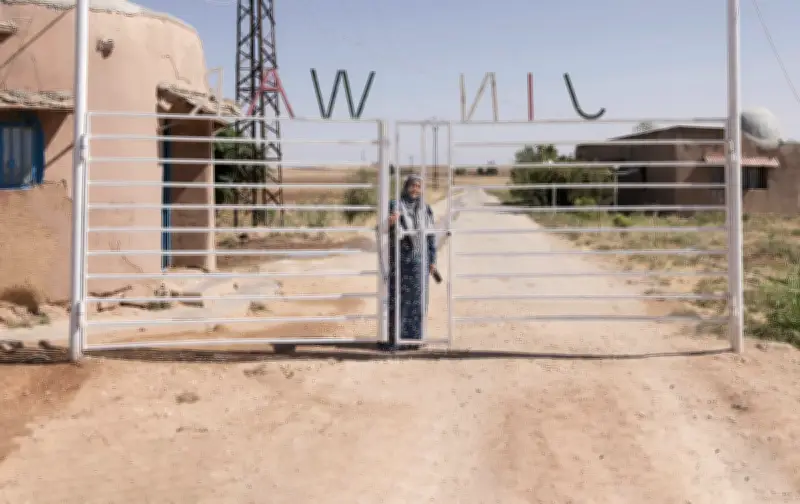
In the midst of Syria's devastating civil war, a quiet revolution is unfolding. Women across the country are banding together to form female-led communes and collectives, carving out spaces of safety, autonomy, and mutual support in a landscape shattered by conflict. Photographer Matteo Trevisan has documented these remarkable communities, offering a rare glimpse into a movement that is reshaping gender roles and providing a lifeline for those fleeing violence.
From Refugees to Leaders
Trevisan's project, which spans several years, captures women who have transitioned from being victims of war to architects of their own destiny. In the northern province of Idlib, a group of widows and displaced women established a cooperative farm, growing vegetables and raising livestock to sustain themselves and their children. "We lost everything, but we found each other," says Umm Ahmad, a 45-year-old widow who leads the collective. "Here, we decide together. No man tells us what to do." The commune now supports over 30 families, with women sharing childcare, cooking, and farming duties.
A Network of Solidarity
Similar initiatives have sprung up in other regions, from the Kurdish-led northeast to rural areas near Damascus. In the city of Raqqa, once a stronghold of the Islamic State, a women-only housing project provides shelter for survivors of sexual violence and forced marriage. The project, run by a local NGO, offers psychological counseling, vocational training, and legal aid. According to the NGO's director, Rana al-Hassan, "These women have endured unimaginable horrors. Our goal is to help them reclaim their agency and build a future on their own terms." Since its founding in 2022, the project has housed more than 200 women and their children.

Challenges and Resilience
Despite their successes, these female-led communities face significant obstacles. Economic hardship is constant, with inflation and scarcity of resources straining their efforts. Social stigma also persists, as conservative norms clash with the idea of women living and working independently. "Some people accuse us of breaking family values," admits Fatima, a 30-year-old teacher who co-founded a women's library in Aleppo. "But we are not against men. We are for survival. And for dignity."
Trevisan notes that the women's resilience is striking. "In the face of war, they have created something beautiful and functional. These communities are not just shelters; they are models of alternative social organization." His photographs show women laughing, working, and caring for one another—images that stand in stark contrast to the destruction around them.
A Glimmer of Hope
The movement has gained attention from international human rights groups, some of which are providing funding and expertise. However, the women emphasize that their work is grassroots and self-directed. "We don't want to be saved from outside," says Umm Ahmad. "We want the world to recognize that we can save ourselves." As Syria's war enters its second decade, these female-led collectives offer not just a means of survival, but a vision of a more equitable society rising from the rubble.