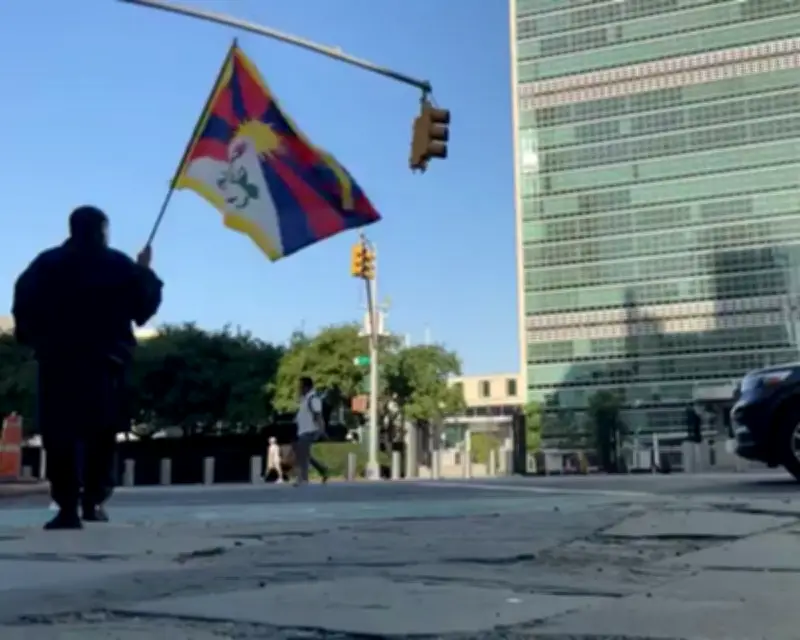
A Tibetan man has died after setting himself on fire outside the United Nations headquarters in New York, according to activists and a media outlet of exiled Tibetans. The New York City police department confirmed that a man was found severely burned after an emergency call at approximately 6:30 p.m. ET. He was taken to Bellevue Hospital, where he was pronounced dead. Police are investigating the death but have not released the man's name or a possible motive.
Activist Identified as Lobga Rangzen
Voice of Tibet, a media outlet of exiled Tibetans, identified the man as Tibetan activist Lobga Rangzen, stating that he "self-immolated outside the UN headquarters in New York after a live appeal for Tibetan independence and unity." Local news site amNewYork reported that Rangzen was an Uber driver and had brought a Tibetan flag to the scene. Fellow Uber driver Lobsang Paljor told the website that Rangzen "was enraged by the restrictions the Chinese government had placed on his countrymen."
Context of Tibetan Protests and China's Ethnic Unity Law
The incident comes amid heightened tensions over China's new ethnic unity law, which went into effect this week. The law creates a "shared" national identity among China's 55 ethnic minority groups, including Tibetans and Uyghurs, some of whom oppose Chinese governance. The US and the European Union have expressed concern about the law, which gives Beijing legal basis to take action against people outside its borders. Tibetans around the world have opposed the legislation.

Tibetans have previously committed acts of self-immolation in protest against Beijing's policies in Tibet and nearby regions with large Tibetan populations. China seized control of Tibet in 1950, describing it as a "peaceful liberation" from feudalistic serfdom. International human rights groups and exiles routinely condemn what they call China's oppressive rule in Tibetan areas, a charge China rejects.
Reactions and Historical Data
Tencho Gyatso, president of the International Campaign for Tibet, described Rangzen as "a tireless advocate for Tibet" and said she was "deeply saddened" by his death. According to the International Campaign for Tibet, there were more than 150 self-immolations by Tibetans between 2009 and 2022, including 10 while in exile. Ethnic minority issues are highly sensitive in China, with Tibetans and other minorities under heavy surveillance for any sign of alleged "separatism." Beijing has exerted greater institutional control in Tibet since Xi Jinping became president in 2012.