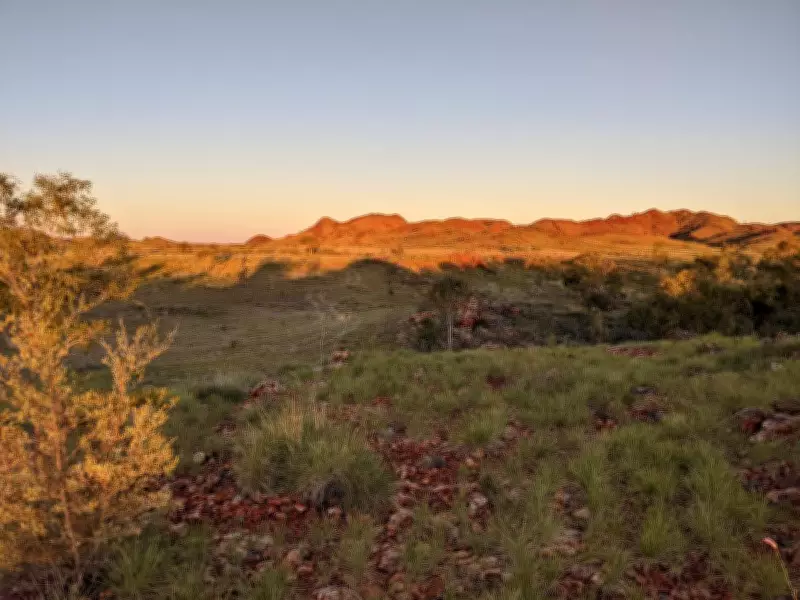
Researchers from the University of Western Australia and Nanjing University in China have uncovered new insights into how ancient continents formed on Earth 3.5 billion years ago. Their study focused on the Pilbara Craton, one of the oldest and best-preserved geological formations on the planet, located in Western Australia and centred around Newman and Tom Price.
Two competing theories
The scientific community has long debated the mechanisms behind early continental crust formation. According to UWA professor and co-author of the study Tony Kemp, two main viewpoints exist: subduction and non-subduction. Subduction occurs when two tectonic plates meet and the denser plate is pushed underneath the other, sinking into the Earth's mantle. Non-subduction involves hot material from deep within the Earth rising upwards and melting, or large meteorites impacting and melting the Earth's crust.
Zircon crystals reveal clues
To determine which process was at work, the team analysed tiny crystals of the mineral zircon found within granitic rocks of the Pilbara Craton. These crystals provided evidence that the magmas forming these rocks became more oxidised and richer in water over time, between 3.2 billion and 3.5 billion years ago.

Professor Kemp explained that for this change to occur, a mechanism must have existed on early Earth to transport water into the deep crust and mantle. On modern Earth, this is achieved through subduction along tectonic plate boundaries—a process unique to Earth and responsible for forming continents.
Implications for understanding Earth's history
The findings, published in the journal Science Advances, underscore the crucial role of subduction-driven water recycling in the formation of continental crust billions of years ago. This research not only sheds light on Earth's ancient past but also helps scientists understand the fundamental processes that shaped the planet's surface and made it habitable.