Every year, millions of visitors flock to Jamaica's pristine beaches, fueling a multibillion-dollar tourism industry. However, these picture-perfect coastlines have become a battleground as successive governments privatized shorelines to support all-inclusive hotels, sparking clashes between protesters and police, and legal battles in the courts.
The Conflict Over Beach Access
Five simultaneous civil court cases are being brought against the government and private landowners to prevent beach privatization in popular tourist destinations. Locals—including community members, craft vendors, and fishers—argue that cutting off access is “discriminatory,” a breach of constitutional rights, and a continuation of “colonial logic” that denies Jamaicans the benefit of their natural resources.
They challenge the 1956 Beach Control Act, enacted under British colonial rule, which placed the foreshore and seabed under state ownership. Activists claim the current licensing regime grants private companies exclusive control over sections of the coast.

Government's Stance
In March 2018, Prime Minister Andrew Holness proposed a new beach access policy promising modernized legislation and increased access. However, campaigners argue it only offers “qualified rights” subject to conditions.
Environment Minister Matthew Samuda stated that while “the idea of access needs to be explored,” the government must consider converting natural assets into economic benefits for all citizens. He noted that 112,000 to 116,000 Jamaicans are directly employed in tourism, with an estimated 300,000 to 350,000—over 10% of the population—benefiting indirectly.
Samuda also pointed out that recent approvals for new developments on public land require developers to carve out corridors to the sea. Campaigners counter that this is at landowners' discretion and fails to address existing private beaches.
The Legal Battle
At the heart of the legal fight is the Jamaica Beach Birthright Environmental Movement (Jabbem), founded in 2020 by Devon Taylor, an immunologist with a PhD in biochemistry. Taylor describes himself as an “anticolonial fighter” after months of protests against the privatization of Mammee Bay, a formerly public beach in Saint Ann parish.
Central to Jabbem's case is the 1882 Prescription Act, which protects legal rights to land or pathways continuously used as public access routes for at least 20 years—including beaches.
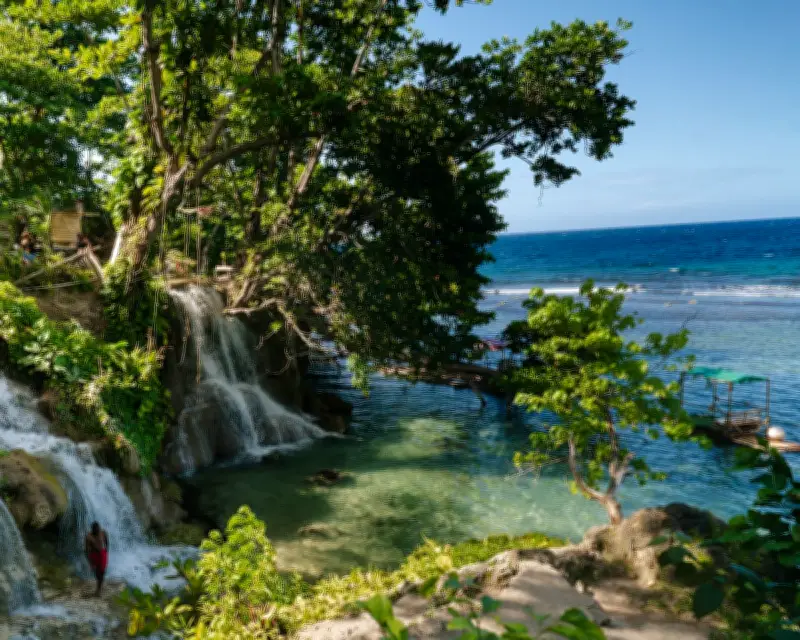
For many locals, beaches hold cultural significance: places to swim, relax, and for Rastafarians, spiritual meditation. The Blue Lagoon in Portland, where mineral springs meet the ocean, serves as medicine for the elderly. Taylor emphasizes that beaches provide livelihoods for fishers and food for communities: “When you cut us off from the sea … you are actually setting us up to starve.”
Carolyn Cooper, professor emerita at the University of the West Indies and volunteer adviser to Jabbem, calls the restrictions “outrageous.” She adds: “It’s as though this government, and successive governments of Jamaica, don’t seem to realise that Black Jamaicans are entitled to leisure.”
Broader Implications
Campaigners stress they are not anti-tourism, citing examples like St Lucia, where all beaches are accessible to the public while tourism thrives. Their concern is that current laws destroy coastlines, restrict leisure access, and benefit only a wealthy elite, with hotel profits often going to foreign owners.
While the legal process may take years and trials have been postponed at great expense, Taylor remains resolute: “Our evidence is overwhelming, and nothing can defeat this case for prescriptive rights. So we continue on. We are very patient. And we’ll see the victory.”