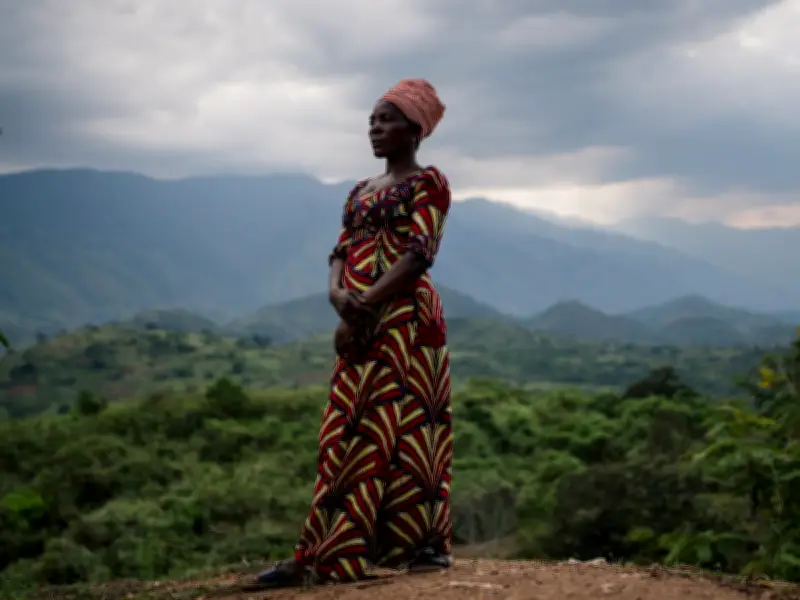
Thousands of people displaced by militia violence in the eastern Democratic Republic of the Congo have carved out precarious lives on the Hauts Plateaux, a remote highland region overlooking Lake Tanganyika. The area, which sits at an elevation of around 2,000 metres, has become a de facto refuge for families fleeing attacks by armed groups in the nearby territories of Fizi and Uvira.
Scale of Displacement
According to the United Nations Office for the Coordination of Humanitarian Affairs, more than 6.5 million people are internally displaced across the DRC, with the eastern provinces of North Kivu, South Kivu, and Ituri accounting for the majority. The Hauts Plateaux alone now hosts an estimated 150,000 displaced individuals, many of whom have been forced to move multiple times as violence shifts across the region.
Local authorities report that the influx has overwhelmed the limited infrastructure. "We have no schools, no health centres, and barely any clean water," said Jean-Pierre Mwamba, a community leader in the village of Mulongwe. "People are living in makeshift shelters and relying on wild foods to survive."

Root Causes of the Crisis
The displacement is driven by a resurgence of militia activity, particularly by groups such as the Twigwaneho and the Mai-Mai Yakutumba. These factions have been fighting for control over mineral-rich areas and trade routes, leading to a wave of attacks on civilian villages. The Congolese army, despite support from UN peacekeepers, has struggled to contain the violence.
Human rights groups have documented numerous atrocities, including summary executions, sexual violence, and the burning of homes. In May 2026, a single attack on the village of Kaniola left 34 dead and forced more than 10,000 people to flee into the highlands.
Life on the Plateau
The Hauts Plateaux offers natural protection due to its rugged terrain and dense forests, but it also presents severe challenges. Food is scarce, with many families surviving on a single meal of cassava or sweet potatoes per day. Malnutrition rates among children under five have soared, with Médecins Sans Frontières reporting acute malnutrition in 12% of children screened in June 2026.
Access to healthcare is almost non-existent. The nearest hospital is a three-day walk away, and the few clinics that exist lack medicines and trained staff. Pregnant women often give birth without assistance, and preventable diseases like malaria and diarrhoea are rampant.
Humanitarian Response
The UN and international NGOs are providing limited aid, but funding shortfalls hamper operations. The DRC Humanitarian Response Plan for 2026 is only 30% funded, leaving millions without essential support. "We are constantly making impossible choices," said Fatima Diallo, a field coordinator for the World Food Programme. "We have enough food for maybe half the displaced population. The rest are left to fend for themselves."
Efforts to reach the Hauts Plateaux are further complicated by poor roads and security risks. Aid convoys have been ambushed, and humanitarian workers have been kidnapped for ransom. In April 2026, a WFP truck was looted near the town of Baraka, losing 20 tonnes of food aid.
Looking Ahead
Without a political solution to the conflict, the displacement crisis is likely to worsen. The DRC government has pledged to restore state authority in the east, but progress has been slow. Meanwhile, the displaced population on the Hauts Plateaux waits, caught between the violence they fled and the uncertainty of what lies ahead.