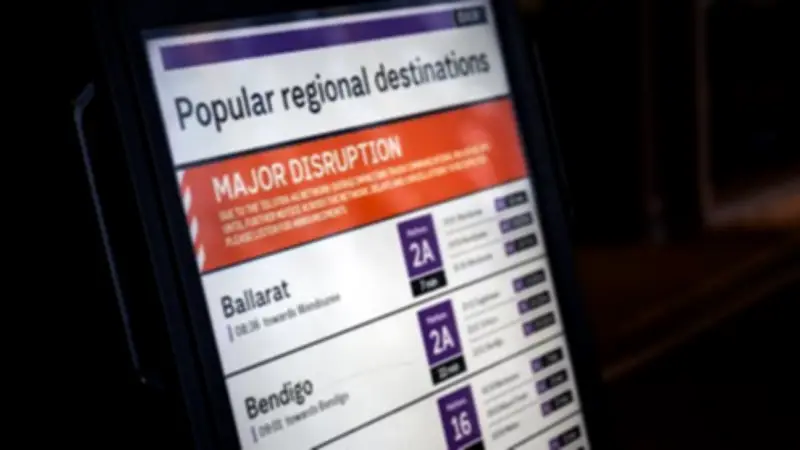
Australians woke up to a major Telstra outage on July 8, 2026, affecting not only mobile phones but also EFTPOS, taxi payments, electric vehicle charging platform Chargefox, and public transport ticketing in Canberra. Most notably, train services in Victoria and New South Wales were suspended. Victoria's regional V/Line system halted all services, with no estimated restoration time as of mid-morning. The outage began around 4:30am, causing chaos for commuters.
How Do Trains Rely on Mobile Networks?
Trains use roof-mounted antennae to communicate with control centres via mobile network frequency channels. This enables voice and data transmission for real-time information like location, speed, and arrival times, ensuring safe travel. The same antennae also provide passenger mobile services and ticketing connectivity.
Why Can't Trains Run When Telstra Is Down?
Without mobile connectivity, trains lose the ability to send or receive traffic-related information, including time-critical alerts about delays or route changes. Diagnostic data such as engine and braking performance also cannot be transmitted. While trains could technically run without mobile networks, the lack of connectivity compromises safety and security. The Australian Rail Track Corporation (ARTC), managing over 9,600 km of tracks, upgraded to 4G on Telstra's network in 2024. VicTrack, which operates V/Line, also uses Telstra, making the network essential for train control.

Could Backup Systems Have Prevented This?
Trains travel at high speeds, and relying on a single mobile provider can lead to coverage gaps, especially in regional areas. Satellite communication is often used as backup but offers slower speeds and lower service levels. Financial constraints often limit the deployment of multiple networks. The outage highlights the risk of putting all eggs in one basket regarding mobile network coverage.
Why Did the Telstra Network Go Down?
Telstra's acting CEO Michael Ackland stated at a press conference that a timing issue with several network nodes caused the outage. "The time synchronisation in those nodes wasn't working as it should. We don't know why yet," he said. All telecom devices must maintain accurate time to share wireless channels without interference. Loss of synchronisation can cause devices to talk over each other, lose connectivity, and fail user authentication. Ackland assured there was no sign of malicious activity and apologised, saying, "Our teams are working, right now, as quickly as possible to get things back online."