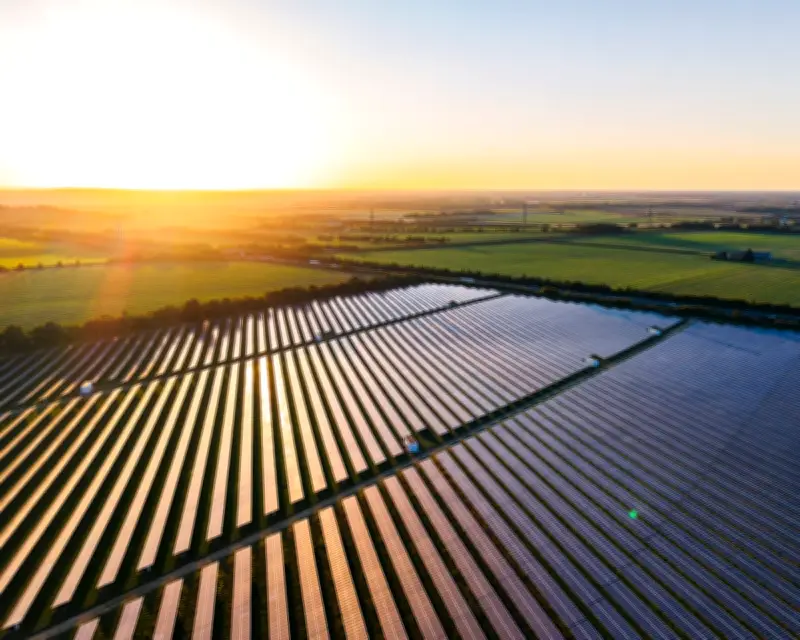
As the push for renewable energy intensifies, a reader has posed a compelling question: why install solar panels on valuable green space when they could be placed over car parks? This idea, gaining traction among urban planners and environmentalists, suggests a dual-use approach that maximizes land efficiency while generating clean electricity.
The Case for Canopy Solar
Covering existing car parks with solar panels—often called 'solar carports'—can generate significant power without encroaching on parks, farmland, or natural habitats. According to a 2025 study by the University of Technology Sydney, Australia's car parks could host up to 15 gigawatts of solar capacity, enough to power over 3 million homes. "We're sitting on a vast, untapped resource," says Dr. Emily Chen, lead author of the study. "Car parks are already paved and often underutilized; adding solar canopies provides shade, reduces urban heat, and generates energy."
Environmental and Economic Benefits
Solar carports offer multiple advantages. They protect vehicles from sun and rain, reducing interior temperatures and fuel evaporation. The electricity generated can power nearby buildings or feed into the grid, lowering energy costs. A report from the Australian Renewable Energy Agency (ARENA) estimates that widespread adoption could cut carbon emissions by 8 million tonnes annually. "It's a no-brainer," says Mark Thompson, CEO of SolarPark Australia. "We can create clean energy without sacrificing a single tree."

Challenges and Implementation
Despite the benefits, barriers remain. Installation costs are higher than ground-mounted systems due to structural requirements. However, falling panel prices and government incentives are making projects more viable. Several councils, including in Sydney and Melbourne, have launched pilot programs. The City of Sydney aims to install solar canopies over 20 car parks by 2028, generating 5 megawatts of power. "We're proving it can be done," says Lord Mayor Clover Moore. "It's a smart use of space that aligns with our net-zero goals."
Public and Expert Reactions
The idea has sparked debate. Some argue that green spaces should be preserved for recreation and biodiversity, while others see car park solar as a pragmatic solution. "We need both," says Dr. Chen. "Solar farms on degraded land or over infrastructure, not on pristine bushland." The reader's letter, published in The Guardian, has resonated widely, prompting calls for policy changes to mandate solar-ready car parks in new developments.
Looking Ahead
As Australia strives for 82% renewable energy by 2030, innovative approaches like car park solar are crucial. With the right incentives, experts believe this underutilized space could become a cornerstone of the nation's clean energy transition. "It's time to think differently about where we put solar," says Thompson. "Our car parks are waiting."