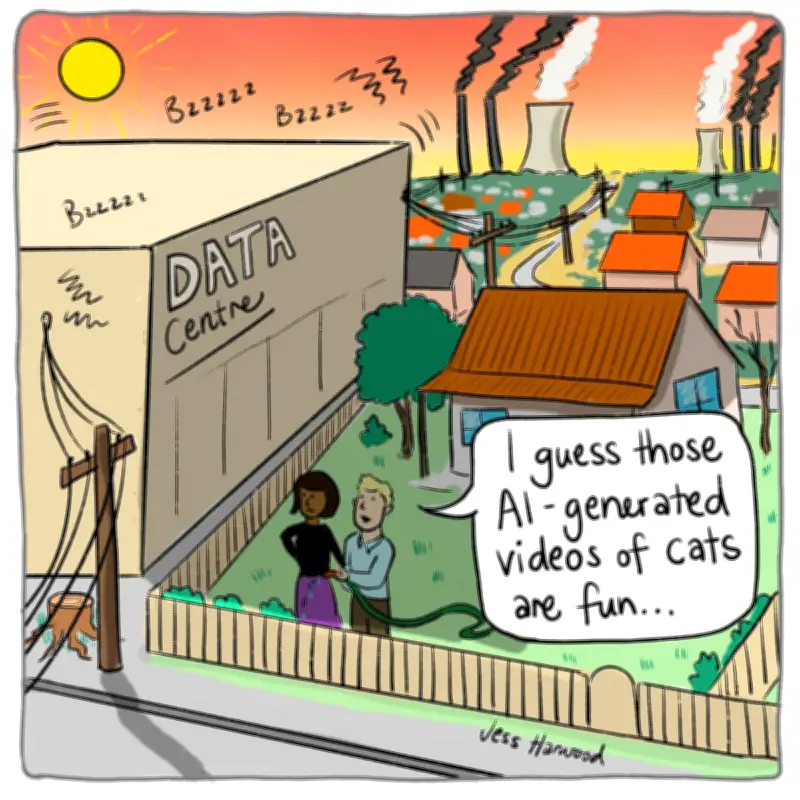
The global boom in datacentre construction is dramatically altering the character of residential and industrial neighbourhoods, often with little warning for local residents. As tech giants such as Amazon, Google, and Microsoft race to expand their cloud computing and AI capabilities, they are buying up land and building massive server farms that can consume as much electricity as a small town.
What is happening to neighbourhoods?
In areas like Northern Virginia, Dublin, and Singapore, datacentres are springing up on former farmland, green belts, and even near schools and homes. Residents report constant humming from cooling systems, increased truck traffic during construction, and concerns about rising property taxes. In some cases, communities have fought back, citing noise pollution and the strain on local water resources used for cooling.
According to a 2025 report by the International Energy Agency, datacentres already account for about 1-2% of global electricity demand, a figure expected to triple by 2030. This rapid growth has led to tensions between tech companies seeking cheap land and reliable power, and locals who feel their quality of life is being sacrificed for corporate profits.

Key examples of community impact
In Loudoun County, Virginia, known as 'Datacentre Alley', the number of facilities has doubled since 2020. Local activist groups have formed to demand stricter zoning laws and environmental reviews. One resident told a local newspaper: 'We moved here for the quiet countryside, not to live next to a 24/7 factory.'
Similarly, in the outskirts of Dublin, Ireland, where datacentres are being built to serve European customers, planners have imposed a moratorium on new connections to the electricity grid until 2028 due to capacity concerns. This has stalled several projects and sparked a debate about whether digital infrastructure should be prioritised over housing.
Economic and environmental trade-offs
Proponents argue that datacentres bring jobs, tax revenue, and investment in broadband infrastructure. However, critics note that the facilities are largely automated, creating few permanent jobs once built. The environmental cost is also significant: datacentres require vast amounts of water for cooling and rely on fossil fuels in many regions, undermining climate goals.
A study by the University of California estimated that a typical hyperscale datacentre uses 1.8 million litres of water per day. In drought-prone areas, this has sparked outrage. Tech companies have pledged to use recycled water and renewable energy, but implementation lags behind pledges.
What can be done?
Some jurisdictions are updating planning laws to require environmental impact assessments, noise barriers, and community benefit agreements. For example, in the Netherlands, new datacentres must prove they use waste heat for district heating. In Singapore, a moratorium on new facilities was lifted only after strict energy efficiency standards were introduced.
As the demand for data continues to surge, the tension between digital progress and local community rights is likely to intensify. The question remains: can we have our cloud and a liveable neighbourhood too?