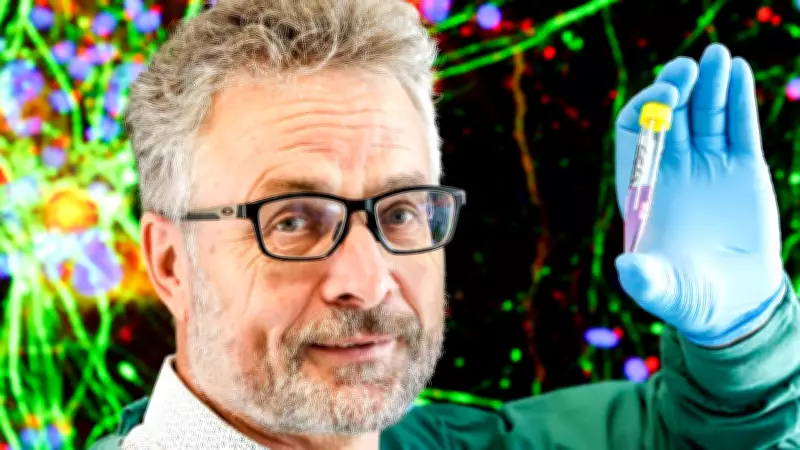
Professor Jozef Gecz, a leading human geneticist at the University of Adelaide, has made groundbreaking discoveries about how differences in our DNA shape the brain and contribute to conditions such as intellectual disability, autism, epilepsy, and cerebral palsy. His research combines large-scale genetic analysis with insights that have identified specific DNA changes behind these disorders, leading to major breakthroughs in understanding their origins.
The Rocket to the Moon
Professor Gecz likens the progress in genetics to space exploration. “We see the moon every day... but we needed the rocket,” he explains. “For me, the rocket was really the completion of the human genome reference DNA sequence. That’s where we could finally delve deeper into the understanding of our biology, of our suffering.” Instead of focusing on normal brain function, he examines what goes wrong during development. “You better understand how things work when they break,” he says. “I started to study disability, and through that, to understand how we are supposed to work by these examples of the natural experiments there – or experiments of nature where things didn’t go to plan.”
Complexity Unveiled
Early estimates suggested there might be 100,000 genes, but scientists now know there are closer to 20,000. Despite the reduction in number, complexity has only grown. “We totally underestimated the complexity,” Professor Gecz notes. “Now we have about 5000 genes where something goes wrong and leads to a clinical outcome – and the majority of these are affecting neurodevelopment, like the brain.” For years, cerebral palsy was thought to result from birth complications. “Now we know that up to one third of these children ... it’s driven by major genetic causes. The causes are there from the very first days of life – from conception.”

No One-Size-Fits-All
These findings highlight the intricate connection between genes and environment. “One alteration doesn’t always cause one outcome,” Professor Gecz says. “One alteration can cause multiple different outcomes – even identical twins can present differently. People say, ‘That’s not genetic, because identical twins are identical’, but that understanding has completely changed.”
Barriers to Genetic Testing
Despite breakthroughs, genomic testing remains out of reach for many. Tests can be expensive, Medicare coverage is limited to specific conditions, and proving eligibility is difficult. “The one thing we don’t have ... is that people have access to these tests,” he explains. “Medicare only covers certain conditions, and if you don’t fit that box, you need to pay thousands of dollars. So my goal is to make these tests affordable and widely available ... sooner or later, each one of us will require a genetic test to live a better and healthier life.”
Developing Treatments
Beyond diagnosis, Professor Gecz is developing treatments by determining the best ways and timing to tweak DNA. “We all just want people to have a healthy family,” he says. “Our goal is to make sure everyone can benefit from this knowledge so people can live healthier, fuller lives without the uncertainty that comes from not knowing what their DNA looks like.”
In His Words
Professor Gecz’s journey began in Slovakia, where his family background limited his medical aspirations under the communist regime. He chose a double degree in general biology and anthropology, eventually focusing on human molecular genetics. “I naturally gravitated to genetics of human traits as a means to understand how our organs and brain in particular work,” he recalls. Since around 1986, he has contributed to about 350 disease gene discoveries out of the total tally of about 5000 human disease genes, leading the field in intellectual disabilities, epilepsies, and cerebral palsies. “Equity of access to genetic testing is hugely important to me as well as appreciation of the fact that many conditions, often considered to be due to e.g., injury or medical malpractice, like cerebral palsy, may and do have significant genetic contribution. That is why a genetic test should be available to everyone and at an affordable price. Understanding of our genetics can and does make a difference for our current and future health.”