Swinburne University researchers have discovered that a compound found in broccoli could offer a new treatment for Friedreich ataxia, a rare genetic neurological disorder that currently has no cure and typically reduces life expectancy to around age 50.
Hope from a Common Vegetable
Rare conditions can be daunting, terrifying and isolating. For the people and families affected by them, the search for a treatment can feel overwhelming – and sometimes impossible. Yet the solution to some complex diseases may not lie in an expensive new pharmaceutical compound or decades of drug development. In some cases, it could be hiding in plain sight – even in our kitchens.
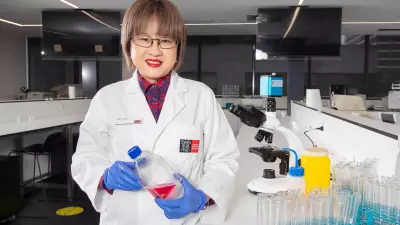
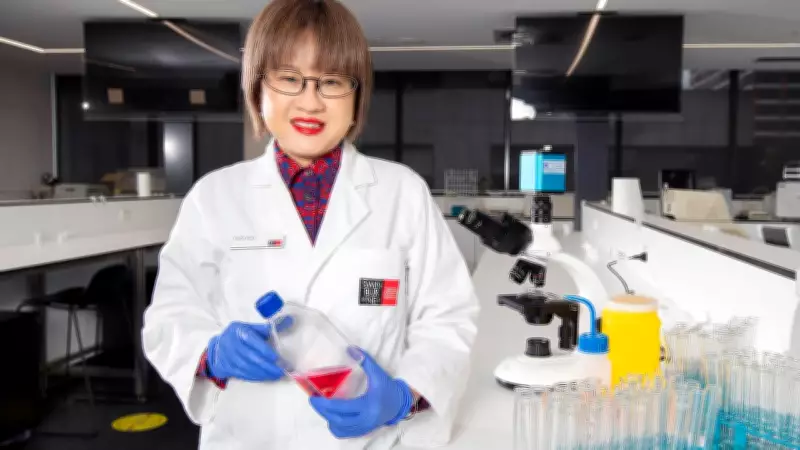
Associate Professor Faith Kwa leads the Drug Discovery for Chronic Diseases Laboratory at Swinburne University of Technology. Her research focuses on finding new treatments for Friedreich ataxia, a rare inherited genetic condition that currently has no cure.

Understanding Friedreich Ataxia
Friedreich ataxia affects around 260 people in Australia and can have devastating consequences. The disease is caused by a genetic mutation that leads to decreased amounts of the frataxin protein, causing excessive levels of iron in cells throughout the body. Over time, this build-up damages and kills cells, including sensory neurons in the spinal cord that control movement.
Symptoms often appear during childhood or adolescence. As the disease progresses, it affects coordination, balance and movement, gradually damaging the nervous system. Many patients lose the ability to walk and require wheelchairs within 10 to 15 years of diagnosis. Speech impairment may become apparent. People living with Friedreich ataxia are also at risk of serious heart complications and face a significantly shortened life expectancy, with some individuals dying around the age of 50.
Despite the severity of the condition, treatment options remain extremely limited. There is currently one US Food and Drug Administration-approved medication, Omaveloxolone, but this is only accessible to people aged 16 and above. While it can help manage symptoms, it does not address the underlying genetic mutation that causes the disease and has not been proven as a safe treatment for the majority of the patient population, children. The treatment is also expensive.
Sulforaphane: A Promising Compound
Faced with these limitations, Associate Professor Kwa and her team began exploring alternative approaches that could potentially slow or halt the progression of the disease – particularly for children diagnosed early. Their investigations pointed to a novel compound found in cruciferous vegetables such as broccoli. The compound, called sulforaphane (SF), has already been widely studied for its health benefits and is known for its anti-cancer properties.
Associate Professor Kwa’s team discovered something particularly interesting when studying its effects in sensory neurons derived from skin cells obtained from three patients with different levels of genetic mutations. At the same doses used in cancer studies, rather than harming the cells, SF appeared to protect them. Unlike treatments such as chemotherapy, which can damage healthy cells alongside abnormal ones, SF appears to exert a cell-type specific response, target the genetic mutation responsible for Friedreich ataxia and address the underlying biological processes linked to the disorder.
Another advantage is that pure and bioactive SF is already available commercially, with therapeutically beneficial doses starting at roughly $5000 per year. Research indicates that SF is safe and well tolerated by both children and adults. This opens the door to a new therapy that could potentially curb the onset of symptoms, slow disease progression and dramatically improve quality of life for patients.
This cost-effective treatment derived from a sustainable source offers hope – not just for symptom management, but for a future where people with Friedreich ataxia can live longer and healthier lives.

Next Steps: Clinical Trials
The next step for Associate Professor Kwa’s team is to secure funding for a clinical trial. The trial would test sulforaphane in patients and determine the most effective doses for treating the condition. This critical clinical study could demonstrate that a compound derived from a common vegetable might help tackle one of the world’s rarest and most challenging diseases – showing that groundbreaking medical discoveries can begin in the most unexpected places.
In Faith’s Words
Associate Professor Kwa is a strong advocate for repurposing naturally occurring compounds as medicines. She notes that these compounds are often readily available, have established safety profiles, and can reach patients faster and at lower cost by reducing regulatory barriers faced by man-made drugs.
She explains that SF has a cell type specific effect: It selectively kills cancer cells while protecting cells in the central and peripheral nervous systems through antioxidant and anti-inflammatory actions. This dual activity suggests SF may reduce the side effects compared to aggressive treatments like chemotherapy which kills both cancer and healthy cells.
Crucially, SF can cross the blood–brain barrier, an advantage lacking in many drugs under investigation for neurodegenerative diseases like Friedreich ataxia. The laboratory showed that clinically relevant doses of SF not only improve survival of spinal cord cells generated from stem cells taken from Friedreich ataxia individuals but also increase frataxin levels.
At approximately $5000 per patient per year, SF is more affordable than the only approved treatment, which costs hundreds of thousands of dollars annually. Sulforaphane exemplifies a future therapy that is sustainable, safe, and accessible to people.