Beach Car Park Closure Creates Dangerous Swimming Trends at Birubi
The temporary closure of the lower car park at Birubi Beach in Anna Bay has created what lifeguards describe as an extremely dangerous situation for swimmers, with safety concerns escalating during the busy holiday period.
Shift in Beachgoer Behavior Creates High-Risk Swimming
Despite a reported 30 percent decrease in overall visitors to Birubi Beach compared to last holiday season, lifeguards have observed alarming trends emerging since the car park closure. Beachgoers are now being pushed away from patrolled areas to unpatrolled stretches of coastline, resulting in what surf life saving officials term high risk swimming.
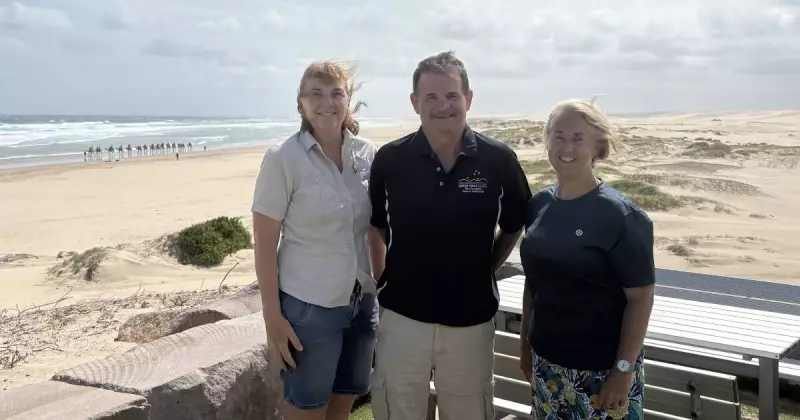
Birubi Surf Life Saving Club vice president Mick Denahy revealed that swimmers outside the flagged areas visible from the Birubi tower have increased significantly, rising from seven to eleven percent of total beach visitors.

"These swimmers outside the flags are using areas that can be extremely dangerous to swimmers, with numerous rips," Mr Denahy warned. "Feedback from the paid lifeguards is that incidents around the rocks at Little Beach have doubled since the closure of the bottom car park."
Emergency Access Concerns and Cultural Considerations
The safety concerns extend beyond swimming hazards. The reduced parking availability has created significant traffic congestion, raising serious questions about emergency service access. A sand-blocked concrete path currently prevents ambulances and two-wheel drive vehicles from reaching the surf life saving club's first aid room.
"With the traffic congestion in James Paterson Street and on Gan Gan Road, the response times of emergency services such as ambulances would be impacted," Mr Denahy explained. "This could mean the difference between a successful resuscitation and a fatality."
The car park situation is further complicated by its location adjacent to Birubi Point Aboriginal Place, a culturally significant area protected under New South Wales legislation and managed in partnership with Worimi representatives. The landscaped sand and gravel car park has operated for approximately twenty years on Crown Land managed by Port Stephens Council.
Temporary Reopening and Community Frustration
The lower car park was temporarily reopened to the public on Monday to alleviate holiday parking pressure, using a small section that sustained minimal damage during major 2025 storms. However, it will close again after the Australia Day long weekend, leaving residents, tourism operators, and lifeguards questioning why it cannot remain permanently accessible.
Port Stephens Council director of facilities and services Greg Kable acknowledged public frustration over past closures, stating the council is "seeking a short-term balance between site access and environmental safety." The council will deploy extra staff to manage traffic flow and parking throughout the weekend.
Anna Bay resident and South Tomaree Community Association representative Tanya Martin expressed disappointment with how the situation has been handled, noting the council has a responsibility under the Crown Lands Act to administer the site in the public's best interests.
"The plan of management looks perfectly reasonable, in my mind," Ms Martin said. "Let's get on and do what needs to be done."
Looking for Sustainable Solutions
The car park has been closed for extensive repairs since April 2025 after suffering damage from intense rainfall and flooding. Port Stephens Council is currently reviewing the Birubi Point Plan of Management to develop sustainable solutions that protect the area's cultural and environmental significance while managing future growth.
Mr Denahy highlighted that Birubi Beach attracts a disproportionately high percentage of high risk swimmers, many of whom travel two or more hours to visit. With the car park closure, these groups are increasingly swimming at Little Beach, where they face greater dangers without lifeguard supervision.
"This is a south-facing beach, so when you get a big swell it all hits here and when water comes in it has to go out somewhere," Mr Denahy explained. "That makes it one of the most dangerous beaches in the area."

The situation underscores the complex balance between public access, environmental protection, cultural significance, and beach safety that coastal communities must navigate.