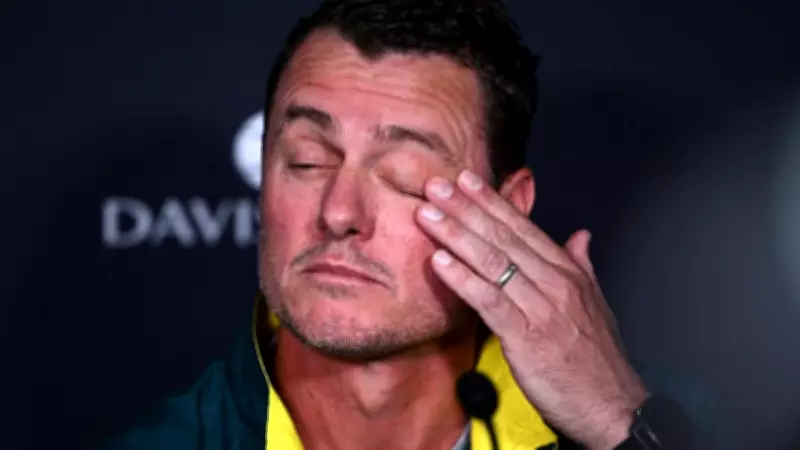
Davis Cup Earthquake: Ecuador Stuns Tennis Powerhouse Australia in Historic Qualifier Upset
Australian tennis has been rocked by one of the most sensational defeats in recent Davis Cup history, with the 28-time champions humbled by Ecuador in a stunning qualifier boilover in Quito. The dramatic scenes unfolded at the Quito Tennis and Golf Club, where ecstatic Ecuadorian players and fans celebrated what will be remembered as a landmark victory for South American tennis.
Complete Capitulation on Clay
Lleyton Hewitt's second-string Australian squad, missing their inspirational leader Alex de Minaur, found themselves completely outmatched in what was always destined to be a challenging assignment on Ecuadorian clay. The 3-0 defeat was sealed on Sunday when the Australian doubles pairing of Jordan Thompson and Rinky Hijikata succumbed in straight sets to the veteran Ecuadorian duo of Gonzalo Escobar and Diego Hidalgo.
As the home fans erupted in wild celebration and the victorious Ecuadorian players rolled around in the clay court surface, Hewitt was left to contemplate what represents arguably the worst defeat of his tenure as Australian captain. The loss marks a dramatic comedown for a nation that reached the Davis Cup final just two seasons ago and had appeared in consecutive finals.

Rankings Defy Reality in Shocking Result
The statistical disparity between the two nations makes this upset even more remarkable. Australia entered the tie as the world's fourth-ranked Davis Cup nation, while Ecuador sat at 37th in the global rankings. Ecuador doesn't possess a single singles player ranked within the world's top 200, while Australia boasts thirteen players ranked higher than Ecuador's leading competitor, world number 201 Alvaro Guillen Meza.
Australia fielded two singles players ranked within the top 103 globally, alongside a doubles team featuring players who have both been part of grand slam-winning partnerships. Despite missing key players including de Minaur, Alexei Popyrin, and Adam Walton, the Australian side possessed what appeared to be sufficient experience and quality to prevail.
High-Altitude Challenge Proves Insurmountable
The Australian team struggled throughout the tie against multiple challenges. The high-altitude conditions of Quito, combined with the unfamiliar clay surface and a vociferous home crowd, created a perfect storm of difficulties. Already trailing 2-0 following first-day singles defeats for world number 103 Rinky Hijikata and number 86 James Duckworth, Australia's fate was sealed on Sunday.
The powerful-looking Australian doubles combination of Hijikata and Thompson couldn't overcome the experienced Ecuadorian pairing, falling 7-6 (7-5) 6-4 to 37-year-old Escobar and 32-year-old Hidalgo. The defeat followed Saturday's remarkable individual performances from Ecuador's players, with Meza edging Hijikata 6-4 1-6 6-4, and world number 257 Andres Andrade coming from a set down to defeat Duckworth 3-6 6-3 7-5 in a rain-interrupted match.
De Minaur's Absence Felt Acutely
The absence of Alex de Minaur proved particularly significant for the Australian campaign. The top-ranked Australian made the difficult decision to make himself unavailable for a Davis Cup tie for the first time since his 2018 debut, choosing to preserve his body following a grueling 2025 tournament schedule. His leadership and on-court presence were sorely missed during the challenging conditions in Quito.
Historical Context Adds to Sting
The defeat represents a dramatic reversal from Australia's only previous Davis Cup encounter with Ecuador back in 2001. During that tie, Hewitt was a key member of a star-studded Australian squad that also included Pat Rafter, highlighting how much has changed in the intervening years.
Adding to the historical significance, Ecuadorian captain Raul Viver, who was the non-playing captain during that 2001 encounter, remains in his position twenty-five years later. His tactical acumen and understanding of Australian tennis proved instrumental in orchestrating this stunning victory, making him the toast of the cheering Ecuadorian crowd.
The result sends shockwaves through international tennis and raises significant questions about Australia's Davis Cup future, while simultaneously elevating Ecuador's status in the global tennis community.