Cam McEvoy Shatters Swimming World Record, Exposes Financial Irony
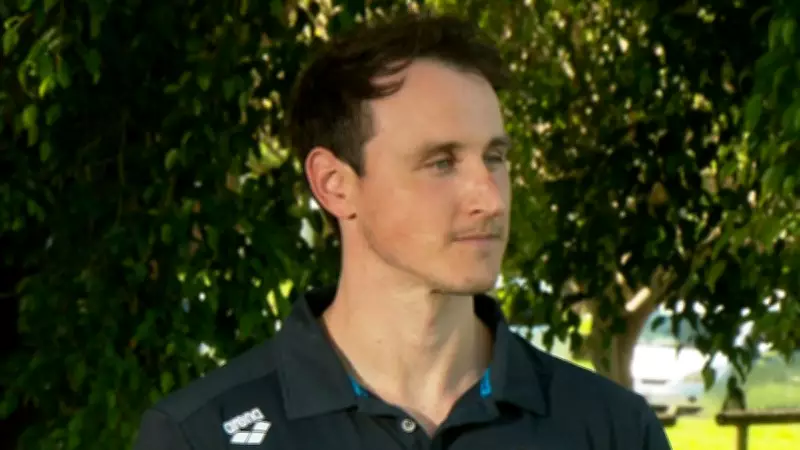
A "dumbfounded" Cam McEvoy has revealed the costly irony behind his stunning swimming world record, while insisting he can achieve even greater speeds after detailing his radical and revolutionary training approach. The 31-year-old Australian sprinter clocked an impressive 20.88 seconds in the 50m freestyle at the China Open on Saturday, surpassing a long-standing mark many considered untouchable.
Breaking a Historic Barrier
McEvoy's time bettered the previous record of 20.91 seconds set by Brazilian swimmer Cesar Cielo in December 2009, a feat accomplished while wearing a now-banned super-suit. Swimming experts had widely regarded this record as nearly impossible to break under current regulations. Additionally, McEvoy's performance outpaced an unofficial record of 20.89 seconds by Kristian Gkolomeev, achieved last year in a suit as part of the Enhanced Games, a pro-doping exhibition offering substantial financial rewards.
A Revolutionary Training Regimen
Back home in Brisbane, McEvoy admitted the world record arrived earlier in his season than anticipated, noting he had not swum beyond 25 meters in training before the event. The four-time Olympian has revitalized his career by following a hunch to increase his strength training while drastically reducing his weekly pool mileage from as much as 70 kilometers to just 1.5 kilometers. This unconventional method has proven highly effective, challenging traditional swimming training norms.

Financial Disparity in the Sport
McEvoy highlighted a stark financial contrast, pointing out that his clean world record earned him zero dollars in prize money, as the China Open did not include a world title bonus. In contrast, he mused that pursuing the Enhanced Games could have netted him approximately $2 million through a $250,000 first prize and bonuses, by using performance-enhancing drugs and advanced suits. He described this pathway as "the easier route" but one that "holds no weight" in terms of integrity.
"I'm dumbfounded in terms of the stark contrast that exists currently in the landscape of swimming," McEvoy said, emphasizing the low value placed on clean achievements compared to enhanced alternatives.
Future Ambitions and Age Defiance
Despite the financial irony, McEvoy remains enthusiastic and confident he can grow stronger and faster into his mid-30s, with ambitions to compete at the Brisbane 2032 Games. He cited scientific potential for improvement and a personal drive to prove that athletes in their 30s can excel in sprinting, especially after being rejected for sponsorships due to age. "Hopefully the result in China proves that people in their 30s can definitely sprint and continue to sprint," he asserted.
Expert Insights on the Training Approach
Australian head coach Rohan Taylor praised McEvoy's innovative "venture" as charting new ground for the sport but cautioned that it is not a universal solution. "If you're going to be a concert pianist you don't practice the trumpet," Taylor remarked, highlighting McEvoy's technical superiority as a key factor. He noted that the effectiveness of this training method for younger athletes remains uncertain, with the jury still out on its broader applicability.
McEvoy's achievement not only sets a new benchmark in swimming but also sparks important conversations about training innovation, financial incentives, and the value of clean sport in an era of enhanced competitions.