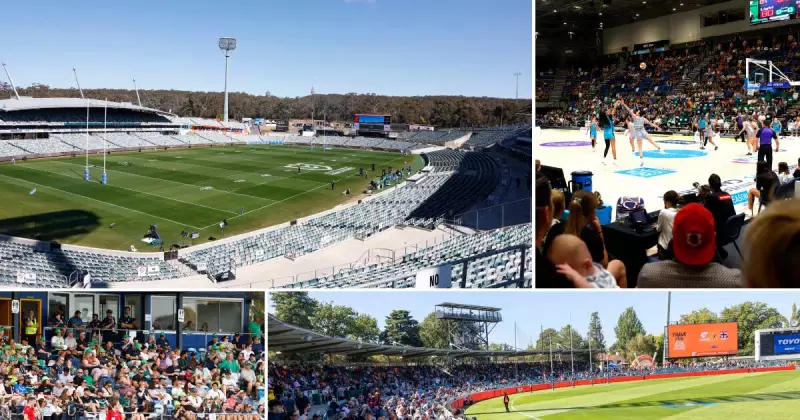
Canberra's sporting infrastructure is under the microscope, with a rapidly growing population, limited venue availability, and ageing facilities creating significant pressure for maintenance, renovation, or complete replacement.
The State of Play in the Capital
Despite the hurdles, the sports-loving capital continues to turn out for its teams. We've undertaken a detailed review of the region's most prominent venues that host top domestic competitions, scoring each out of 10 based on their best and worst features.
Stadiums in the Spotlight: The Highs and Lows
Canberra Stadium (Bruce, opened 1977, capacity 26,000) remains an iconic venue, praised for its bushland setting, open-plan design, and one of the best playing surfaces in the country. However, it scores a dismal 3 out of 10 due to concrete cancer, 'high' risk asbestos, sewage smells, poor facilities, and a severe lack of cover for patrons. Its Bruce location also limits public transport.

AIS Arena (Bruce, opened 1981, capacity 4,200) fares much better with a 7/10. The premier indoor venue reopened in 2024 after a $15 million upgrade, featuring new seating and climate control. Its enclosed nature is a major plus, but traffic issues and limited entry points are significant drawbacks.
Manuka Oval (Griffith, opened 1929, capacity 15,000) also scores a 7/10. This historic ground boasts a superb surface and an accessible suburban location. Recent toilet and concession upgrades help, but limited food options and outdated facilities in the Bradman Stand let it down.
Boutique Grounds and Community Hubs
McKellar Park (McKellar, opened 2002, capacity 3,500), home of Canberra United, is loved for its atmosphere but let down by pitch quality and ageing facilities, scoring a 5/10.
National Hockey Centre (Lyneham, opened 1987, capacity 3,000) earns a 7/10. It's a quality venue set for a $1.5 million federal upgrade, though shaded seating would improve the patron experience.
Thoroughbred Park (Lyneham, opened 1962, capacity 3,000) scores a 7/10 for its great race-day atmosphere and diversification into concerts and markets. However, its facilities are dated compared to interstate tracks.
Deakin Stadium (Deakin, opened 2008, capacity 2,800) is a great suburban soccer venue with an excellent atmosphere, scoring a 6/10. Its facilities, however, are sufficient but not modern.
Viking Park (Wanniassa, opened 2006, capacity 6,000) has a real grassroots feel and an immaculate field but needs major upgrades, resulting in a 5/10 score.
Phillip Oval (Phillip, opened 1969, capacity ~2,000) gets a 6/10. Its Woden heartland location is ideal, but a brewing crisis with its irrigation system threatens the entire field.
Tuggeranong Basketball Stadium (Tuggeranong, opened 1972, capacity 1,900) struggles with a major, persistent roof leak described as "untenable," leading to a low score of 4/10.
Seiffert Oval (Queanbeyan East, opened 1982, capacity 15,000), the historic birthplace of the Canberra Raiders, scores a 6/10. While the field is in great condition, corporate facilities are largely untouched since the Raiders' departure.
The Verdict on Canberra's Sporting Infrastructure
The review highlights a clear divide in Canberra's sporting landscape. While some venues like the AIS Arena and Manuka Oval are holding their own after recent investment, the city's premier venue, Canberra Stadium, is in a state of serious decline. Several community-focused grounds show potential but require significant attention and funding. The findings underscore the ongoing challenge for the ACT: to provide sporting infrastructure that matches the expectations of a growing national capital.