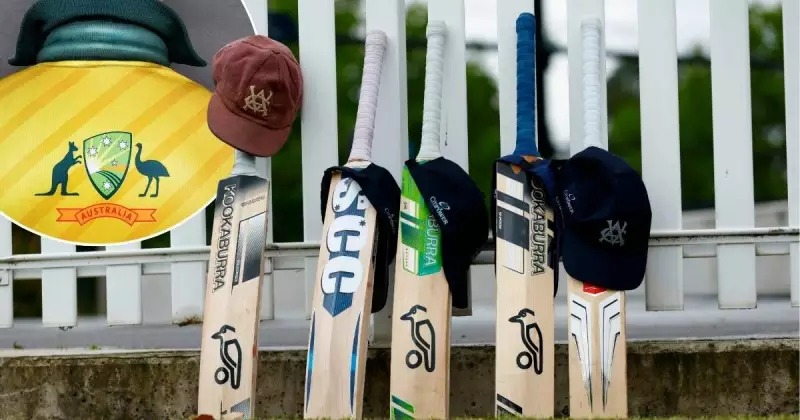
In a move that could redefine player safety in cricket and other high-speed ball sports, an Australian materials engineer has secured design registration for a groundbreaking piece of protective apparel. The invention, a cricket shirt with an integrated 'safety collar', is a direct response to the tragic on-field deaths that have shaken the sporting world, including that of Australian Test cricketer Phillip Hughes in 2014.
A Wake-Up Call from Tragedy
Australian inventor Charisma Wickham stated that Hughes's passing served as a heartbreaking catalyst for her work. "Phillip Hughes' passing was a heartbreaking wake-up call," Wickham said. She also noted the sobering reality that another death occurred in October 2025, alongside many other serious injuries, proving that even elite athletes remain vulnerable.
"This highlights the reality that even world-class players with access to the best equipment can still be vulnerable," Wickham explained. Her mission was to develop a solution that was simple, affordable, and scalable to help bridge a critical safety gap. Cricket balls routinely travel at speeds between 100 and 150 kilometres per hour, posing a significant risk to any unprotected area, with the neck being notably exposed.

How the Innovative Safety Collar Works
The core of the invention lies in its clever yet straightforward design. The protective system is integrated directly into a standard collared cricket shirt. It features two high-density foam tubes with hollow centres, backed by a lightly padded resin layer.
This engineering is crucial: the hollow core of the tubes is designed to absorb, spread, and deflect impact force around the neck. Most importantly, it diverts the ball's energy away from the body rather than channelling it directly into the spine or arteries. "We have helmets, pads, boxes and gloves, but the neck has remained dangerously exposed," Wickham said. "One ball, one bad bounce, one moment can change a life. This shirt is designed to help prevent that."
Scaling Up for Global Impact
Prototype shirts have already been created using standard cricket apparel for initial demonstration and testing. Wickham's focus is now on finding the right partners to bring the invention to players at every level, from grassroots clubs to international professionals.
She is calling on sports equipment manufacturers, sportswear brands, clubs, and governing bodies to collaborate on the next phase of testing, certification, and large-scale production. The potential application also extends far beyond the cricket pitch.
"This invention is ready for its next chapter," Wickham stated. "With the right partner, we can turn a simple idea into a standard piece of protective apparel that has the potential to save lives." She emphasised that the technology could be vital for sports like field hockey, baseball, softball, and lacrosse—any sport where a high-speed ball poses a threat to the neck.
"Any sport where a ball can reach the neck at 100 kilometres an hour should at least be exploring integrated protection," Wickham concluded. "We've proved the concept. Now we need the right partner to test, certify and scale it."