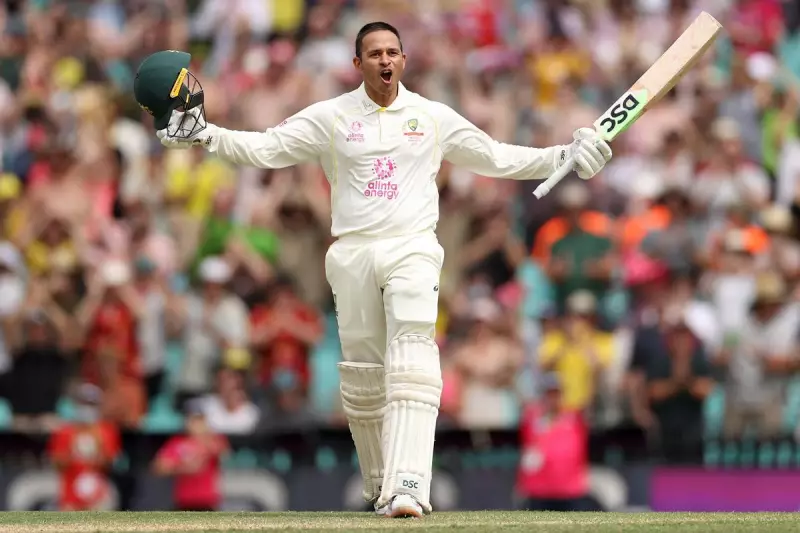
Australian cricketer Usman Khawaja is forging a legacy that extends well beyond the boundary rope and the scoreboard. While his batting feats for Australia are significant, it is his courageous voice on social issues and mental health that is cementing a profound and lasting impact on the nation's sporting culture.
A Powerful Voice for Social Justice
Khawaja's willingness to take a stand has been a defining feature of his career in recent years. During the 2023 Ashes series in England, he made a powerful statement by wearing black armbands. This was a personal tribute following the passing of his grandmother and a subtle act of solidarity, coming after the International Cricket Council (ICC) had prevented him from displaying messages of support on his shoes and bat.
His advocacy reached a pivotal moment during the 2024 Test series against Pakistan. Khawaja intended to wear shoes bearing the handwritten messages "All Lives Are Equal" and "Freedom Is A Human Right." The ICC deemed this a political statement and banned it. In response, Khawaja opted for a simple black armband, leading to a formal charge from the governing body, which was later dropped.

This episode sparked a crucial conversation about the place of athlete activism in cricket. Khawaja argued passionately that his messages were about universal human rights, not politics. His stance challenged the ICC's regulations and resonated with fans and fellow players who believe athletes should be able to express their humanitarian views.
Championing Mental Health and Perspective
Beyond social justice, Khawaja has been an influential advocate for mental health and maintaining a healthy life balance. He has spoken openly about the immense pressures of international cricket and the importance of prioritising family and personal well-being.
This perspective was shaped by his own experiences, including being dropped from the national team multiple times. Khawaja has emphasised that cricket, while his profession, does not define his entire identity. By publicly discussing his challenges and his approach to managing them, he has helped destigmatise mental health conversations in the high-performance sporting environment.
His balanced outlook serves as a vital reminder that athletes are multifaceted individuals. Khawaja demonstrates that success and resilience can be built on a foundation that values life outside the sporting arena as much as achievements within it.
An Enduring Impact on Australian Sport
The legacy Usman Khawaja is building is multifaceted. On the field, his statistics as a top-order batsman are impressive. Off the field, his impact is arguably greater. He is reshaping what it means to be a modern Australian sports star.
Khawaja has shown that athletes can use their platform for meaningful advocacy without compromising their performance. He has navigated complex issues with principle and eloquence, encouraging a new generation of players to consider their role in society.
His journey from a talented young batsman to a senior leader and vocal advocate illustrates a profound evolution. Usman Khawaja's story is no longer just about runs and centuries; it is about courage, compassion, and using one's voice for positive change. This combination ensures his legacy will be remembered as richer and more influential than any batting average could convey.