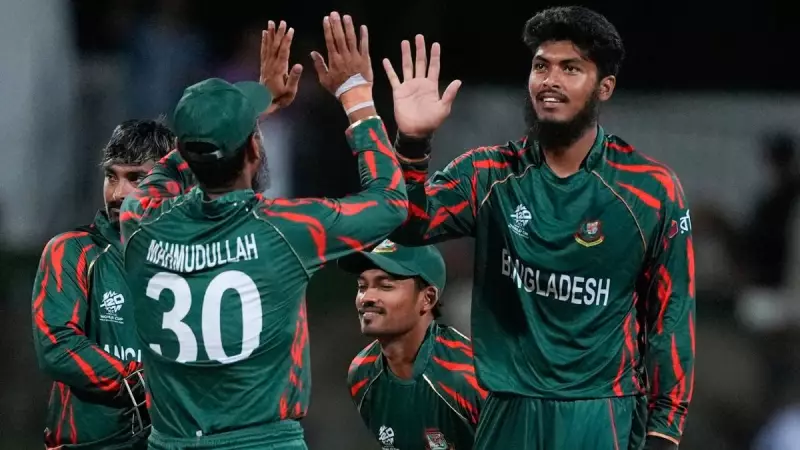
The International Cricket Council has confirmed a significant late change to the upcoming T20 World Cup lineup, with Scotland stepping in to replace Bangladesh after the South Asian nation refused to travel to co-host India.
Security Concerns Prompt Withdrawal
The ICC announced the decision on Saturday following weeks of uncertainty surrounding Bangladesh's participation. The Bangladesh Cricket Board had repeatedly insisted it would not play its scheduled matches in India, citing safety concerns stemming from soured political relations between the neighbouring countries.
Bangladesh had formally requested that the ICC move their games to Sri Lanka, the tournament's other host nation, but cricket's governing body rejected this demand, dismissing any security threat to the team.

ICC's Deadline and Replacement Process
"Following a meeting on Wednesday, the Bangladesh Cricket Board had been given a 24-hour timeframe to confirm whether its team would participate in India as scheduled," the ICC stated in an official release.
"As no confirmation was received within the deadline, the ICC proceeded in line with its established governance and qualification processes to identify a replacement team."
Scotland will now join Group C alongside England, Nepal, Italy, and the West Indies. The ICC noted that Scotland represents the next-highest ranked T20 international team that had originally missed World Cup qualification, currently sitting at 14th position globally.
Political Tensions Spill Into Cricket
The decision follows escalating political tensions between India and Bangladesh. Last month, hundreds of people protested near Bangladesh's High Commission in New Delhi after a Hindu factory worker was beaten and set on fire in Bangladesh's Mymensingh district.
Twelve people were arrested in connection with the death, which further strained relations already tense following Bangladesh's former Prime Minister Sheikh Hasina fleeing to New Delhi amid protests against her leadership.
These political tensions have increasingly affected cricket relations between the nations. Earlier this year, Bangladesh bowler Mustafizur Rahman was dropped from the Indian Premier League despite signing with the Kolkata franchise. Bangladesh responded by banning IPL broadcasts nationally and demanding World Cup matches be relocated to Sri Lanka.
Historical Context of South Asian Cricket Tensions
This standoff mirrors previous political tensions affecting cricket in South Asia. For last year's Champions Trophy, the Indian cricket board maintained its policy of not touring Pakistan due to strained political relations between those neighbours.
Similar to the 2023 Asia Cup in Pakistan, a 'hybrid model' was agreed upon allowing India to play their Champions Trophy matches in Dubai to preserve the tournament. Under current agreements running until 2027, Pakistan will play at neutral venues for ICC events, including scheduled T20 World Cup matches in Sri Lanka.
The ICC's decision to replace Bangladesh with Scotland represents another instance where geopolitical realities have directly impacted international cricket competitions, forcing last-minute changes to tournament lineups and highlighting the complex relationship between sport and diplomacy in the region.