The Enduring Mystery of a Hunter Valley Coal Baron's Lost Automobile
A fascinating automotive puzzle continues to captivate historians and vintage car enthusiasts across Australia. At the heart of this mystery lies a derelict vehicle that may represent one of the rarest early British automobiles ever to reach Australian shores, potentially connected to one of the Hunter Valley's most formidable industrial figures.
The Discovery and Its Historical Context
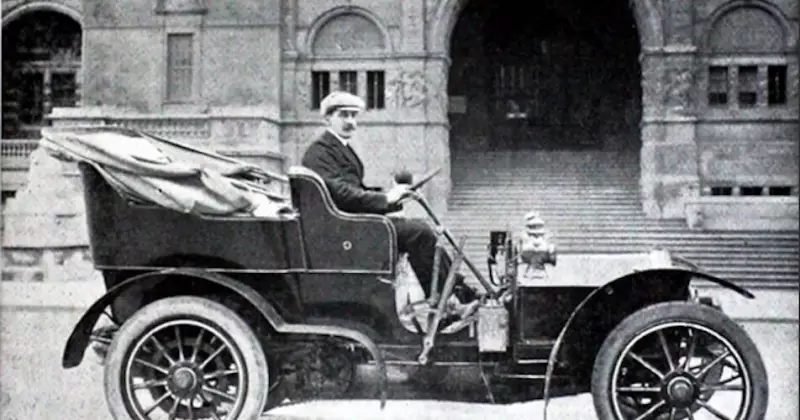
Retired Sydney engineer and dedicated car enthusiast Damien Allan currently owns what he believes to be one of the earliest surviving vehicles from the short-lived British motoring firm Brotherhood-Crocker, which operated between 1904 and 1907. This company later evolved into the Sheffield-Simplex brand from 1908 onward. The car was originally discovered by Allan's uncle in a vacant lot at Leichhardt, Sydney, back in 1953, where it had apparently been partially dismantled for at least a decade according to aerial survey photographs from 1943.
Local lore suggests the vehicle may have served as an early taxi in Newcastle before becoming unserviceable and abandoned. What makes this discovery particularly compelling is its potential connection to John Brown (1850-1930), the controversial Hunter Valley coal magnate, shipowner, and racehorse breeder who once controlled the fortunes of the privately managed J&A Brown coal company from his Newcastle residence at 50 Wolfe Street.

The John Brown Connection
Brown was known for his extravagant tastes and penchant for acquiring the newest and best of everything. His empire included multiple Hunter coal mines equipped with the latest technology, at least 500 horses, a fleet of ships, steam locomotives, and ten ocean-going tugs including the powerful Rollicker. The possibility that he might have owned one of these rare Brotherhood-Crocker vehicles adds significant historical weight to Allan's discovery.
According to Allan, the connection was first suggested by an old Canberra friend named Ian, who believed the car dated from around 1905 and represented one of Brotherhood-Crocker's first models. "I think it may even be the only surviving such Brotherhood automobile," Allan remarked. The friend's information supposedly came from a Scone Historical Society reference, though subsequent enquiries with that organization, Maitland historians, Newcastle University, and overseas sources have failed to produce definitive documentation.
Historical Documentation and Dead Ends
The search for conclusive evidence faces significant challenges. After Brown's death in 1930, he ordered all his business papers destroyed, creating substantial gaps in the historical record. Hunter history consultant Rosemary Melville managed to uncover a potentially unique list of cars registered in the Lower Hunter 115 years ago, revealing that Brown owned two motor vehicles in 1911 when only 135 cars were registered across the entire Hunter region up to Singleton.
These registered vehicles were a 20/30hp Siddeley and a 40/50hp Rolls-Royce, both appearing on Hunter car registration lists for 1911 and 1918. Notably absent is any definitive record of a Brotherhood-Crocker vehicle, though this doesn't necessarily disprove ownership since Brown might have acquired and disposed of such a car before 1911.
Supporting Evidence and Theories
Maitland history researcher Chas Keys provided a possible explanation for the Scone Historical Society reference through the unpublished 1979 memoirs of Maitland resident Arthur John Gow. The memoirs state: "The first car I ever saw was about 1914 and that car belonged to John Brown (the coal baron). It happened to be a bright red one. Every fourth Sunday morning, John Brown's chauffeur would drive him from Newcastle through East Maitland on his way to his horse stud at Minimbah, near Singleton."

Allan has developed his own theory about how Brown might have acquired such a vehicle. The car's designer was the dynamic Percy Richardson, who convinced English coal magnate Earl Fitzwilliam to invest heavily in a company aimed at producing the world's best automobile to compete with Rolls-Royce. "I believe John Brown bought one of the last Brotherhood models in 1906, imported it, then found out it wasn't as advanced as he thought, and quickly disposed of it," Allan suggested.
This theory gains plausibility from Brown's decade living overseas, mostly in London from 1899-1904, where he would have frequently crossed paths socially with fellow coal magnates like Lord Fitzwilliam. Newcastle chemist and car enthusiast 'Ron' noted that during Brown's era, automobiles represented "a rich man's toy" and were genuine novelties in the Hunter Valley, with only 109 cars registered in Newcastle city as late as 1915.
The Restoration Quest and Historical Significance
Damien Allan now aims to restore this potentially significant piece of automotive history. The rarity of such vehicles cannot be overstated - surviving examples of the luxury touring cars once built in England by Sheffield-Simplex are so scarce that only two other cars of this make may still exist worldwide. Predecessors like the Brotherhood-Crocker models would be even rarer.
Adding to the vehicle's potential significance, avid car restorer Brian Schasser, an 84-year-old life member of the Newcastle and District Vintage and Classic Car Club, recalled that Brown's early prestige Rolls-Royce vehicle had broken down by 1930 and was eventually scrapped, ending up in a Minmi quarry near Brown's model farm. "A nearby house owner had things off its radiator on display, including on a shelf in the lounge room," Schasser noted.
For now, the mystery of the Brotherhood-Crocker vehicle and its possible connection to John Brown remains unresolved but continues to generate interest among automotive historians and enthusiasts. As researchers continue to piece together fragments of evidence from historical records, personal accounts, and physical artifacts, this automotive enigma serves as a fascinating window into Australia's early motoring history and the extravagant lifestyles of its industrial pioneers.