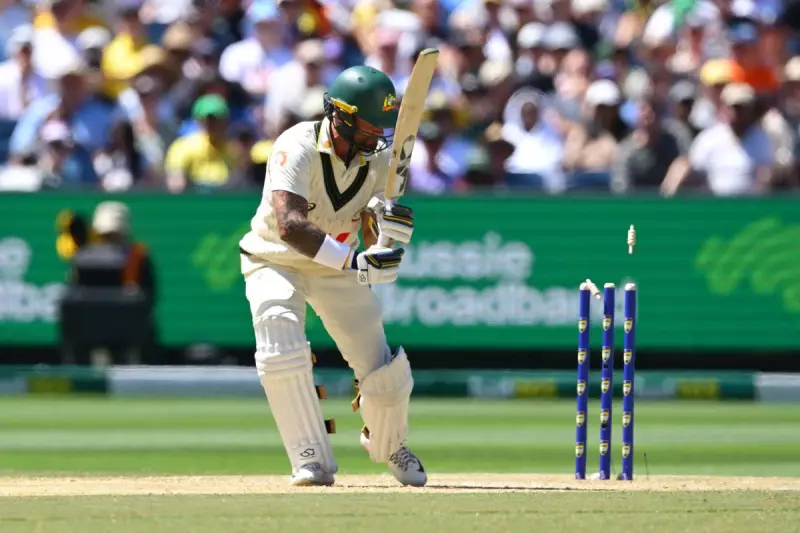
Former Australian cricket coach Justin Langer has delivered a pointed critique in the wake of the Melbourne Cricket Ground's two-day Test debacle, arguing that the players from both Australia and South Africa must shoulder a significant portion of the blame.
Langer's Blunt Assessment of Player Technique
Langer, who led Australia from 2018 to 2022, did not hold back in his analysis of the chaotic second Test, which concluded inside two days with Australia securing a series-clinching victory. While the heavily criticised MCG pitch dominated headlines, Langer insisted the batters' technical deficiencies were a major contributing factor to the match's brevity.
The match saw a staggering 34 wickets fall across six sessions, with South Africa bowled out for 189 and 204, and Australia managing 575 in their sole innings. Langer emphasised that the nature of many dismissals pointed to poor batting rather than an unplayable surface.

"Everyone's blaming the MCG wicket," Langer stated. "Could the players take some responsibility as well? Could the technique of the players, on both sides, have been better?" He highlighted specific examples, noting that several batters were out playing expansive cover drives or cuts on a pitch offering seam movement, shots he deemed inappropriate for the conditions.
The Pitch Controversy and Match Referee's Verdict
The surface at the MCG was rated as 'poor' by match referee Richie Richardson following the match's rapid conclusion. This rating placed Cricket Australia and the MCG curators under intense scrutiny, with the venue receiving three demerit points. An accumulation of demerit points can lead to a venue suspension from hosting international cricket.
However, Langer's comments reframe the narrative, suggesting the players' approach exacerbated the situation. He argued that modern batters, often reared on flat white-ball pitches, are sometimes ill-equipped to handle challenging, seaming conditions that require patience, tight defence, and judicious shot selection.
The former Test opener acknowledged the pitch was challenging but maintained it was not dangerous. "It was a tough wicket, but it wasn't a wicket where you couldn't bat on," he said. His perspective adds a crucial layer to the post-mortem, shifting some focus from the curators to the playing cohort.
Broader Implications for Test Cricket
This incident has sparked a wider debate about the balance between bat and ball in Test cricket and the quality of pitches worldwide. Langer's intervention serves as a call for greater accountability from players, urging them to refine their techniques to survive and thrive on all surfaces, not just batting-friendly roads.
The fallout from the MCG Test is likely to influence pitch preparation discussions for years to come. Langer concluded that for the health of the five-day format, both curators and cricketers need to play their part: groundsmen must produce fair contests, and players must hone the skills to adapt.
As Australia celebrates its series win and looks ahead to the Sydney Test, Langer's words serve as a sobering reminder that in Test cricket, technical prowess and mental application remain non-negotiable, regardless of the strip they are playing on.