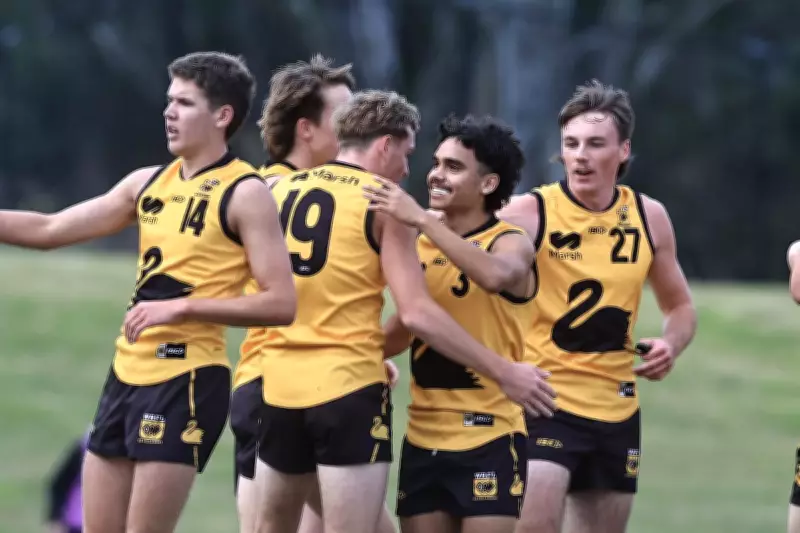
WA Football CEO Brad Wira has declared that a significant drop in AFL draft numbers has been addressed through a radical review and reform of the state's talent pathways, urging critics to "judge us in five years". Wira, a former Fremantle, Western Bulldogs, and Carlton player, recently stepped into the top role at WA Football and insists the organisation will not hesitate to borrow ideas from other codes.
A Cyclical Challenge
Speaking exclusively to The West Australian, Wira acknowledged the cyclical nature of draft numbers. "It's cyclical. It does go in ebbs and flows," he said. "But what the talent pathway review shows us is that we need to refine, enhance, improve, which is what we're doing."
The extensive talent review, led by WA Football deputy chair Dixie Marshall, former West Coast CEO Trevor Nisbett, and Wira himself, aims to increase the talent pool by 20 per cent. The urgency stems from last year's AFL national draft, where WA had only six players selected, with just one in the top 30 out of 60 picks. This marked a decline from eight draftees the previous year and saw WA fall outside the top three states for the first time. Essendon's Jacob Farrow was the state's only first-round selection.

Key Recommendations and Immediate Changes
Among the 39 recommendations, key issues included targeting under-represented groups such as regional, Indigenous, multicultural, and female players; leveraging advanced technology for scouting; and appointing a dedicated talent development executive manager. North Melbourne and Fremantle champion Peter Bell was appointed to that role last January.
Wira outlined the changes: "We looked at coaching at all levels, from 14s to 15s to futures to colts, into our pathways, the ability for our regional kids to get the same access and opportunity that our city kids get. We changed our executive to incorporate Peter Bell and have added Michael Walters."
Former Fremantle star Michael Walters has joined WA Football as part of the overhaul. Additionally, the state program now includes a full-time strength and conditioning coach for the female program, and Kate Orme, a former West Coast and Claremont WAFLW premiership player, has become the state talent coach for the women's 18s and 16s programs.
Training Facilities and Style of Play
Despite not having a permanent base—currently housed temporarily at Tuart Hill—WA Football has secured elite training facilities at both AFL clubs. Wira emphasised the importance of these improvements: "To be able to do that is absolutely beneficial for our elite talent boys and girls. We now train at elite facilities at the two AFL clubs."
The review also delved into training methods and playing style, including the anti-density rule, which reduces congestion around the ball to encourage one-on-one contests, higher scoring, and development of specialised positions.
Balancing State Programs with Junior Football
Wira acknowledged the potential "drain" on school and community football when talented players are drawn into the state program. "We've made the State 18s a 12-month program, but we've also got to be really mindful of what does it do to our school footy, what's it do to our community footy, and the drain on that?" he said.
With 12 years of experience at Hale School, Wira understands the balance required: "We don't want them all State eighteens. We want them to experience all facets and not to the detriment of their school program or their WA footy program. Give them the best opportunity to be good young men and women, but also fulfill their dreams."
He added that under his watch, WA Football will "not be afraid of looking at other competitions, at other sports, and how they're doing things both successfully and unsuccessfully, and implementing things that work. Unashamedly we have looked at what we have learnt from the eastern states."
The Future of the WAFL
Wira described the current period as "pivotal" for the WAFL, which remains a key layer in the WA football ecosystem. "WA Football is the custodian of not only two AFL licenses, but a WAFL competition," he said.

"I was lucky enough to play at the elite level, but where the magic happens is at community level, and that's the attraction of the game for grandparents and carers and mums and dads and volunteers. It gives them a sense of belonging."
The vision is to make the WAFL sustainable financially while continuing to grow the game. "We need venues. We need lights. We need grounds. The constant challenge of other sports, the constant challenge for the dollar, cost of living and inflation and the challenges on households. I do think it's a really pivotal time."
Night Grand Final and Fixture Innovation
Wira revealed the exciting possibility of a night WAFL grand final this season, tentatively booked for Saturday, September 19 at Optus Stadium, subject to the AFL's preliminary final schedule. "We need to continue to look at things differently. We've averaged, I think, 25,000 at the six WAFL grand finals at Optus, which in a 60,000-capacity stadium is still cool."
Players have expressed a preference for Optus Stadium, despite the romantic appeal of traditional venues like South Fremantle and Leederville. "I've got a finance background. I understand the numbers, so that's a big part of it. I also now have a CEO hat on that says what do the facilities look like, how we're looking after our community?"
Wira also emphasised the need for flexible fixturing, citing the success of the Good Friday round one games: "Having four games on Good Friday our numbers were fantastic. Adapting in this hectic world that families are in, the challenges of multiple sports and multiple kids and work, life balance and all those things, I think we have to be really flexible with our fixturing and look at things differently. So that's certainly something we will be doing."