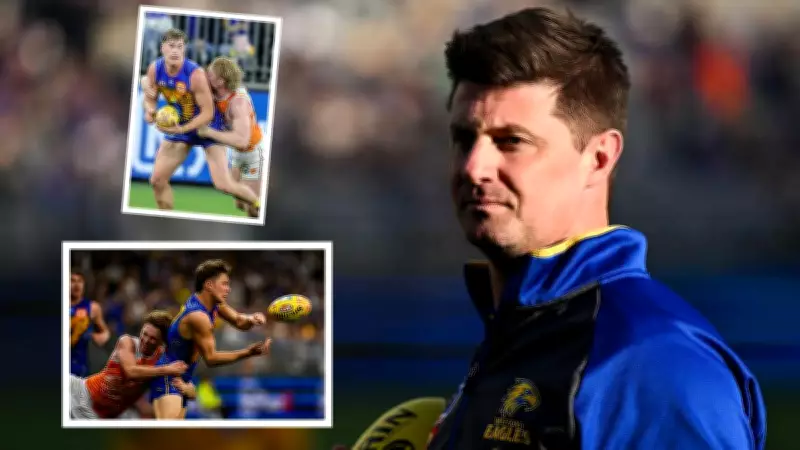
The West Coast Eagles produced one of the biggest upsets of the AFL season, defeating the Greater Western Sydney Giants at Giants Stadium. The victory, which stunned pundits and fans alike, was built on a series of crucial match-up wins across the ground. Here's a detailed breakdown of how Waalitj Marawar (the Eagles) got it right.
Midfield Dominance: Yeo and Kelly Lead the Charge
The midfield battle was always going to be pivotal, and the Eagles' duo of Elliot Yeo and Tim Kelly rose to the occasion. Yeo, returning from injury, was immense with 28 disposals, 10 clearances, and a goal. Kelly, playing his best game for the season, amassed 32 touches and eight clearances. They outshone GWS's star-studded midfield of Tom Green, Josh Kelly, and Stephen Coniglio, who were restricted to a combined 22 clearances. The Eagles' midfield pressure was relentless, forcing turnovers and generating scoring opportunities.
Ruck Work: Nic Naitanui's Influence
Nic Naitanui's presence in the ruck was a game-changer. Despite being outsized by GWS's Brayden Preuss, Naitanui's athleticism and tap work gave the Eagles first use of the ball. He finished with 15 disposals, 30 hit-outs, and five clearances, providing a platform for the midfielders to exploit. His ability to rove his own taps and create chaos at ground level was a key factor in the Eagles' dominance.

Defensive Resilience: McGovern and Barrass Stand Tall
The Eagles' defensive unit was resolute, led by Jeremy McGovern and Tom Barrass. McGovern took nine marks, including several intercept marks, and rebounded with precision. Barrass kept GWS's key forward Jesse Hogan to just one goal, while also providing drive from the backline. Their aerial dominance and ability to read the play stifled the Giants' attacking forays. The defensive pressure from the smalls, notably Liam Duggan and Alex Witherden, was also crucial in limiting GWS's scoring opportunities.
Forward Line Efficiency: Darling and Allen Capitalise
Up forward, Jack Darling and Oscar Allen proved too good for their opponents. Darling kicked three goals from 15 disposals, using his strength and leading patterns to advantage. Allen, playing as the second tall, contributed two goals and five marks, providing a mobile target. The Eagles' forward entry was precise, often hitting leading targets or creating contests that brought the ball to ground for the small forwards. Jamie Cripps and Liam Ryan added pressure and chipped in with goals, ensuring the Eagles made the most of their opportunities.
Key Match-Ups That Won the Game
Several individual battles swung the game in the Eagles' favour:
- Elliot Yeo vs. Tom Green: Yeo's physicality and two-way running outshone Green, who was held to 20 disposals and just four clearances.
- Tim Kelly vs. Josh Kelly: The Eagles' Kelly was the more influential, winning the contested possessions and using the ball better than his namesake.
- Tom Barrass vs. Jesse Hogan: Barrass kept Hogan to a single goal, dominating the one-on-one contests and intercepting at will.
- Nic Naitanui vs. Brayden Preuss: Naitanui's speed and agility around the ground gave the Eagles an edge in the ruck contests.
Coaching Masterstroke: Simpson's Tactical Adjustments
Coach Adam Simpson deserves credit for the tactical setup. The Eagles employed a high-pressure game plan, with aggressive forward pressing and a numbers game at stoppages. They targeted GWS's weaker defensive match-ups and exploited mismatches. The decision to play an extra midfielder behind the ball also helped nullify the Giants' counter-attacks. Simpson's ability to adapt and motivate his players after a disappointing season was evident.
What This Means for the Season
The win keeps the Eagles' slim finals hopes alive, but more importantly, it shows the potential of this young list. With key players returning to form, West Coast can build momentum for the remainder of the season. For GWS, the loss is a setback in their top-four aspirations, highlighting vulnerabilities that need addressing. The Eagles will look to replicate this performance as they face upcoming challenges, while the Giants must regroup quickly.

In summary, the Eagles' stunning upset was no fluke. It was a result of winning key match-ups across the ground, from midfield dominance to defensive resilience and forward efficiency. If they can maintain this level of performance, West Coast could be a dangerous team in the second half of the season.