If tall defenders are West Coast’s Achilles’ heel, Marvel Stadium is its underworld. While the Eagles have endured heavy defeats across most venues since mid-2021, Marvel has been a particularly unwelcome destination.
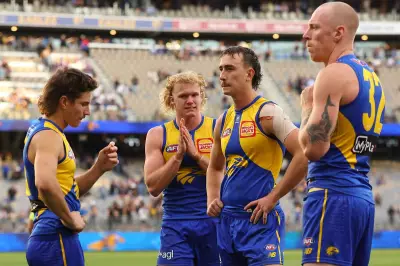
Sunday’s 32-point loss to Melbourne at Docklands, though not the disaster it initially threatened to become, still marked their 16th defeat in the last 18 matches at the venue. The fact it fell just shy of the Eagles’ average losing margin of 48 points at Docklands in that period will offer little comfort to coach Andrew McQualter, who was up against it from early on.
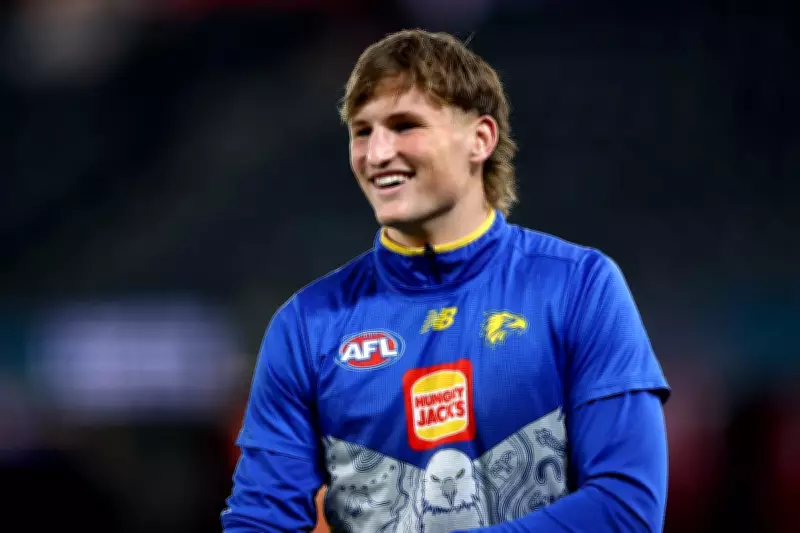
Key position defenders are at a premium across the competition and in this year’s draft pool, and this area remains the most desperate need for the rebuilding Eagles. So heading into Sunday’s clash with Melbourne, the inclusion of 200cm Harry Edwards, returning from concussion protocols after a cautious WAFL stint, would have been a structural godsend for McQualter.

Unfortunately for the Eagles and the luckless Edwards, he did not last a quarter. He copped the full impact of a friendly fire elbow to the forehead and subsequently failed head assessment protocols. He did not reach quarter time, marking his third concussion this year. This setback casts doubt on his short-term future, if not his longer-term outlook.
McQualter has stood firm in playing the immensely talented Jobe Shanahan as a key forward, as that is undoubtedly where his long-term future lies. Shake a talent tree and it’s rare a natural key forward falls out; with all due respect to backmen, they are scattered like dime a dozen beneath the canopy. Edwards’ unavailability might force McQualter to turn Shanahan’s regular forays behind the ball into a full-time role for the remainder of this season.
He does have Jack Williams as a forward line option, but could he also be a back half solution? Rhett Bazzo and Sandy Brock are other options.
The Eagles had few wins against the Demons, but they didn’t get the small things right. Kysaiah Pickett, the No.1 ranked player over the previous six rounds, was subdued by close-checking Brady Hough, who forced him to get 67 percent of his 14 possessions in the back half.
Hough has had several rebirths as an AFL player: from defender into midfielder and back again. His success in transforming a superpower into a mere mortal has at least given McQualter enough evidence to suggest the 191cm Eagle can become a run-with go-to in the second half of the season.
Other positives: Milan Murdoch reaffirmed he belongs at AFL level as a high half-forward-cum-midfielder; Tom McCarthy worked hard for 30 possessions but is better than a 70 percent efficiency player; Willem Duursma Yeo busted a gut for no reward; Jake Waterman kicked three goals and could have had a handful. The Eagles also welcomed Jack Hutchinson’s first game back from injury, highlighted by a goal from a courageous mark running into danger in the fourth quarter that sparked a mini-comeback.
But again, the small things were not done right often enough. Example A: Elliot Yeo marks at half-forward and kicks over the top of a leading Jake Waterman. Example B: Harley Reid marks and handballs impetuously, turning it over, with the ball pumped into Melbourne’s forward 50 before the Eagles’ defence could set up behind play. Numerous similar examples followed from teammates.
The Demons did the damage largely from defensive chains, scoring 5.2 from that source, an area of concern for the Eagles, who halved clearances and won the battle at centre bounces, where Bailey Williams gave an honest account against Max Gawn and Max Heath—the former an all-time great, the latter a promising talent. Melbourne’s first four goals of the third term, after the Eagles had clawed back to a competitive deficit, were all scored from turnovers. Jacob van Rooyen was the beneficiary with five goals in the presence of miserly West Coast defender Reuben Ginbey.
Get the latest news from thewest.com.au in your inbox. Sign up for our emails.