Brad Scott's 'Tough Love' Gesture Towards Nate Caddy Fuels AFL Coaching Controversy
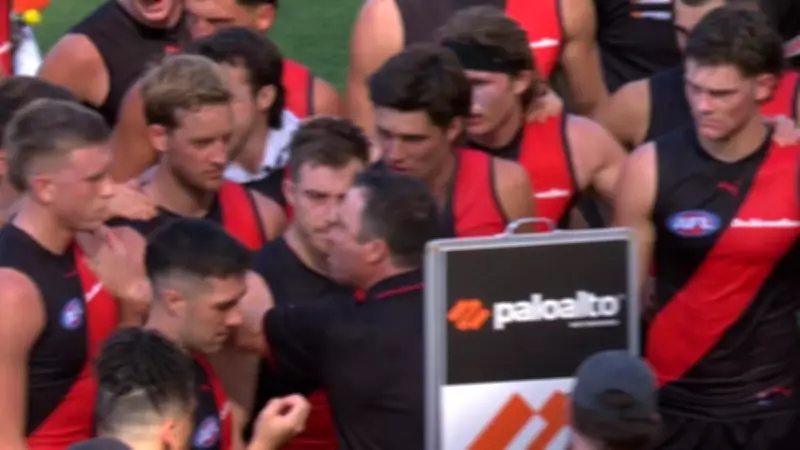
In a dramatic turn of events, the AFL coaching landscape is under intense scrutiny once again as Essendon coach Brad Scott has been observed engaging in a physical interaction with young forward Nate Caddy. This incident comes merely two weeks after Alastair Clarkson, the North Melbourne coach, sparked widespread debate with a fiery shove to the chest of his player, Colby McKercher. The latest episode unfolded during Essendon's narrow loss to Gold Coast over the weekend, where Scott was seen pointing at Caddy in a huddle before delivering a push near the shoulder.
Contrasting Coaching Styles Under the Microscope
Unlike Clarkson's confrontation with McKercher, which was perceived as aggressive, Scott's action appears to be more motivational in nature. Eyewitnesses noted that the interaction occurred just before play resumed, with a teammate immediately patting Caddy on the back in a show of support. Port Adelaide premiership player Kane Cornes commented on Channel 7's The Agenda Setters, stating, "I've got no issue with this interaction, but it was strong. Not something we often see." He elaborated that it seemed more like encouragement than aggression, highlighting the nuanced differences in coaching approaches.
Caroline Wilson, a prominent football analyst, echoed this sentiment, describing Scott's push as "completely different" to Clarkson's incident. She emphasized that while physical contact from coaches remains a contentious issue, this example illustrates the diverse personalities within teams. Wilson explained, "I think this is a player who wants to be coached really hard by his coach, who wants to be a leader at his footy club and who is demanding tough love."

Debating the Risks and Rewards of Hard Coaching
The discussion has broadened to consider the potential risks associated with intense coaching methods. Kane Cornes raised concerns about player retention, questioning whether harsh coaching could drive players to seek safer environments, especially with factors like short contracts or the allure of new teams like Tasmania. He asked, "Is there a risk that coaching a player really hard has that prospect of him wanting to leave and get out to a safer environment?"
In contrast, Caroline Wilson offered a different perspective, suggesting that Scott's actions might be a strategy to retain Caddy at Essendon. She noted, "I think what Brad's doing with Nate Caddy is because he's trying to make him stay and keep him at the footy club." This highlights the complex dynamics between coaches and players in modern AFL.
Collingwood premiership winner Dale Thomas weighed in, emphasizing the importance of tailored coaching. He stated, "Experienced coaches understand which players need a bit of a carrot and which player needs a bit of a stick." Thomas defended the use of such methods when necessary, adding, "If you need to get the best out of your player and you think that's what's required, we shouldn't have an issue with it one bit."
Broader Implications for AFL Coaching Culture
This incident underscores a ongoing debate within the AFL about the boundaries of coaching behavior. While some argue that tough love is essential for player development and team success, others caution against crossing lines that could lead to discomfort or conflict. The comparison between Scott and Clarkson serves as a case study in how different personalities and situations influence coaching tactics.
Ultimately, as Thomas concluded, "They're both winners. They both want to win." This sentiment captures the high-stakes environment of professional sports, where coaches must balance motivation with respect. The AFL community continues to dissect these interactions, reflecting on how best to foster talent while maintaining positive team dynamics.