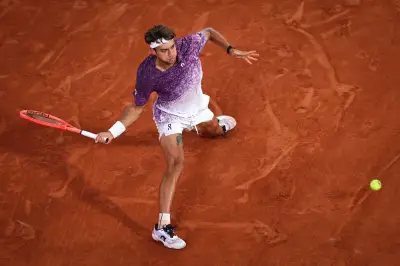
The wait is over. Tomorrow evening, the World Cup begins at the Azteca stadium in Mexico City, where co-hosts Mexico face South Africa. This match is the first of 104 games to be played by 48 nations across Canada, Mexico, and the United States before the final on 19 July. Millions will attend matches, and billions more will watch the biggest single-sport tournament on the planet.
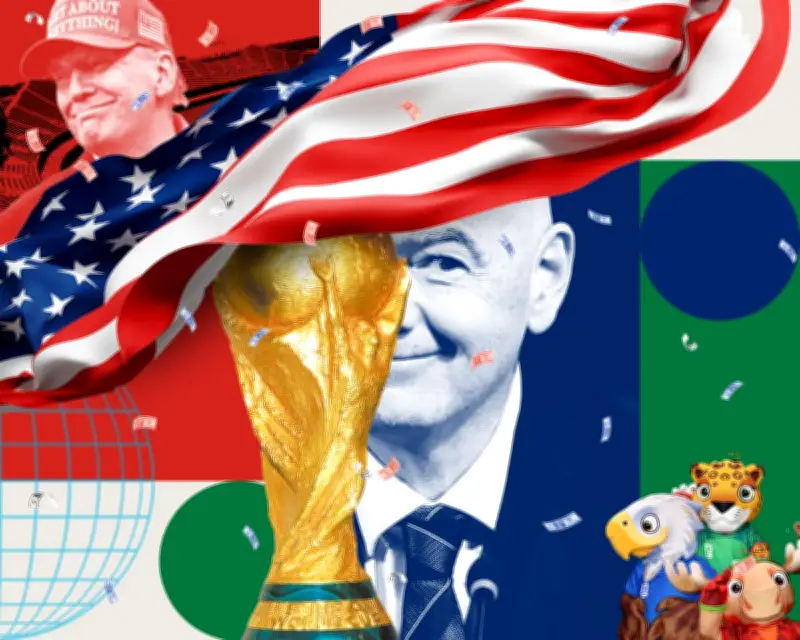
As often seems to be the case, one man looms large over events: Donald Trump. FIFA has sought to develop a close relationship with the US president, awarding him a specially invented prize after he was overlooked for an actual award by the Nobel committee. Trump will likely present the World Cup trophy to the winning team. His administration’s unprecedented approach to the event has received little pushback from organisers.
But the festival of football is not all about Trump. With an ever-growing contingent of stateside soccer fans, this summer could finally see the US’s growing interest in the beautiful game turn into a full-throttle love affair. For today’s First Edition, I spoke with Alexander Abnos, senior sports editor for the Guardian US, about what to expect from the tournament, the challenges Trump poses, and his on-the-pitch predictions. First, the headlines.

Five Big Stories
UK News
Protests against immigration have erupted into violence in Northern Ireland after far-right activists called for demonstrations in response to a stabbing attack captured in a graphic video.
Middle East
The US has launched strikes against Iran after Donald Trump blamed Tehran for downing a US army helicopter near the Strait of Hormuz, imperilling a shaky ceasefire announced by the two countries in April.
Europe
European confidence in an American “security guarantee” has hit a historic low, a survey suggests, with only one in 10 people across 15 countries seeing the US as an ally and majorities in all doubting it would come to their aid if attacked.
UK Politics
David Lammy’s planned changes to criminal courts in England and Wales could have a “far-reaching” impact on race relations, a cross-party committee of MPs has concluded.
Media
The BBC presenter Tony Livesey is to “step back” from his radio show after allegations were raised about his previous career as editor-in-chief of David Sullivan’s Sport Newspapers.
In Depth: Will Trump Be the Greatest Obstacle to a Successful World Cup?
Speculation is always rife ahead of any World Cup about what could go wrong. For South Africa in 2010, violent crime, weak transport links, and unfinished stadiums were causes for concern. Ahead of Brazil hosting in 2014, delays to critical infrastructure and civil unrest threatened to disrupt the tournament. For Russia in 2018, it was the spectre of hooliganism. Each time, tournaments went mostly to plan; whether this iteration can is far from certain.
Despite the logistical challenges posed by the 2026 tournament—an expanded 48-strong lineup of nations competing in stadiums across three countries separated by thousands of miles—it is Donald Trump who many see as its greatest obstacle. The president is unpopular at home, and the tournament presents him the opportunity to grab the world’s attention. “I certainly wouldn’t call it Trump’s World Cup,” says Alex, “although I think he’s going to try to make it Trump’s World Cup.”
There is intense uncertainty over whether tens of thousands of fans will be let into the US to support their teams due to the country’s strict—and at times punitive—immigration rules. Dozens of Scottish fans have faced last-minute revocations of US entry permits that could stop them from attending their team’s first World Cup finals since 1998. Iran’s allocation of fan tickets have reportedly been revoked just days before the start of the tournament.

Players and officials are also being affected. A top Somalian referee has been denied entry to the US to officiate; Iraq’s star striker, Aymen Hussein, was held for almost seven hours of questioning when he arrived in Chicago; and the Iranian team is being forced to fly in and out of the US on match days after the Trump administration refused to allow them to spend a single night in the country despite all of their group stage games being held there. A further 15 Iranian officials and support staff have been refused visas. In a statement, the US government said: “We will not allow the Iranian team to abuse this system to sneak terrorists into the United States under false pretences.”
FIFA’s Golden Goose
FIFA, the World Cup organiser, has done all it can to placate Trump. In December, the organisation’s head, Gianni Infantino, said: “We want to see hope, we want to see unity, we want to see a future. This is what we want to see from a leader, and you definitely deserve the first FIFA peace prize.”
This will also be the most lucrative tournament that football’s governing body has held. Recent projections estimate that it will make $13 billion (£9.6 billion) from this World Cup cycle, with almost $9 billion generated this year alone. The US is the golden goose—and FIFA has had few qualms about working with controversial governments: Russia and Qatar hosted the last two tournaments. Last week, campaigners announced plans to deliver the “biggest complaint FIFA has ever received” to the body’s ethics committee.
Onlookers will be bracing themselves throughout the tournament for further antics from the US president, who Alex says is unlikely to observe the competition quietly. “That’s Trump’s skill,” says Alex. “He just manages to find a way to insert himself into anything. You can’t get away from him. If the US does well, he’ll probably show up to a game. If they do badly, he’ll probably just ignore them. If anybody, any player speaks out about conditions in the US or ICE or his leadership, he’ll respond.” That is before considering the fact that if Iran and the US make it out of the group stages, they could meet in the knockout stage.
How Is Football Viewed in the US?
There is intense excitement in parts of the US, says Alex, who notes there is far more interest in the sport since it last hosted the tournament in 1994, when it was won by Brazil. “That World Cup was definitely more of an introduction to an unfamiliar sport for Americans,” Alex says. “Things have changed a ton. There was no soccer culture in 1994. Now, it is widespread. The Premier League is one of the most widely watched sports leagues in the nation.” Since mid-2022—before the start of the 2022 World Cup in Qatar—the share of Americans who say they actively follow football has increased from 8% to 12%. It is now the US’s fourth-most-popular spectator sport.
Many World Cup match-going fans will come from diaspora communities across North America. More teams from Africa, Asia, and the Caribbean will feature, including newcomers Curaçao, Cape Verde, and Uzbekistan—and while some fans will struggle to make it to the tournament, stadiums will still be full of fans with ties to the countries playing. “One of the advantages of having the World Cup co-hosted in the US is that we have so many immigrant communities,” he says. “There is going to be a built-in fanbase for just about every nation. I am half-Iranian, and Iran’s team is playing two of their three group games in Los Angeles, which has the highest concentration of Iranian diaspora in the United States.”
A key feature of any World Cup is the hordes of travelling fans supporting their team, including many who do not have tickets, and Alex believes they will probably be embraced by locals, despite mood music emanating from the White House. “Americans really enjoy people who are very enthusiastic about things. We’re enthusiastic people, and we appreciate it when other people are, too.”
Getting In on the Game
And let us not forget the small issue of the football itself. This World Cup is one of the most unpredictable yet: Spain, France, Argentina, England, Brazil, and Portugal are all being touted as frontrunners. Alex reckons Spain will come out on top. Many Guardian sports writers predict Japan will have a big impact—and Ecuador are my underdog favourite. Ahead of the tournament, Alex sat down with New York mayor Zohran Mamdani to play the Guardian’s Bracketology game to predict the eventual winner.
From Thursday night, dreams must give way to reality. Hundreds of millions of people will be absorbed by the games over the next six weeks as the greatest show on Earth begins. From here in London, I am hoping it ends with England captain Harry Kane holding the trophy.
What Else We’ve Been Reading
Kanya King, founder of the MOBO awards, died last week from colon cancer at age 57. In her Guardian obituary, Peter Mason eulogises a visionary who “never fulfilled the stereotype of the thrusting entrepreneur, and was known for her warm, humble approach.”
Do not miss the Guardian’s best albums of 2026 so far—the package comes complete with a Spotify playlist for you to enjoy.
The New York Knicks had won 13 straight playoff games and were cruising to their first NBA title in almost 50 years… then Donald Trump ruined the vibe. Andrew Lawrence explores how the president’s heavily booed appearance at the finals now threatens to derail the Knicks’ run.
Anita Chaudhuri has written an important deep dive on why Britain’s once-thriving food scene has started to struggle.
“It may not be fashionable, it may not be cool, but who cares,” writes Polly Hudson in this column modestly suggesting: marriage, not that bad?
Sport
Bukayo Saka continues to play through the pain of an Achilles injury, according to England manager Thomas Tuchel, and must be managed carefully at the World Cup.
Ben Stokes is highly unlikely to be included in England’s squad for the second Test against New Zealand after the 35-year-old asked for space and time to consider his long-term future amid the fallout from a nightclub incident.
Serena Williams marked her comeback at Queen’s with a stellar victory alongside Victoria Mboko as they defeated the third seeds in the women’s doubles to reach the quarter-finals.
The Front Pages
“Violence erupts in Belfast after protests over stabbing attack” is the Guardian’s front page today. The knife attack and subsequent protests dominate other titles. The Times leads with “Refugee charged with ‘medieval’ knife attack” while the i Paper writes “Police plead for calm after knife attack as far-right push for protests across Britain”. The Telegraph says “‘Beheading’ suspect entered UK via asylum loophole”, and the Mail takes a similar line with “Sudanese knife attack suspect got asylum after taking back door to UK”. Elsewhere, the FT has “Boots owner’s talks on $10bn sale cast IPO plans in doubt”, Metro says “Historic day for victims terrified by train pests”, and the Mirror leads on a Somali World Cup referee barred from entering the US, with the headline “Refused entry”.
Today in Focus: The Latest
Kemi Badenoch has vowed to reform the Equality Act in what is viewed as an attempt to win back support from Reform voters. The Conservative leader, who also served as equalities minister from 2020 to 2022, wants to scrap the public sector equality duty—a legal requirement that forces public institutions to actively consider how their decisions affect equality. Nosheen Iqbal speaks to community affairs correspondent Aamna Mohdin.
Cartoon of the Day
Ella Baron’s illustration captures the mood.
The Upside
Lynea Lattanzio has cared for 44,000 cats in the past 33 years at her sanctuary in California, even selling her Mercedes and two-carat diamond wedding ring to fund the operation. There is a social science behind those who are cat-obsessed, going all the way back to ancient mythology where cats were sacred. In a study comparing moods between dog and cat owners, “cat people scored higher on general intelligence, abstraction and self-reliance.” As Lattanzio puts it: “When you take a cat that’s almost dead and you bring it back to full health and help get it adopted, that really warms your heart. It’s fulfilling.”