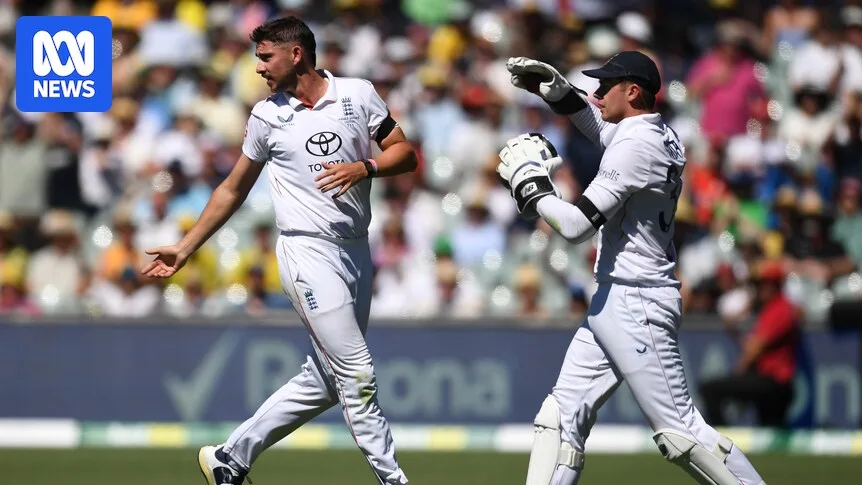
The use of Snicko as part of cricket's Decision Review System (DRS) has come under scrutiny after an apparent error denied England a wicket on day one of the third Ashes Test in Adelaide. Australia's Alex Carey, who went on to score a century, admitted he thought he had edged the ball while on 72. Despite a clear spike on the Snicko soundwave, the third umpire upheld the on-field not out decision, citing that the spike occurred two frames before the ball reached the bat.
After the match, Carey said he believed there was a feather or noise as the ball passed the bat. The technology's operator, BBG Sports, acknowledged the error, stating that the wrong stump microphone may have been used to sync audio and vision. The company took full responsibility, and England was later given its review back on day two.
This incident follows two controversial Snicko calls in the first Test in Perth, where a small murmur on the soundwave was used to overturn a not out decision, despite the disturbance arriving a frame after the ball passed the bat. Former ICC umpire of the year Simon Taufel revealed that third umpires are instructed to allow one frame of leeway, which has drawn criticism from former players and commentators.

Ex-England captain Nasser Hussain questioned Snicko's fitness for purpose, stating that multiple-frame discrepancies confuse viewers and players. Former Australian quick Jason Gillespie argued that allowing wiggle room indicates the technology is not reliable. England bowling coach David Saker noted concerns about Snicko throughout the series.
The tourists are more accustomed to UltraEdge, a system using 340 frames-per-second footage and Hawk-Eye technology, which is paid for by the England and Wales Cricket Board in their series. In Australia, host broadcaster Fox Sports uses the cheaper Snicko alternative. Ricky Ponting criticized the system, saying umpires cannot trust it, and called for reliable technology.
Former Australia fast bowler Stuart Clark questioned the role of on-field umpires, suggesting they should bear more responsibility for correct decisions. The controversy adds to ongoing debates about technology's accuracy in sports, with DRS, the NRL bunker, and VAR all facing similar frustrations.