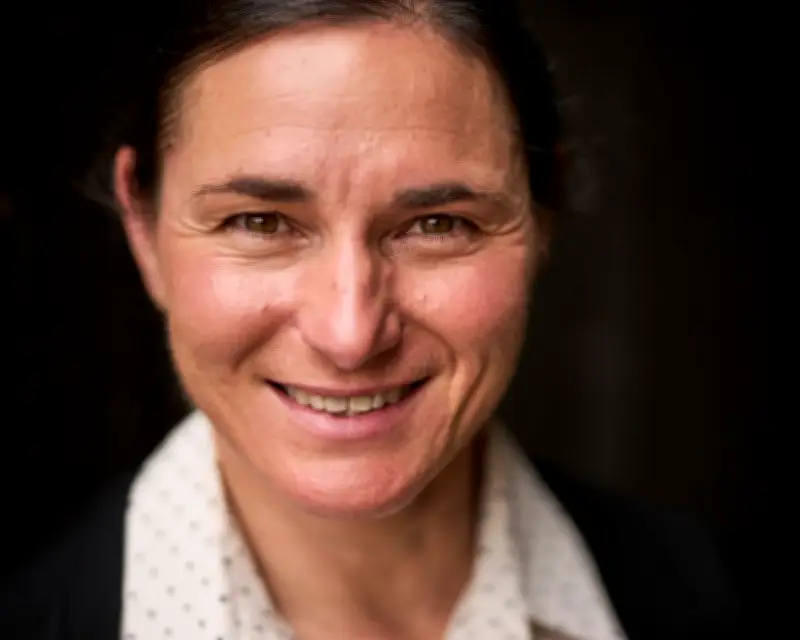
Dame Sarah Storey, the most decorated British Paralympian in history, has announced her retirement from elite competition at the age of 48, ending a career that spanned 35 years and yielded 74 world and Paralympic medals. Storey, who won 19 gold medals across nine Paralympic Games—beginning as a 14-year-old swimmer in Barcelona in 1992 and culminating in four consecutive road race golds on the bike in London, Rio, Tokyo, and Paris—confirmed the decision in an interview with The Guardian.
A Career of Unmatched Longevity and Versatility
Storey's Paralympic journey started in the pool, where she won gold in the 100m backstroke in a world record at Barcelona 1992, followed by the 200m individual medley. She added three gold medals and a silver in Atlanta 1996, all before starting university. After a persistent ear infection forced her to switch to cycling in 2005, she dominated on the road and track, winning 17 more Paralympic golds. Her ability to compete at the highest level across two sports and multiple Games is unprecedented.
“This is the first time that I will speak about the next chapter,” Storey said. “I’ve always shied away from the word ‘retirement’ because as an athlete you have to plan for the next chapter. It certainly isn’t doing nothing and sitting with your feet up. I started planning for what life might look like as soon as I became an international athlete.”

Beyond the Medals: A Life of Public Service
Storey has already built a significant post-competition portfolio. She served as the travel commissioner of Manchester alongside Mayor Andy Burnham and is the chair of Lancashire Cricket. She also works in sports television and remains a powerful advocate for Paralympic sport. When asked about her ideal next role, she laughed: “Sometimes I’d like to be the chef de mission of the [Paralympic] team going to the Games. Other times I’d like to be the performance director of cycling or the anchor of the TV programme that showcases all these amazing things. I just can’t make my mind up.”
Storey’s path was not without obstacles. She was turned away from an elite swimming club in Leeds because of her disability—her left hand failed to grow after being entangled in the umbilical cord in the womb. The rejection forced her to coach herself, leading to overtraining and chronic fatigue syndrome. “They say what doesn’t kill you makes you stronger, although it led to me having to coach myself, overtraining and ending up with chronic fatigue syndrome and four years of hell with my health. But it gave me a real empathy for other athletes,” she recalled.
The Final Race and a Legacy of Inclusion
Storey’s last Paralympic race in Paris 2024 was a dramatic road race where, at nearly 47, she outsprinted 19-year-old French star Heïdi Gaugain by half a bike length. “Someone sent me the photo-finish and said: ‘It wasn’t that close.’ Well, it felt close,” she said. She won by 7 minutes 22 seconds at London 2012 and 3:29 in Rio, but the Paris victory was her most hard-fought.
Storey acknowledged that Paralympic sport still struggles for recognition. “Lots of people have been surprised over the years when I’m selected again for the next Paralympics because they made this assumption I wasn’t racing. There is still a great need for us to address the years in between [Paralympic Games],” she said. She noted that one in four people have a disability, and investing more in coverage and combined events would build cultural understanding.
Storey leaves the sport unbeaten in Paralympic competition. She decided against aiming for a 10th Games in Los Angeles after undergoing saddle surgery, which gave her time to reflect. “That was probably the most impactful thing in my decision because even a couple of years ago I assumed I’d always ride a bike for hours on end. A gradual realisation that being able to leave the sport unbeaten at the Paralympic Games is something not everyone gets to do,” she explained.

Now, Storey focuses on her family—her daughter dances with the English Youth Ballet, and both children play cricket—and on making sport more inclusive. “Whatever you do, it’s always about leaving something better than you found it. There are now more opportunities than ever to cross over into Olympic sport and more female athletes are able to work and train and be a mum. That wasn’t always an option, so I feel privileged to have been part of the cohort that showed it was possible.”